 Visa
Visa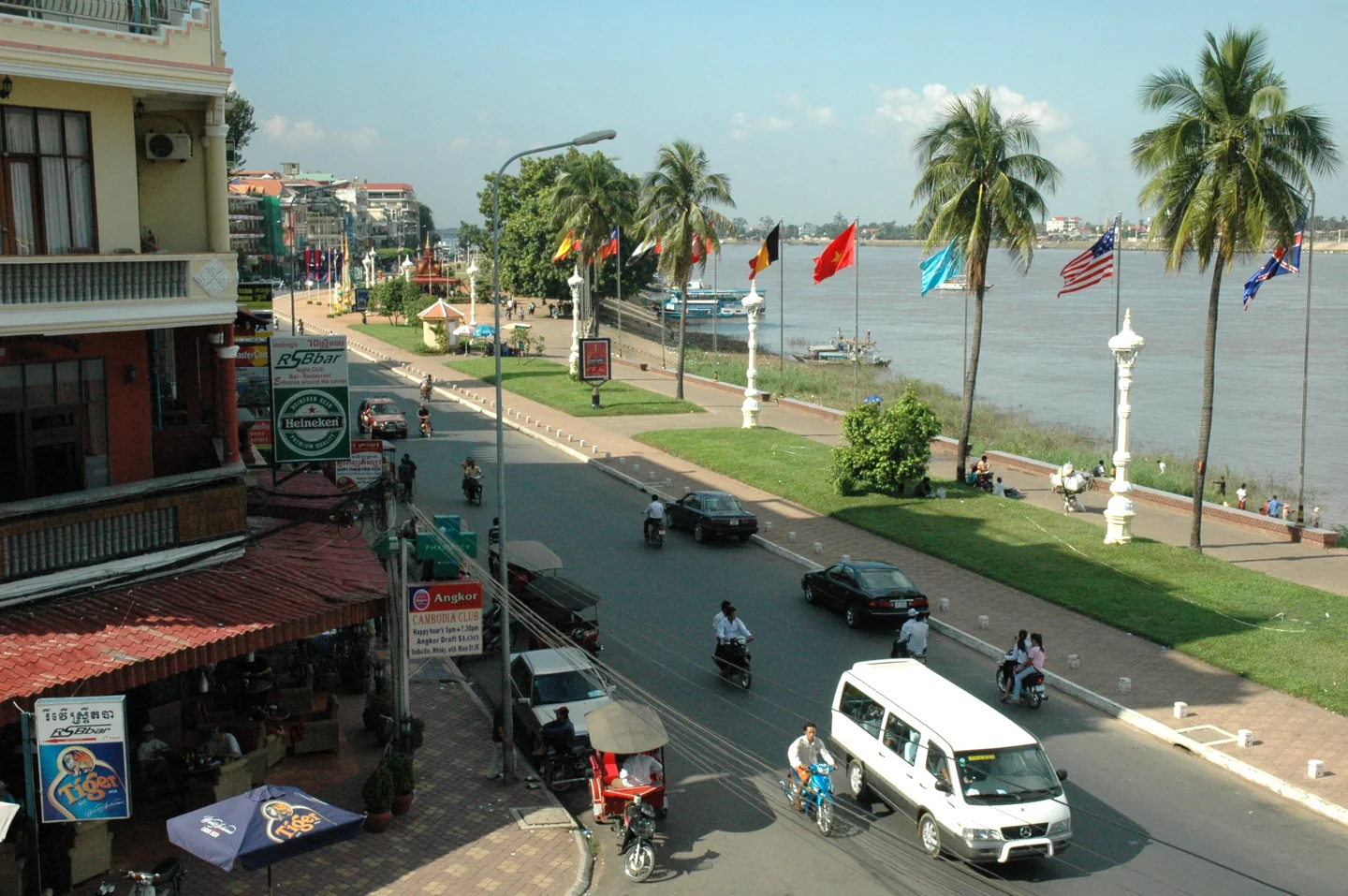
Moving & Living - Cambodia - Complete Guide
Move to Cambodia in a practical sequence: choose a city, arrange the correct E-class stay and work documents, register your address, then organise banking, a lease, schools, healthcare and everyday payments.
Photo credit
Daily life in Cambodia can mean a Phnom Penh apartment with a tuk-tuk commute, a Siem Reap home near the river, or a workplace in a provincial city. The move works best when the address, immigration category and source of income fit together. This journey explains how to arrange entry and a longer stay, prepare a household file, register accommodation, and establish the money, housing and services you will use after arrival.
Cambodia at a glance
- Language
- Khmer; arrange translation for documents you sign
- Money
- Cambodian riel · KHR; USD prices also appear in local banking and services
- Immigration
- E-class entry and extensions are distinct from an electronic e-Visa
- Address registration
- Foreigners Presence in Cambodia System · FPCS
- Employment
- MLVT work permit and employment card; visa alone is insufficient
- Reviewed
- 13 October 2026
Follow your moving journey
Start at step 1, or jump to the task you are working on.
01Choose a city around the journeys you will make every week
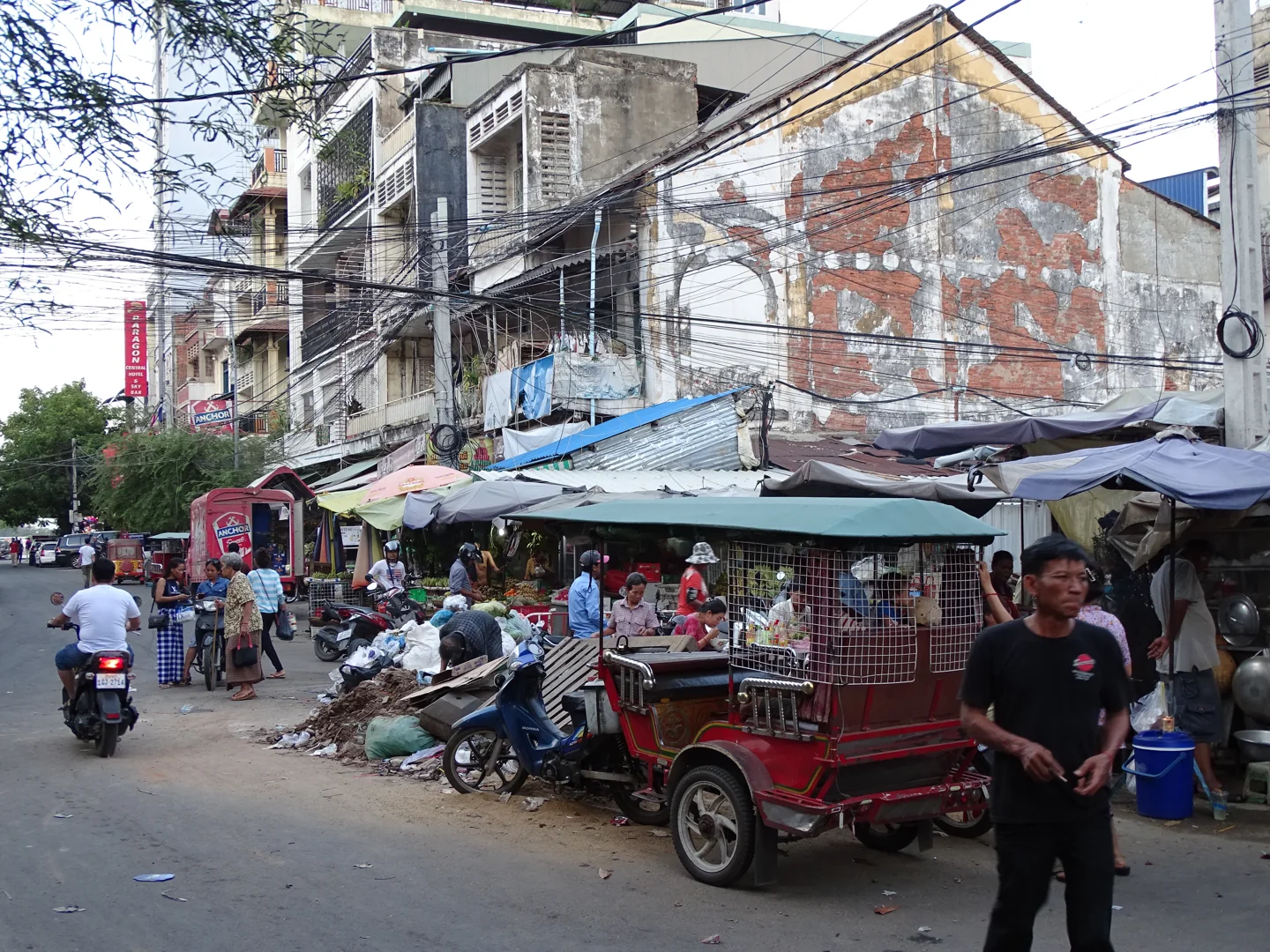
Choose the places you need to reach before choosing an apartment. Phnom Penh gives you a capital-city routine, with government offices, banks, universities and hospitals spread across different districts. Siem Reap is a different proposition: make sure your job, schooling and medical arrangements work there rather than treating a holiday near Angkor as a complete relocation plan.
| Base to investigate | Useful starting areas | The decision to make |
|---|---|---|
| Phnom Penh | Boeng Keng Kang 1, Tuol Tumpung, Toul Kork; compare Chroy Changvar separately | Which address gives you a workable journey to your actual office or school, including any bridge crossing? |
| Siem Reap | Compare a river/Wat Bo area address with homes farther from the central visitor streets | Can the household reach its school, workplace and medical provider without relying on the tourist centre? |
| Battambang or another provincial base | Start with the specific employer, campus or family address | Which services must be arranged elsewhere, and who provides the necessary transport? |
- Mark the work address, candidate school and hospital on the same map. In Phnom Penh, compare those locations with the City Bus routes rather than assuming every neighbourhood has a useful service.
- Book temporary accommodation in one candidate area. Obtain a map pin, contact number and written airport-collection arrangement.
- Visit homes at the times you would leave for work and return. Inspect access, stairs or lifts, street noise, ventilation and the water/electricity arrangements.
- Compare rent plus the actual commute and building charges. Choose the address only after these tests.
If your move includes overland travel from Thailand or a border-area assignment, use the current border advice when planning the route. At the October 2026 review, Thai land crossings remained suspended and FCDO advised against all but essential travel within 20 km of that border. Arrange an available route before paying for a connection that depends on a closed crossing.
02Apply for the right entry class and plan the extension
Two different uses of “E” cause confusion. An e-Visa describes electronic issuance; E class describes the ordinary/business entry category. Applying online does not turn a tourist visa into an employment or retirement arrangement. Decide the purpose first, then the way to obtain the appropriate entry document.
- For a move involving employment, business, study or retirement, discuss the E-class entry and applicable extension with the General Department of Immigration or the consulate handling your application. Establish a category for each household member.
- Use the official e-Visa service if your nationality and journey qualify. Its published T and E fees are USD 30 and USD 35 respectively; both are single-entry, usable for entry within three months, with a one-month initial stay and a three-business-day processing target.
- Match the booking to an accepted checkpoint. The service lists Techo International Airport (KTI), Siem Reap Angkor (SAI), Sihanoukville (KOS), Bavet and Tropaeng Kreal. Its closure notices include Poipet and Cham Yeam; confirm the actual route before applying.
- Retain the approval and payment record. At arrival, check the class and authorised last day on the entry record, then diary the extension application.
For a consular example, the Canberra embassy’s E-class procedure asks for a signed form, recent 4 × 6 photograph, passport with six months remaining and two blank pages, supporting work/purpose documents, local contact/address and the specified invitation or guarantee validation. Its postal arrangements serve Australia/New Zealand; your receiving consulate may use another procedure.
The Austrian honorary consulate’s extension guidance distinguishes EB for work/business, ER for non-working retirees and ES for study after ordinary entry. Tourist entry is a short-visit category, not a substitute for that sequence. Obtain the current category checklist and official extension charge from immigration, including work and household evidence. Visa permission alone does not authorise employment.
03Have the employer complete the work-permit process
Put the immigration and labour questions into the offer discussion. The employer should identify who applies, which supporting company documents it supplies and when you may begin. Ask for a contract showing the role, salary, location and responsibilities for visa extension, work-permit charges, insurance and dependants.
- Have the employer resolve its foreign-worker quota through MLVT’s employer registration service. A company’s quota and your own work documents are separate parts of the process.
- Prepare the passport, valid visa, employment evidence and qualifications for the applicable file. Have HR obtain the current personal checklist, including the required photographs or health evidence, from the Foreign Workers Centralized Management System.
- Retain the application and payment evidence, then copies of the issued work permit and employment card. Confirm the authorised start and current validity instead of treating an entry stamp as approval.
- After payroll starts, obtain payslips and evidence of the relevant NSSF registration and contributions. Agree who tracks annual work-document renewal.
The February 2026 KPMG compliance note summarises MLVT Notification 038/25: new arrivals for work or business must apply within 90 days of entry. The 31 March 2026 deadline it gives for existing workers’ annual renewal had already passed at this guide’s review. An application deadline is not permission to work for ninety days without the required approval; arrange the file before the job starts.
Optional: start a business. Use the government’s online-registration guide to choose the entity and assemble identity, premises and ownership documents, plus statutes or parent-company authorisation where applicable. The Single Portal application coordinates commercial, tax and labour registration; activity-specific licences remain separate. Follow its current payment instruction rather than the older manual’s introductory discount prices.
For remote work, document the foreign employment or client relationship and ask immigration, MLVT and GDT how the actual activity is classified. No dedicated digital-nomad route was verified here. A foreign payer or a newly incorporated company does not by itself resolve your personal stay and work permission.
04Separate the move’s initial cash needs from monthly spending
Keep KHR and USD figures separate until you use an actual bank or payment-provider conversion. A dollar-priced rent, a riel bus fare and a refundable bank deposit are different budget lines. Use quotations from your chosen city and suppliers; there is no useful single national monthly cost that covers every household.
| Initial cash requirement | Recurring expense | How to establish the amount |
|---|---|---|
| Travel, temporary home and airport transfer | Commuting and visits elsewhere | Booking and transfer quotation, including baggage |
| Entry and work/stay applications | Extensions, annual work renewal and replacements | Actual category, official fees and separately stated service charges |
| Advance rent, deposit and furnishings | Rent, building services, power and water | Lease draft, inventory, unit rate and sample bill |
| School application and enrolment | Tuition, capital fees, transport and materials | Current school-year schedule and placement invoice |
| Medical preparation, insurance and shipping | Coverage, medicines, treatment and everyday shopping | Household-specific policy and clearance quotation |
Verified service examples, reviewed 13 October 2026: the ordinary electronic E entry fee is USD 35; Smart’s Data 6 plan is USD 6 for 30 days; a regular Phnom Penh City Bus journey is 1,500 KHR. Forty such journeys total 60,000 KHR. Keep the USD 6 alongside that figure until applying your actual conversion; this is a two-service calculation, not a living-cost estimate.
Hypothetical housing cash: a USD 500 monthly lease requiring the first month and a separate USD 500 refundable deposit would need USD 1,000 at signing. Those are arithmetic assumptions, not surveyed Cambodia rent or a legal deposit standard. Add the actual connection, furnishing and temporary-accommodation costs.
For tax planning, the OECD’s 2026 review describes resident taxation of Cambodian and foreign income and non-resident taxation of Cambodian-source income. It identifies more than 182 days in a twelve-month period ending in the current tax year as a residence test. Have the General Department of Taxation or a qualified adviser assess your home, travel dates, work and income sources, including treaty provisions.
Ask payroll to show salary-tax deductions and clarify any employer-paid benefits. For a business, establish the taxpayer registration, patent-tax and filing obligations for the actual entity. Keep foreign tax-payment evidence and transfer records. An extension sticker or bank’s residence-proof rule is not a tax-residence ruling, and foreign income is not automatically exempt.
05Apply for the school or course before choosing the final home
For children, begin with curriculum, language and support needs. The International School of Phnom Penh admissions process provides a concrete starting point for an IB-school application. Submit an enquiry, then the pre-application and USD 50 deposit; when space is confirmed, the remaining application charge is USD 200. The total USD 250 application fee is non-refundable and non-transferable.
- Prepare parent/guardian and child passport pages, recent photographs and any learning-support reports for the pre-application.
- For the full file, provide the requested two years of school reports in English, previous-school recommendation and immunisation records/form. Grades 2–5 also require an independent writing sample.
- Resolve the grade’s English requirement, age placement and whether the school can meet the child’s needs. The process also considers nationality limits and available places; an enquiry is not acceptance.
- Obtain the placement decision and start conditions in writing before paying for a home chosen around that school.
Read the 2026–27 fee schedule linked by ISPP and request a complete invoice. Separate tuition from entrance and capital charges, instalment finance costs, meals, transport and required equipment. The school’s refund rules distinguish tuition for full terms of non-attendance from other non-refundable charges. Confirm any employer payment arrangement directly with the school.
For higher education, start with RUPP’s programme directory and the selected department. If moving for an exchange, its International Relations Office describes requirements including completed study at the home university, academic performance, English proficiency and the home institution’s arrangements. Students outside a partner agreement should contact [email protected] about the applicable route. A partner tuition waiver is not a general exemption for all foreign students.
Obtain the actual admission, enrolment, tuition and campus details for your programme, then coordinate the study-extension evidence with immigration. Keep the institution’s acceptance and payment records in the personal file. A short language class does not automatically qualify as the longer-stay category for an admitted student.
06Establish the retirement extension and a long-term care plan
For a non-working retirement move, investigate ER as an extension of ordinary entry. The consulate’s retirement guidance describes pensioner status and regular pension evidence. It does not provide a reliable universal published minimum age or income threshold; obtain the requirements immigration will apply to your passport and circumstances. Do not rely on reports that reaching a particular birthday removes the need for evidence.
- Obtain the pension provider’s retirement and payment confirmation, recent financial evidence and passport documents. Ask immigration how those documents must be presented for the intended extension.
- Establish the pension transfer route and whether the provider requires proof of life, overseas-address notification or periodic certification. Keep the paying country’s obligations in your calendar.
- Confirm the duration, re-entry conditions and official extension cost before booking a trip outside Cambodia. Retain the application receipt and resulting permission.
- Select the home around continuing medical care, transport and support, then obtain the insurance terms for the actual age and conditions.
Ask a bank to assess the address and visa evidence for an account, rather than assuming pension receipt itself satisfies the bank’s customer checks. Resolve foreign pension taxation with GDT and an adviser in the paying country, using your residence dates and any applicable agreement.
Visit the intended medical provider or discuss treatment needs before a long lease. For a complex condition, ask how prescriptions, regular tests, urgent admission and possible overseas referral are handled. Compare that practical plan between Phnom Penh, Siem Reap and a smaller town. If you intend to take employment or operate a business later, resolve the work and stay category before beginning; ER is presented for non-working retirement.
07Prepare documents and get a shipment or pet plan in writing
Create a separate file for every traveller. Keep passport and visa evidence, relationship records, work or retirement documents, school reports, prescriptions and financial records together. Ask the actual receiving institution which records need translation or authentication; requirements for a school, labour file and consular application are not necessarily identical.
- Check that passport details match every application. Scan the originals, name the files clearly and keep another copy accessible away from the luggage.
- Obtain the civil or criminal records actually requested for the selected route, respecting the receiving office’s issue-date requirements.
- For a shipment, prepare a numbered inventory with quantities and values and obtain a quotation covering freight, destination handling, clearance and delivery.
- Have the agent obtain the applicable assessment using Customs and Excise’s procedures manual. It permits reasonable quantities of personal belongings needed for travel, with declaration of excess goods. That passenger allowance is not automatic relief for an unaccompanied household shipment; obtain the applicable clearance assessment before dispatch.
Optional: bring a pet. The National Trade Repository’s animal-sanitation entry identifies MAFF permission and exporting-country sanitary and animal-identification documents. It is a general legal framework, not a complete current dog/cat checklist for every origin.
Contact the General Directorate of Animal Health and Production with the species, age, origin, identification, vaccination history and proposed entry point. Request the specific permit/application procedure, accepted veterinary certificate, vaccination/testing conditions, certificate validity and any quarantine or inspection arrangements. The public material reviewed did not verify an origin-specific rabies-titre threshold, vaccination interval or pet-import fee, so none is invented here.
Take the written conditions to the origin’s official veterinary service, schedule the required preparation and obtain the accepted certificate. Confirm airline carrier dimensions, cabin/cargo approval and every transit country’s conditions before buying the animal’s ticket. Ask the landlord to agree to the pet in the lease. Keep veterinary documents with you at entry rather than in the freight shipment.
08Complete e-Arrival and reach the booked accommodation
For arrival by air, complete the official Cambodia e-Arrival within seven days before travel. FCDO entry guidance identifies it as free and separate from the visa. Save the confirmation together with the actual visa approval. For land or sea travel, obtain the procedure for that checkpoint rather than assuming the air-arrival form replaces all border documents.
- Check the airport code and transfer booking. Phnom Penh’s international entry airport is now Techo (KTI); give the accommodation your actual arrival airport, flight and contact details.
- Carry the passport, approval, purpose evidence, accommodation address and funds available before a local account opens.
- At immigration, verify the visa class and authorised last day. Retain the entry record and any departure document issued.
- Reach the booked accommodation, obtain the full address and confirm that the host has your details for FPCS registration.
- Activate a local phone number, test access to money and arrange the first immigration or employer appointments against the stay deadline.
For a British citizen passport, the same entry guidance requires six months of validity at arrival and six months from the start of an in-country extension. Other travellers should use the applicable consular instructions for their passport and category. Renew before departure if the planned extension cannot fit the document’s remaining validity.
Keep a small reserve for transfers, food and urgent expenses in the currencies you can actually use, and request receipts for large payments. Do not dispatch originals to an intermediary without a written receipt and a clear return date. Your first priority is to establish the address, phone and permission dates needed for the next applications.
09Register the address and organise the stay and employment records
FPCS is accommodation registration, not a visa or a work permit. The official GDI application manages a foreign visitor’s stay information. In a hotel, guesthouse or rented home, ask the operator or landlord to enter your details and give you confirmation. Do this again when moving to the final rental.
- Give the host the passport and arrival/stay information needed for the entry, confirming the correct dates and address.
- If staying with family/friends or in your own home, follow the self-registration route described in official entry guidance. Use a Cambodian phone number and retain the record; registration may be needed when seeking an extension.
- Prepare the extension file for the actual EB, ER or ES purpose and submit before the existing permission ends. Obtain the current requirements from GDI, separating official fees from any agent’s service charge.
- Retain the resulting permission and confirm the expiry and re-entry conditions. Update the employer, bank and other services that require current documents.
For employment, ask HR for your NSSF member record. The published NSSF registration formalities require employers to register new workers within three days of starting, except workers already holding a member card. The foreign-worker file uses a passport, employer-issued employment certificate and member factsheet, Form 1.02. Ensure the name and employer match the labour and payroll file, and obtain the registration evidence rather than relying on a verbal statement that deductions cover it.
If operating a business, retain the commercial certificate, GDT taxpayer and patent records, relevant licence and labour registration together. Keep the authorised activity and names consistent. A business tax number serves the registered business; do not describe it as a universal foreign-resident identity card. Decide who monitors visa extension, work renewal, tax filings and contribution records, with a named contact for each.
10Open a suitable account and test KHQR payments
Bring the account-opening file to a branch before committing to a payment that needs a local account. ABA’s current-account requirements specify foreign customers aged at least eighteen, an original passport with valid visa and accepted residence evidence. The listed alternatives include a sufficiently long residence/lease or employment document, qualifying longer presence with a multiple-entry visa, or business evidence for independent activity.
- Ask the branch to assess the documents you actually hold: passport, visa, signed lease or employment records. Resolve the accepted six-month document requirement before assuming a short hotel booking is enough.
- Choose the account and currency. ABA’s current-account table lists an opening balance of USD 100 or KHR 400,000. This is a named product’s deposit, not a fee or a requirement at every Cambodian bank.
- Obtain the written tariff for the ongoing minimum, card, withdrawals and transfers. The page’s current table and lower FAQ differ on the ongoing minimum; have the branch confirm which applies.
- Set up access and test a small transfer, purchase and cash withdrawal. Retain the reference for an incoming salary or pension transfer.
The National Bank’s Bakong and KHQR information explains local payments using QR identifiers and participating services. Ask the bank to activate the supported facility for your account. When scanning a merchant code, verify the recipient, currency and amount before approving; check the completed transaction with the merchant and keep the record.
Agree with the landlord how rent will be paid and receipted, including the currency and any conversion method. Maintain an alternative way to access money until the new account and international transfer route both work. Being able to scan a local code is useful, but it does not remove the need to understand account and cross-border charges.
11Inspect the unit, document the charges and sign the lease
Compare the home you will occupy, not just the building’s brochure. Ask for the full house/street, sangkat and khan address where applicable and a map pin. A rental’s location description should match the address the landlord registers in FPCS and the evidence you later present to the bank.
- Verify the owner or agent’s authority to rent the unit. View it in person and obtain the agreement before transferring a deposit.
- Inspect taps, water pressure, air conditioners, ventilation, locks and stairs/lifts. Test phone reception and ask how the building handles interruptions to water, electricity and internet.
- Record rent currency, payment day, deposit, advance period, repair responsibilities, included services and any separate management, parking or cleaning charge.
- Agree electricity and water billing explicitly: meter readings, unit rates, bill copies and any landlord-administered charge. Ask whether the unit has a direct supplier meter or a building sub-meter.
- Sign the agreement with clear notice, renewal, early-exit and deposit-return terms. Obtain a dated inventory and photographs, opening meter readings, keys and separate receipts for rent and deposit.
Ask the landlord to confirm FPCS registration and supply the accepted address evidence. Use the PPWSA domestic tariff for comparison only when it applies to the actual direct-meter account; it does not establish what every apartment’s all-inclusive water charge must be.
Have someone qualified translate any Khmer contract you cannot read before signing. Resolve a guarantor request, advance payment or promised repair in the agreement rather than assuming there is one universal rental practice. For a furnished unit, list the appliances and their condition. Keep the handover evidence available for the final inspection and deposit return.
Finally, repeat the work or school journey from this exact address. If the added transport cost changes the budget substantially, reconsider before accepting a longer commitment. The final home should support the household routine already planned, including any pet agreement and medical access.
12Confirm healthcare access and choose coverage for the household
Separate employment-based NSSF coverage from a private medical policy and from the right to visit a clinic. Ask HR or NSSF how your actual registration, contribution history and household status affect access to the health-care scheme. Obtain the member evidence and applicable provider instructions; do not assume payroll registration automatically covers every relative or every private hospital.
- Bring a concise medical summary, prescriptions with active-ingredient names and vaccination records. Discuss ongoing treatment and medicine availability with the chosen provider before the move.
- Ask the provider about appointments, consultation charges, deposits and direct billing with the actual insurer. Obtain written confirmation for planned expensive treatment.
- Read policy limits for pre-existing conditions, residence duration, the country and activities. Check how referrals, emergency admission and possible overseas evacuation are authorised.
- Save the clinic, emergency and insurance-assistance contacts on each adult’s phone and keep a paper copy at home.
For a Phnom Penh starting point, Royal Phnom Penh Hospital lists its address at No. 888 Russian Federation Boulevard, Toeuk Thla, Sen Sok, with a 24-hour emergency number +855 23 991 222. In Siem Reap, Royal Angkor International Hospital lists National Route 6, Kasekam, Sra Ngea, and emergency contact +855 63 761 888. These are providers to contact for your needs, not guarantees of admission, insurance acceptance or every specialty.
Current official health guidance gives 119 for an ambulance and advises arranging cover for local treatment and unexpected medical evacuation. Establish what the insurer wants you to do if a provider recommends transfer abroad. In a provincial home, test the transport route to the intended hospital and identify who can assist before an urgent appointment is needed.
13Set up connections and practise the regular journeys
Choose the phone plan from a tested signal at the property and workplace. Smart’s current Data 6 listing, reviewed 13 October 2026, offers 60 GB, 150 on-net minutes and 150 on-net SMS for USD 6 with 30-day validity. The operator gives no effective date on the listing. Obtain the SIM registration instructions using your passport and ask about renewal and extra-use charges. A mobile allowance is not a verified fixed-home connection.
- Ask the fixed-internet provider whether it serves the exact unit, what installation and equipment cost, and when service can begin. For remote work, test calls and uploads during your actual working hours.
- Record supplier names and account/meter identifiers. The Energy Ministry’s resource page identifies EDC and the electricity regulator; use the supplier’s applicable tariff and connection instruction rather than a general online unit-price estimate.
- For direct PPWSA domestic supply, read the consumption category on the bill. Its published 2020-to-present tariff begins at 400 KHR per cubic metre in the 0–7 m³ band and rises through higher bands. Apartment resale charges and other bill items need separate explanation.
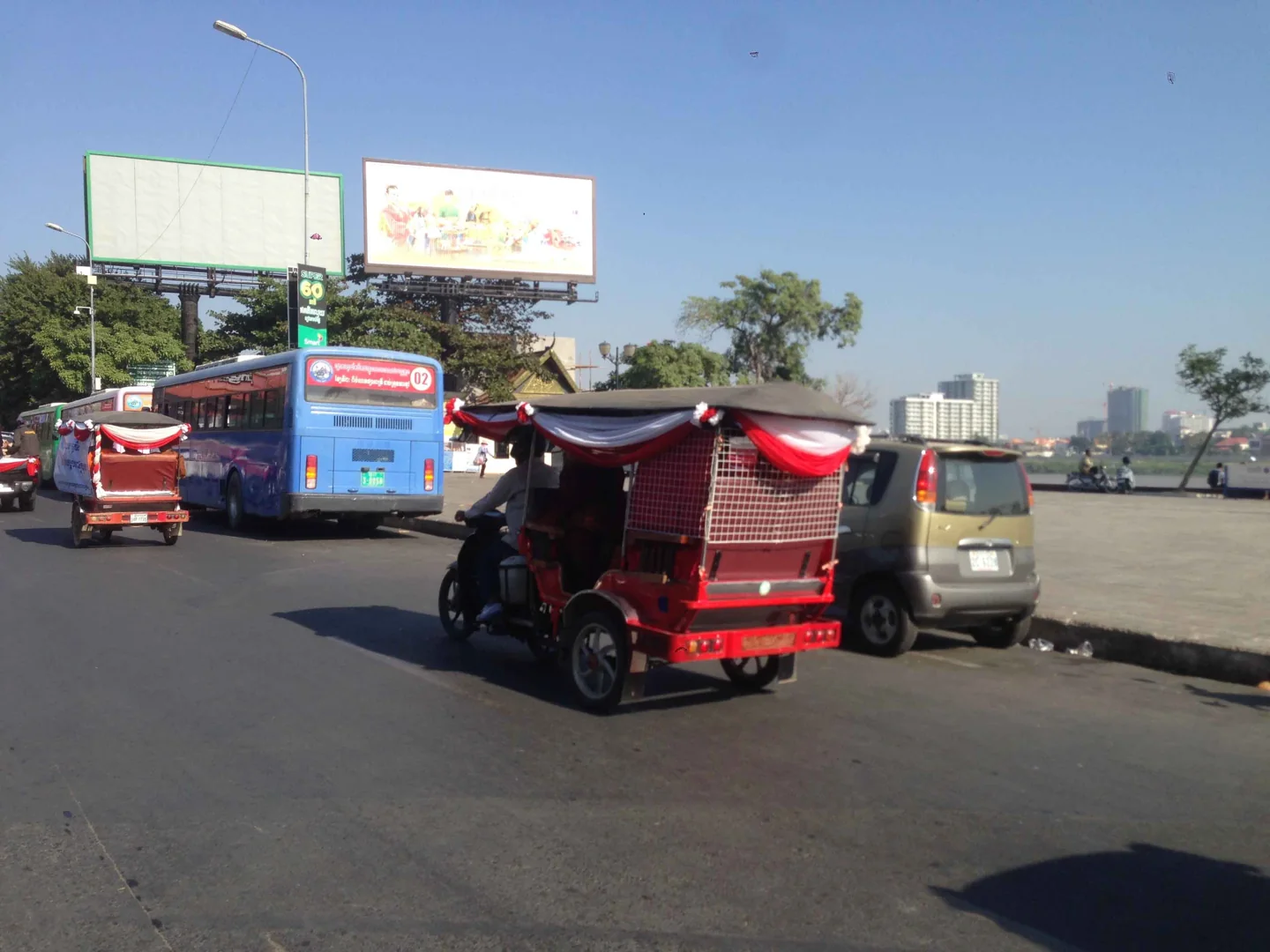
- In Phnom Penh, use the current route maps to locate the actual stop and direction. The authority publishes service from 05:30 to 20:30 and a regular 1,500-KHR trip fare; identification-based concessions have their own conditions.
Test a tuk-tuk or other booked journey to the workplace and save the destination in a recognisable form. Compare that real cost with the bus journey before choosing a routine. Do not use a historical bus photograph to infer the current route or vehicle.
Optional: drive. MPWT’s foreign-licence procedure lists passport, valid visa, competent-authority residence certificate, photographs, medical certificate and the valid original licence for exchange, with the specified translation where needed. It lists 120,000 KHR for exchange, a different service from a driving test. Use the official application service or named service centre and confirm the vehicle category, insurance and accepted licence before driving.
14Build a local routine and finish the first-month file
Learn Khmer for the tasks you repeat: giving the address, arranging a journey, shopping, making an appointment and discussing a household problem. RUPP’s Khmer for Foreigners Center provides a concrete language starting point through its Institute of Foreign Languages. Ask the coordinator for the current level, timetable and invoice; choose a course that fits work rather than relying only on visitor phrases.
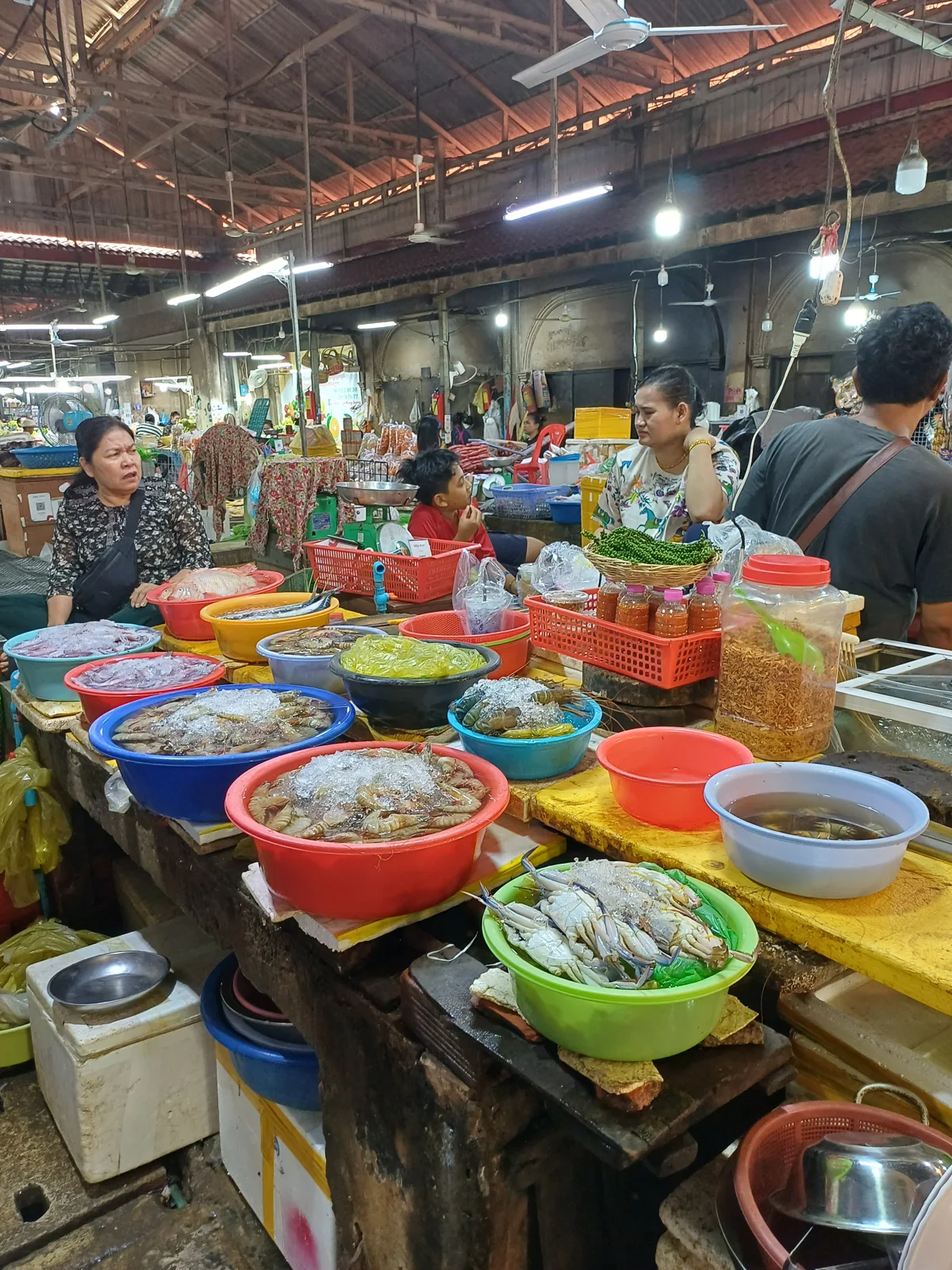
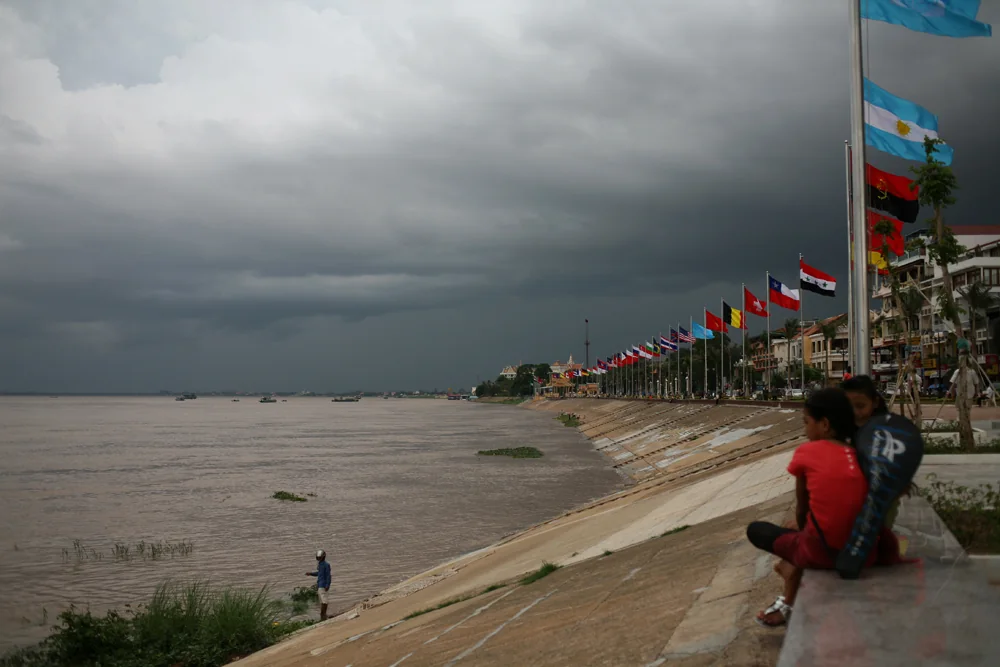
In Siem Reap, build a shopping routine around the market or shops convenient to the home. In Phnom Penh, compare the everyday streets near the apartment with a riverfront visit on Sisowath Quay. Record actual prices and travel times for the budget. A pleasant outing can help you understand the city, while colleagues, school activities and a regular class give more sustained opportunities to meet people.
- Stay: file entry and extension records, passport scans, receipts and re-entry conditions. Diary the next immigration and work-document deadlines.
- Address: obtain FPCS confirmation for the final home and update it after moving. Keep the lease, inventory, meter readings and deposit receipt together.
- Work and money: retain the issued work documents, payroll/NSSF evidence and applicable business/tax records. Test salary or pension receipt, rent payment and recurring bill references.
- Family: confirm school start and collection arrangements, healthcare contacts, prescriptions and the insurer’s emergency instructions.
- Connections: test the working-day internet load and routine transport. Keep an alternative for an appointment when the usual connection is unavailable.
At the end of the month, compare actual spending with the quotations and clarify unexplained charges with the supplier or landlord. If the employer, home, activity or family circumstances change, identify the records and permissions affected before simply continuing under the previous arrangement. The useful outcome is a household routine supported by current documents, reachable contacts and payment methods you have already tested.
Sources & further reading
Reviewed 13 October 2026. Sources are linked beside the relevant instructions. Electronic visa issuance, visa class, extensions of stay, accommodation registration, work permission and tax status are separate decisions. Consular requirements depend on nationality and the office handling the application. Reviewed13October2026. Official entry fees, named bank opening deposit, school application charge, Smart plan and PhnomPenh bus fare retain their service scope; no effective date is invented where the publisher gives none. PPWSA explicitly labels its domestic tariff2020-to-present. Hypothetical rent calculations are not surveyed market prices. Photograph credits, licences and capture years appear with the images.
Browse the source directory
- Cambodian Foreign Ministry: official e-Visa service
- Royal Embassy in Canberra: E-class visa
- Honorary Consulate in Austria: ordinary-visa extensions
- General Department of Immigration
- Cambodia e-Arrival
- GDI: Foreigners Presence in Cambodia System
- GDI: official FPCS application
- FCDO: British traveller entry and registration guidance
- FCDO: Cambodia border-area advice
- MLVT: foreign-worker application service
- MLVT: employer and quota registration
- KPMG: 2026 work-permit notification summary
- Economy and Finance Ministry: online business registration
- Government: online business registration application
- General Department of Taxation
- OECD: Cambodia2026 tax-system review
- International School of Phnom Penh: admissions
- ISPP: current2026–27 school-fee schedule
- RUPP: International Relations Office
- Royal University of Phnom Penh: programmes
- RUPP: Khmer for Foreigners Center
- National Trade Repository: animal-sanitation requirements
- MAFF: General Directorate of Animal Health and Production
- GDCE: current customs procedures manual
- ABA: current-account conditions for foreign customers
- National Bank of Cambodia: Bakong and KHQR
- NSSF: health-insurance scheme
- NSSF: Prakas168/22 registration formalities
- Royal Phnom Penh Hospital: contact and emergencies
- Royal Angkor International Hospital: contact
- FCDO: healthcare in Cambodia
- Smart Axiata: Smart Laor plans
- Phnom Penh Water Supply Authority: domestic tariff and meters
- Ministry of Mines and Energy: energy sector
- Phnom Penh City Bus Authority: current daily service
- MPWT: foreign driving-licence exchange
- MPWT: driving-licence application service
Make your next step a practical one
Resolve the intended work or retirement category and entry route, then prepare the documents and first-month appointments against the actual permission dates.




