 Visa
Visa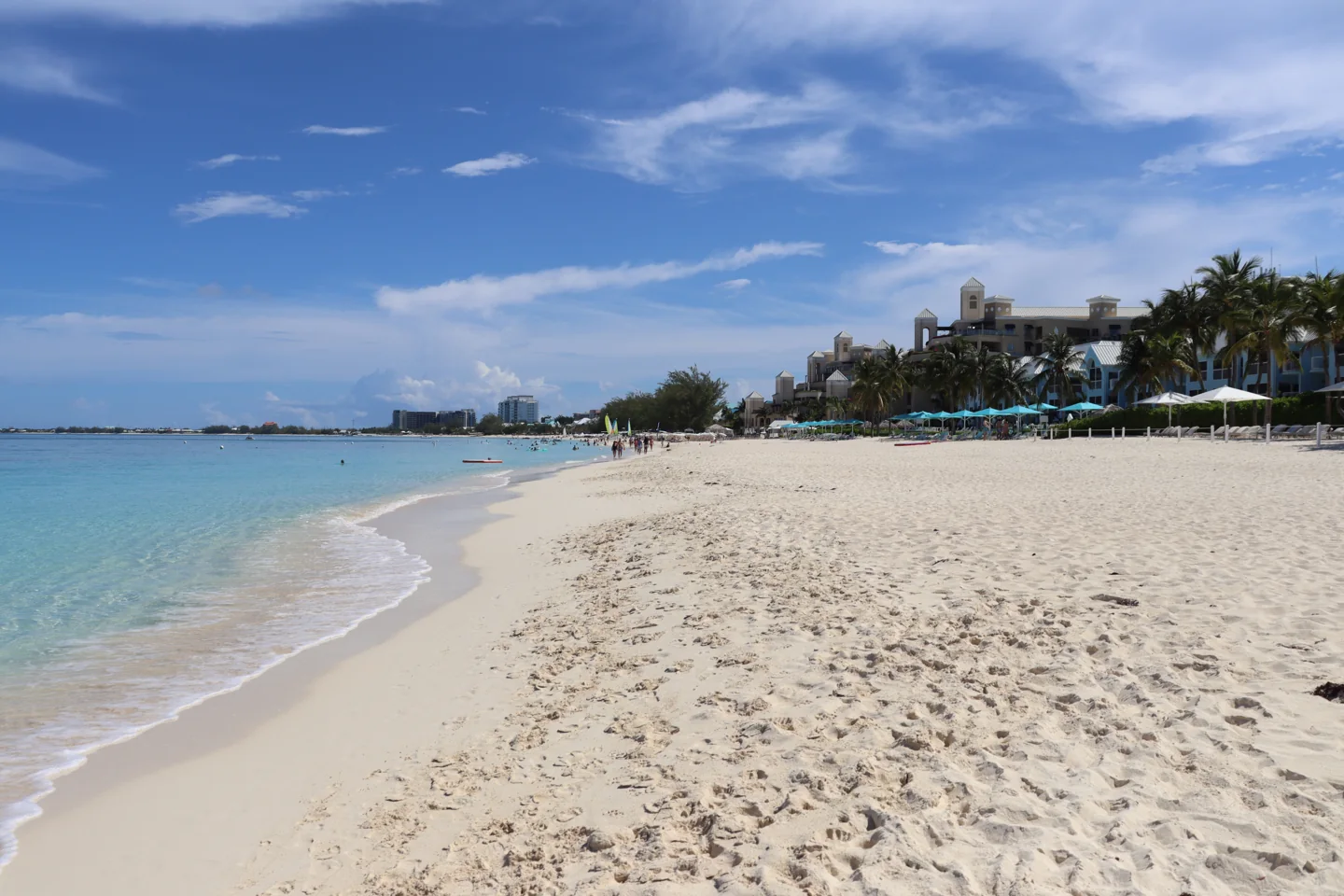
Moving & Living - Cayman Islands - Complete Guide
Move to the Cayman Islands in fourteen practical steps: choose an island, arrange work and dependant permissions, compare schools, plan housing and insurance, and set up banking, utilities and transport.
Photo credit
Life in the Cayman Islands can mean a George Town office and a West Bay commute, a home near Camana Bay’s shops and school, or a smaller-island routine on Cayman Brac. The decisive preparations are usually an approved purpose of residence, a realistic housing and insurance budget, and a school place where children are involved. This guide takes you through those decisions and the paperwork that turns an arrival into a functioning household.
Cayman Islands at a glance
- Islands
- Grand Cayman, Cayman Brac and Little Cayman
- Main working centre
- George Town; choose the exact commute before a neighbourhood
- Money
- Cayman Islands dollar · KYD, usually written CI$
- Immigration services
- WORC for work and residence; CBC for entry and visas
- Healthcare
- Locally approved health insurance, at least SHIC
- Reviewed
- 13 October 2026
Follow your moving journey
Start at step 1, or jump to the task you are working on.
01Choose the island and test your daily journeys
Choose the island first, then the district. Grand Cayman contains George Town, the main working centre, and the Seven Mile Beach corridor. Cayman Brac and Little Cayman are separate islands: an attractive home there does not give you a road commute to a Grand Cayman job. The smaller islands also change how you arrange shopping, specialist appointments and baggage.
- Put the actual workplace, possible school and likely medical provider on a map. Ask the employer which office you will attend; a company’s registered address may differ from your everyday workplace.
- Compare George Town and South Sound for a city-based routine; West Bay and the Seven Mile Beach corridor for a west-side base; and Prospect, Savannah or Bodden Town if you are considering the eastern residential corridor. These are starting points for inspection, not a ranking of rents or safety.
- Visit the shortlisted area during the hours you would travel. Time the complete journey, including parking or the walk from a bus stop. For a family, repeat the school run rather than relying on the distance to the office.
- If you are considering Camana Bay, use its live-and-work directory to locate residences, offices, shops and the international school. Ask for current availability and the full annual rental cost.
For Cayman Brac or Little Cayman, confirm that the job or residence permission supports your intended base and that the services you need are actually on that island. Cayman Airways’ domestic baggage rules distinguish propeller aircraft from jet flights; plan a small-island move around the aircraft you will use.

02Select a residence route for every household member
A visitor visa, permission to enter and permission to work answer different questions. Customs & Border Control, usually called CBC, handles entry and visas; Workforce Opportunities & Residency Cayman, or WORC, handles the work and residence applications described here.
| Your purpose | Practical starting point | Important distinction |
|---|---|---|
| A sponsored job | Employer-led W2 work-permit application; T1 where a temporary permit is appropriate | An offer or submitted application does not authorise work. |
| Joining a worker | Named dependant application or amendment | Residence as a dependant does not automatically authorise employment. |
| Full-time study | Institutional acceptance and CBC student-visa assessment | Existing qualifying residence status may change the visa requirement. |
| Living on independent resources | R41 or R42 assessment | Investment, resources and work rights differ between certificates. |
- Use the current WORC forms directory to identify the relevant form and its checklist. Record who sponsors the application, who signs it and which family members must be named.
- For new dependant applications under the relevant work-permit provisions, the 2026 financial-standing rules require at least CI$5,000 gross monthly income for one dependant, plus CI$1,000 for each additional dependant. A worker bringing a spouse and child should assess the CI$6,000 threshold before accepting a package.
- Use CBC’s nationality-specific visa information for each traveller. A British, US or other third-country visa is not a universal Cayman entry exemption.
- Keep approval letters and read their actual names, dates, occupation and conditions before booking the final move.
Apply through the responsible service rather than treating an agency quotation as a government decision. The My WORC portal provides the jobs and immigration payment/submission functions.
03Agree the job, permit sponsorship and employment package
For an ordinary sponsored job, establish who will prepare the application and when you may start. Ask for the occupation to be used on the permit, the contract’s basic wage, working hours, probation, insurance contribution, pension treatment, and any housing or school allowance. A headline salary is insufficient for comparing two offers.
- Ask the employer to explain its recruitment and advertising compliance. The published WORC policy requires qualifying annual-permit positions to be advertised for 21 consecutive days on the WORC portal and in a local newspaper, with specified exemptions. The extended transitional period ended on 30 June 2026.
- Keep the timing current: a 1 October 2026 government announcement proposes removing the employer’s newspaper requirement. It is a proposal subject to approvals; this review did not verify an implementing notice. Have the employer obtain WORC’s current filing instructions rather than assume the proposal is already law.
- Complete the August 2026 W2 checklist with the sponsor: employee and employer signatures, the employer’s cover letter and licence evidence, passport page, photograph, certified qualifications and a signed/sealed police clearance under six months old. Obtain the medical declaration and the industry-specific approvals applicable to the occupation. For a dependant child, include the requested relationship evidence and local school acceptance/attendance letter. Use WORC’s tracking instructions to follow the decision.
- Discuss the first two years before moving. Under the new rules, covered workers generally cannot change employers during that period; domestic-helper-to-domestic-helper changes have a specific exception. The 2026 regulations provide a departure-exemption procedure when covered employment ends early, including specified complaint circumstances and redundancy. The application deadline can be three working days after employment ends; a new offer alone is not an exemption.
The current W2 checklist separates the annual occupation-based charge from filing fees of CI$150–500, depending on the annual-fee band, and a CI$250 repatriation charge where applicable. Ask the sponsor for the itemised total; a filing fee is not the whole permit cost. Ask WORC to confirm the age limit for the employee’s medical declaration: the current W2 checklist contains conflicting age wording.
Remote work or a business: the former Global Citizen programme is not a verified current application route. Its published regulations contain the historical application cutoff and expiry. Do not use a visitor arrival as a substitute for an appropriate work or residence arrangement. For a business, approach DCI’s Trade and Business Licence service about the correct entity and Local Companies Control requirements. Incorporation and a business licence still leave your own immigration permission to resolve.
04Build a cash-flow budget and resolve cross-border tax
Write CI$ or KYD beside every Cayman-dollar amount and US$ beside US-dollar quotations. Airlines, overseas suppliers, leases and schools may present different currencies. Use the conversion actually offered by the bank or payment service, including charges, rather than assume a cash till and an international transfer produce the same result.
| Verified published item | Amount and scope | Source and date |
|---|---|---|
| National minimum basic wage | CI$8.75 per hour before deductions | DLP, effective 1 January 2026 |
| CIS kindergarten tuition | CI$22,000 annually; additional fees and household costs separate | School schedule, 2026/27 |
| CIS application | CI$350 per child, non-refundable | Admissions instructions, reviewed 13 October 2026 |
| Digicel prepaid offer | CI$72 for 30 days; 20GB general-use plus 25GB entertainment data | Provider display, observed 13 October 2026 |
| Dog or cat import fee | CI$50 per animal; preparation and carriage additional | Department of Agriculture, reviewed 13 October 2026 |
DLP also publishes wage exemptions and special calculations for approved gratuity schemes and live-in household domestics; compare the actual contract’s pay components.
Hypothetical recurring budget, not a rent survey: one adult allowing CI$2,200 rent, CI$250 electricity, CI$40 water, CI$100 internet, CI$72 mobile, CI$650 groceries, CI$250 transport and CI$200 personal insurance contributions would allocate CI$3,762. Only the displayed mobile offer above is a verified price; the other inputs are assumptions to replace with quotations. This excludes pensions, school fees, vehicle purchase and overseas taxes.
Hypothetical initial costs: CI$2,200 first rent + CI$2,200 agreed deposit + CI$1,200 temporary accommodation + CI$350 flights + CI$600 shipping + CI$300 utility deposits = CI$6,850. This is an arithmetic example, not a customary deposit requirement. Add the actual immigration, school, pet and insurance costs applicable to you.
The government’s economy explanation describes Cayman’s absence of personal income tax. That does not settle obligations elsewhere: US citizens and resident aliens generally remain subject to US worldwide-income rules. Before departure, document your former home’s tax-residence position, pension arrangements and continuing income. For ordinary newly arriving non-Caymanian employees aged 18–65, DLP’s pension guidance describes eligibility after nine months of island employment, with category exceptions. Once pensionable, employer and employee contributions total at least 10% of pensionable earnings; the employer contributes at least 5% and may deduct 5% from the employee, subject to the earnings ceiling. Ask payroll for the applicable start date and plan.
05Secure the school place or university admission
School availability can decide whether the whole household moves together. Do this before selecting a home solely for its catchment. Government-school admission follows priority categories and available space; a private-sector work permit does not guarantee a place.
- Read the DES registration notice for the intended year group. At review, the 2026/27 late period runs to 30 November 2026. The notice revised 15 September lists all year groups at John Gray High School, Clifton Hunter High School and CIFEC as full for non-Caymanian applications, alongside several primary-school restrictions.
- Use DES’s registration portal through that page; individual government schools do not approve placements. Provide the requested family, address and immigration evidence, including a permit naming the child. Work-permit dependants have a lower priority than the preceding admission categories.
- For a private option, follow Cayman International School’s admissions process: enquire about the specific year group, submit the application and fee, arrange assessments, and have the current school send its confidential reference directly. Assemble the passport page, residence evidence, photograph, immunisation record and academic reports.
- After acceptance, read the annual contract before paying. CIS’s 2026/27 schedule requires a CI$1,000 deposit within ten days, credited toward tuition. Count it as an early payment, not a second annual tuition charge.
University: select a programme through UCCI admissions, then establish your student classification and immigration status. Its application portal tells international applicants to contact Admissions directly first. An acceptance letter can support the immigration file; visitor status does not allow registration for classes.
The CBC student-visa service explains applicable exemptions and the separate file for those who need a visa. Prepare the course acceptance letter with duration, attendance hours and fees, financial evidence, the required police certificate and medical declaration. A child under 18 already named as a qualifying dependant is different from an adult entering for full-time study.
06Assess independent-means residence before a retirement move
Retiring here requires an available residence basis. Having a pension or purchasing a holiday apartment does not itself establish a right to settle. R41, the Residency Certificate for Persons of Independent Means, and R42, the permanent-residence certificate category, have different financial tests and conditions.
| R41 intended base | Resources test | Investment test |
|---|---|---|
| Grand Cayman | CI$120,000 continuous annual income without local employment, or CI$400,000 in qualifying locally held assets | CI$1 million invested, including at least CI$500,000 in developed real estate on Grand Cayman |
| Cayman Brac or Little Cayman | CI$75,000 annual income without local employment, or the qualifying CI$400,000 asset deposit | At least CI$500,000 invested, including CI$250,000 in developed real estate on the relevant smaller island |
These are the alternative income/deposit tests plus the investment requirement in regulation 14. They are not an all-inclusive purchase package. Section 41 provides the R41 category without a right to work and with a 25-year certificate, renewable subject to the authority’s decision.
- Download R41 or R42 from WORC’s current directory and assemble the particular checklist. For R41’s May 2026 checklist, prepare certified identity and relationship evidence, bank references and financial statements, land-registry/transfer documents, accepted insurance and three written references from unrelated people who have known you for at least three years. Use the specified notarised English translations for foreign-language originals.
- Ask WORC how the current developed-real-estate and paid-up investment definitions apply to the proposed property and financing. Resolve that before treating a sale agreement as sufficient qualifying investment.
- Use the 2026 fees, which the updated R41 checklist also confirms: R41 application CI$500, issue CI$50,000, and annual-declaration filing CI$500. Dependants carry separate issue and recurring charges.
- For R42, regulation 14B specifies CI$2 million in developed real estate; the 2026 issue fee is CI$200,000. The current application distinguishes an initial ten-year certificate from indefinite renewal. The amendment to section 42 requires qualifying paid-up investment and allows an application for discretionary indefinite renewal within the final year. This is not an automatic indefinite first grant.
07Prepare the document file, shipment and pet timeline
Make one document list from the actual immigration checklist and a second from the services you will establish. Keep passports, approval letters, relationship documents, school records, insurance evidence and employment papers accessible during travel. Send legible copies to the responsible sponsor while retaining the originals the service requires. Agree translations and certification with the receiving institution before paying for them.
For belongings, prepare an itemised inventory with purchase/use history, values and the shipment reference. CBC’s household-effects guidance describes a bona fide residence change exceeding twelve months and conditions for qualifying household effects, including at least six months’ ownership and use abroad. It also contains wording distinguishing accompanied baggage from unaccompanied imports. Ask CBC or your clearing agent to establish the treatment of your actual cargo before dispatch; do not turn the baggage allowance into a guaranteed container exemption.
Bringing a dog or cat
- Give the veterinarian the 2026 import conditions. Identify the origin and transit countries and use the specified rabies-risk category.
- Arrange and document the microchip before the qualifying rabies vaccination. Where a titre test is required, the blood draw is at least 30 days after vaccination. The successful draw starts the relevant waiting period: at least two months for low-risk origin, three months for high-risk origin. No-risk territories have a distinct exemption from titre testing.
- Coordinate the final examination, tick/tapeworm treatment and health certificate within the stated fourteen-day window. Follow the export country’s accreditation or endorsement requirements.
- Submit the application and supporting records to DoA Veterinary Services, obtain the import permit, pay the applicable fee and confirm airline carriage separately.
Plan luggage for every flight segment. A small-island propeller connection has different weight and carry-on limits from an international jet, even when both flights use Cayman Airways.
08Enter under the approved purpose and establish your first address
Travel with the documents that explain your actual purpose: passport, applicable visa, work or residence approval, household approvals and the first accommodation address. Keep them in cabin baggage rather than in a shipment awaiting customs clearance.
- Present the appropriate approval to CBC and answer the officer’s questions consistently with it. A visitor scouting accommodation should retain the paid onward ticket and maintenance evidence applicable to a visit. A worker should travel on the approved working arrangement rather than begin duties on visitor permission.
- Read the permission recorded for you and each dependant. Resolve a name, passport-number or date discrepancy through the responsible office before allowing it to spread into school and banking files.
- If connecting to a smaller island, follow Cayman Airways’ connecting-flight instructions for collecting bags and completing border formalities at the first Cayman port. Keep the pet permit and shipment paperwork ready for the separate inspections.
- Set up a local contact number, record the temporary home’s physical address and give the employer a reliable means of reaching you. Ask where parcels or posted letters should be delivered; a physical address and a postal address serve different purposes.
- Arrange the first week around necessary appointments rather than sign a long lease immediately after landing. See the commute, property and utility arrangements in person.
Visitors can seek employment, but CBC’s entry guidance describes restrictions on granting permits while the applicant is visiting, particularly temporary permits. Obtain a decision on the actual situation; a job interview is not an entitlement to convert status on the spot.

09Organise immigration records and identify the applicable local registrations
Cayman does not require you to recreate another country’s tax-number or resident-card process. Start with the documents that already establish your permission, then identify which additional services apply.
- Save the approval letter, arrival record, submitted application and payment receipt together. Create reminders for the actual permit expiry and any declaration or payment dates on your certificate. Ask the sponsor when renewal preparation starts.
- Notify the responsible office when the passport, name, occupation or household changes. WORC’s amendment instructions explain application uploads and the appropriate supporting documents; a promotion or new dependant may require an amendment.
- Assess My eID using the July 2026 issuance announcement. It extends the rollout to permanent residents and qualifying dependants, following Caymanians and civil servants. The broader eligibility page names other groups, including work-permit holders, but eligibility in the legislation and currently available issuance are not identical.
- If your group is being issued cards, follow the official application/appointment instructions with a valid passport and any immigration evidence the system cannot retrieve. Until issued, keep using the identification accepted by the specific bank or service.
The IRS list of jurisdictions not issuing foreign TINs includes Cayman. Do not invent a personal Cayman income-tax-number application to fill a bank form. Supply your genuine tax-residence information and applicable overseas TINs, with the institution’s permitted explanation where a jurisdiction does not issue one.
Make a short household register: each person’s permission, expiry, sponsor, school or employer, and insurance policy. Keep it privately; it is a working file for your household rather than an identification document to circulate.
10Open a usable account and test salary and bill payments
Choose the account that matches your salary currency and bills. A Cayman-dollar account may simplify local rent and utilities; a US-dollar account can serve different receipts or international transfers. Compare fees and foreign-exchange terms for your own payment pattern rather than assume every bank product is interchangeable.
- Start with a local personal-banking service, such as Butterfield’s Cayman chequing page. Its February 2026 launch announcement confirms digital applications for resident personal customers. Starting online is not an instant approval promise.
- Prepare the bank’s documentary requirements: nationality/identity evidence, physical address evidence, applicable Cayman immigration document and source-of-income support. A rental agreement or employer letter can be relevant when you do not yet have a utility bill; use the bank’s accepted form of evidence.
- Complete the requested tax self-certification accurately. US-person requirements and overseas tax-residence details are separate from your immigration permission.
- After approval, verify the account name, number, currency and transfer instructions before sending substantial savings. Ask whether a proposed transfer will arrive in the intended currency and which intermediary fees apply.
- Give verified salary instructions to payroll, activate the everyday payment method and test a small payment. Set up the rent and utilities only after checking the recipient’s details against the contract or bill.
Retain access to your existing bank and a second payment method during onboarding. The first lease payment may fall due before the new account is approved; agree a documented alternative with the actual landlord. Keep receipts distinguishing rent, deposit and other charges so a transfer statement can be reconciled with the lease.
11Inspect the property and negotiate the full lease
Choose the exact unit, not just the development name. A furnished condominium, a detached home and a room in a shared property produce different privacy, utility and maintenance arrangements. In a condominium, ask about the applicable strata rules; your landlord’s agreement should explain what you may use and which costs remain yours.
- Confirm the person receiving money is the owner or authorised manager for the advertised unit. Inspect the home, the access route and the facilities that were offered. Obtain the same confirmation for a remote viewing through a trusted representative.
- Write down the rent currency, term, payment date, agreed deposit, occupants, utilities and whether the property is shared. These are among the government’s recommended lease details. Add the notice and early-termination clauses, including what happens if an employment or immigration arrangement ends.
- Ask who pays strata charges, air-conditioning servicing, water, electricity, internet, pest treatment and repairs. Where a bill is shared, specify the calculation, access to readings and payment schedule.
- Obtain written permission for a pet and clarify any pet-related charges before the import arrangements are final. Ask how storm preparation, shutters and emergency access are handled.
- Record the move-in condition with the landlord: dated photographs, meter readings, keys, furniture, appliances and existing defects. Sign the inventory and retain a copy with the lease and payment receipts.
No current statutory island-wide deposit cap was verified in this research. Treat the amount and refund arrangements as matters to document in the actual agreement, rather than import UK or Canadian limits. For a proposed guarantor, establish the obligation, amount and duration before anyone signs.
Use the first week to note how the property performs during rain, heat and your actual commute. Resolve an advertised facility or repair discrepancy with the manager in writing while the move-in record is fresh.
12Activate locally approved insurance and register with a provider
Arrange health cover as part of the move, not after the first appointment. DHRS’s Health Insurance Commission explains the Standard Health Insurance Contract, or SHIC, and the locally approved insurers. An overseas policy may be retained, but does not by itself replace the locally required arrangement for a resident.
- Obtain the policy details and effective date from the employer or approved insurer. Employee cover starts when work begins; the employer must provide the written insurer, start-date and policy-number information within fifteen days.
- Price each family member. The employer may recover half the employee’s standard premium, but is not required to subsidise the premiums for the unemployed spouse or dependent children. Put the household’s actual contribution into the budget.
- Read the benefits, deductibles, coinsurance, provider network and any overseas-treatment or evacuation provisions. For retirement or self-employment, arrange the applicable cover directly and identify who pays every premium.
- Choose the provider and book the initial appointment. HSA’s registration instructions require government photo identification and the current insurance card; bring your contact details and expect the applicable co-pay.
- For HSA care, register for MyHSA with the required identification and email. Children under 16 use the parent/guardian proxy process. Use the portal for routine records and appointment functions, not urgent medical contact.
Prepare a concise medication and treatment summary for the new practitioner, together with existing prescriptions and relevant records. Ask the insurer and chosen provider how ongoing treatment will be continued before any existing supplies run out. Keep the policy documents accessible to the adult who would accompany a child to an appointment.
13Connect utilities, choose a phone plan and establish transport
Identify which meters and contracts serve the unit before choosing providers. A landlord-managed water bill is different from a tenant’s own electricity account, and service areas differ around Grand Cayman.
- For a Grand Cayman home with an existing electricity connection, follow CUC’s account setup instructions. Complete the service application with the physical address, unit and requested activation date. An existing postpaid location’s security deposit uses historical consumption equivalent to an average six weeks; prepaid service has different deposit treatment. Apply at least three business days before service is needed.
- Establish the water supplier with the landlord. Water Authority’s start/stop/move page separates owner applications from a tenant’s move/off-reading request, and its customer portal supports tenant access. Cayman Water supplies the Seven Mile Beach and West Bay area. Do not submit to the wrong operator because it has a familiar name.
- Confirm internet availability at the actual unit, the contract term, installation date and whether a working connection is included in rent. For mobile service, compare the actual data categories: Digicel’s CI$72 thirty-day display splits 20GB general use from 25GB entertainment data. A combined headline allowance is not all unrestricted data.
- Use the Public Transport Unit’s route map to establish the correct route and ask about the current fare and final departures. Test it at work and school hours. This review did not verify one current fare table sufficient to price every route.
If driving: ask DVDL’s foreign-licence exchange service which rule applies to your licence and residence history before relying on it. The instructions distinguish new residents, contracting-state licences and specific UK-family exemptions. Arrange the relevant application or test and vehicle insurance; do not assume one six- or twelve-month rule covers everyone.
For a Cayman Brac or Little Cayman property, obtain the island-specific electricity and water arrangements from the landlord and operator rather than reuse a Grand Cayman account application. Save account references and emergency contact details with the lease.
14Complete the first-month review and build a local routine
Use the first month to turn separate applications into a routine. A home works well when the school journey, salary date, bills, appointments and permission calendar fit together. Keep a short list of unresolved items and close each with a document or a clear appointment.
- Household permission: each traveller’s records are accurate, the employer has the correct approval, and any dependant or passport amendments have been submitted through the responsible service.
- Education: you have the admission decision, start instructions, fee schedule and actual transport plan. Revisit the move date if a required place has not been secured.
- Money: salary details have been tested, rent and utility payments are documented, and the household budget includes actual insurance deductions. Confirm the pension start date for your category with payroll.
- Home: the inventory is signed, repairs have an agreed process, meters match the unit, and you know who handles shutters and other storm preparations.
- Care: every household member’s cover is active and you know how to book routine care and obtain continuing medication.
Choose one regular activity you can actually attend from home. The National Gallery’s current events directory provides a practical starting point for exhibitions and activities; inspect the specific date and booking conditions. School communities, a workplace group or a local sports organisation can provide a repeated weekly connection without requiring a packed social schedule.
Register for Hazard Management’s National Emergency Notification System through its official instructions, and agree your household’s response to an alert. Keep a plan for medication, drinking water, charging devices, pets and contact with relatives. Ask the landlord about the property’s arrangements rather than assume every building handles storms in the same way.
At the end of the month, compare the first electricity, food and transport spending with the assumptions you used before moving. Adjust the next month’s budget and retain a cash reserve for the next permit, school invoice or unexpected travel need.

Sources & further reading
Reviewed 13 October 2026. Sources are linked beside the relevant instructions. Current published rules are distinguished from the October advertising proposal and superseded fee schedules. School places, immigration decisions and insurance quotations remain household-specific. All applications linked here are for the reader to complete; no application was submitted. Reviewed 13 October 2026. Immigration fees use the May 2026 regulations. School figures retain their 2026/27 academic year and pupil category. Digicel prices are displayed offers observed on the review date. Household budgets and deposits are explicitly hypothetical, not island rent or cost surveys. Photograph credits, licences and capture years appear with the images.
Browse the source directory
- Camana Bay: living and working
- CBC: entry requirements
- CBC: visitor visas
- My WORC application and payment portal
- WORC: current immigration forms
- WORC: work permit and permanent residency FAQ
- WORC: legislation and regulation changes FAQ
- WORC: advertising and recruitment feedback policy
- WORC: advertising grace period extended
- MCEI: proposed advertising changes, 1 October 2026
- Caymanian Protection Amendment Regulations 2026
- Caymanian Protection Fees Regulations 2026
- Global Citizen Exemption Regulations: application cutoff
- DCI: applying for a business licence
- DLP: labour and pensions FAQ
- DLP: minimum wage
- Government finance and economy explanation
- IRS: US citizens and resident aliens abroad
- IRS: jurisdictions not issuing foreign TINs
- DES: government-school registration guidelines
- Cayman International School: apply
- Cayman International School: 2026/27 fees
- UCCI: admissions
- UCCI: application portal
- CBC: student visa
- Immigration Transition Act: independent-means categories
- Immigration Regulations 2025: independent-means financial tests
- CBC: household effects allowances
- DoA: import and export service
- DoA: 2026 dog and cat import conditions
- Cayman Airways: baggage policy
- Cayman Airways: connecting flights
- eGovernment: expanded My eID issuance, July2026
- My eID: eligibility and documents
- Butterfield Cayman: personal chequing
- Butterfield: account documentation checklist
- Butterfield: digital account opening launch
- Government: lease agreement contents
- DHRS: Health Insurance Commission
- HSA: registration and admission
- HSA: patient portal
- CUC: applying for existing meter service
- CUC: electrical service application
- Water Authority: start/stop/move
- Water Authority: customer portal
- Cayman Water: service area and support
- Digicel Cayman: prepaid plans
- Public Transport Unit: bus routes
- DVDL: exchanging foreign licences
- National Gallery: current events
- HMCI: National Emergency Notification System
- WORC: August 2026 W2 grant form and checklist
- WORC: May 2026 R41 application and checklist
- WORC: May 2026 R42 application
- Immigration Transition Amendment and Validation Act 2025
Make your next step a practical one
Resolve the sponsoring employer or other residence route, establish the whole household’s permission and school plan, then price a home with its actual commute and utility arrangements.




