 Visa
Visa
Moving & Living - Cocos (Keeling) Islands - Complete Guide
Plan your move to the Cocos (Keeling) Islands: Australian visa status, Home and West Island housing, school and ferry arrangements, freight, healthcare, banking and practical island services.
Photo credit
A move to the Cocos (Keeling) Islands is a move between a small number of services, homes and ferry connections. West Island and Home Island are the two inhabited centres, with different daily routines and a shared lagoon between them. This guide helps you work through the decisions in their real order: establish Australian status, secure a specific home and job arrangement, plan schooling and care, then organise freight, travel and the services that make an island household function.
Cocos (Keeling) Islands at a glance
- Status
- Australian external territory in the Indian Ocean
- Currency
- Australian dollar · AUD
- Time
- UTC+6:30; no daylight saving
- Inhabited centres
- Home Island and West Island
- School
- Cocos Islands District High School · Kindergarten–Year 10
- Reviewed
- 13 October 2026
Follow your moving journey
Start at step 1, or jump to the task you are working on.
01Choose your home island around the household's daily journeys
Choose between an actual home on West Island and an actual home on Home Island, rather than looking for a mainland-style range of cities. West Island contains the airport and its main settlement. Home Island is the centre of the Cocos Malay community, where daily life in the kampong is shaped by family, community and Muslim traditions. The distinction affects school journeys, office appointments, shopping and the last ferry home.
- Locate the proposed workplace and home. Ask whether the job requires regular attendance on the other island and who pays for the journey.
- For children, identify the campus appropriate to their year level. Home Island secondary students travel to West Island, so housing and schooling need to be planned together.
- Read the current ferry and connecting-bus information for both outward and return journeys. Plan for Sundays, public holidays and days when your working hours do not match the service.
- Ask the accommodation provider about access, furniture, storage, communications and the availability of a long-term agreement. Visitor accommodation is not confirmation of a permanent rental.
On Home Island, respectful dress includes covering shoulders and knees. Learn the household's practical setting before arrival: which services are close enough to walk to, where a bicycle can be stored, and what the crossing adds to the working day. Obtain the precise address and possession date before agreeing to ship a household there.
02Confirm the Australian status that permits your move
The Cocos (Keeling) Islands are an Australian external territory. A foreign passport holder cannot create an independent Cocos residence or work entitlement by booking an island flight. Australian citizens and permanent residents can organise their domestic relocation using their existing status; other applicants must match an Australian route to their intended activities.
- Start with the Home Affairs visa finder for the actual purpose of the move. Visitor entry, residence and work permission are different questions.
- If you already hold an Australian visa, obtain its conditions through VEVO. Check the permitted duration and any restrictions affecting the proposed employer, work or study.
- For a sponsored position, obtain the employer's confirmation that the particular role and applicant will be sponsored. The Skills in Demand subclass 482 process requires the relevant sponsor, nomination and applicant eligibility; geographical remoteness does not make every job eligible.
- Follow the selected route's evidence and application-location requirements, using ImmiAccount where applicable. Keep the grant and linked passport details available.
The territories department's entry guidance distinguishes a domestic mainland journey from arrival from outside Australia. Mainland travel does not require a separate island visa. International arrival follows Australian passport and applicable visa procedures. Carry the airline's accepted identification for every passenger, including children; a valid passport is the preferred practical choice if the flight is diverted internationally. Existing Australian visa conditions still govern what a foreign resident may do after arrival.
03Secure a position or establish a viable island business plan
Ask for the entire relocation arrangement in writing. Salary, housing, freight, flights and vehicle use may be separate offers with different conditions. The Indian Ocean Territories Administration career page is a starting point for government position packs. The Shire employment page stated that no current opportunities were available when reviewed on 13 October 2026; a previous position description is not an open vacancy.
- Apply against the actual advertised criteria and required qualifications. Establish any professional registration and Australian work entitlement needed for the role.
- Read the salary, allowances, superannuation and deductions separately. Ask whether a quoted package includes housing value or reimbursements rather than all being paid as salary.
- Clarify household eligibility for the offered accommodation, rent, utilities and the date it becomes available. Record what happens to the home and reimbursed moving expenses if the contract ends.
- For remote work, agree the location with the employer and arrange an address-specific connection assessment. Test whether the required calls, uploads and authentication work with the island setup.
For an eligible enterprise, apply through the Australian Business Register as appropriate. An ABN does not supply immigration permission or premises approval. Take the actual proposed use to the Shire's building and environmental-health service before fitting out a space. Its instructions recommend an early appointment to identify the application needed.
A home kitchen, market stall or other food operation may also require registration or notification before opening. Follow the Shire's food-business process with the requested premises and fit-out information, then obtain the decision and conditions. The document's undated fee figures are not substituted for a current quote.
04Price the move, the ferry commute and recurring bills
Separate the initial move from the monthly household cost. Ask for current rent, freight, flights, transport, connection and insurance quotes. Local housing and grocery availability cannot be represented by a national Australian monthly average, and an employer's subsidy can change the household's own cost substantially.
The destination authority publishes a AUD 2.50 one-way ferry fare and AUD 0.50 one-way connecting-bus fare, checked on 13 October 2026. A calculation of 22 return commuting days using both services gives 44 ferry legs × $2.50 plus 44 bus legs × $0.50 = AUD 132. This is a calculated adult journey example, not a school-transport quote or a promise that every workday has a suitable sailing.
| Monthly item | Illustrative AUD amount | Basis |
|---|---|---|
| Rent | 2,167 | Assumed $500 a week × 52 ÷ 12, rounded |
| Food and household purchases | 950 | Assumption to replace with household costs |
| Utilities | 220 | Assumption; obtain current tariffs and billing terms |
| Internet and communications | 150 | Assumption, not a published unlimited-data plan |
| Ferry and connection bus | 132 | Calculated commuting example above |
| Insurance and care reserve | 200 | Assumption; policy and needs dependent |
| Total | 3,819 | Calculated example, not a surveyed island average |
An illustrative initial reserve of AUD 9,200 consists of assumed advance rent $1,000, deposit $2,000, temporary accommodation $1,200, flights $1,500, freight $3,000 and setup purchases $500. The deposit is a budgeting assumption, not a legal limit. Visa and permit fees, any vehicle purchase and actual connection charges need separate quotes. Advance rent should not be counted again as an additional cost for the same rental period.
Use the ATO's tax-residency guidance to assess your circumstances, independently of immigration status. The islands' treatment outside the GST indirect tax zone, explained in the ATO's export guidance, does not abolish income tax or all shipping and supply charges. Keep payslips, overseas-income records and purchase and freight invoices. Ask a tax adviser how the household's actual income and residence pattern should be reported.
05Resolve the campus and mainland senior-school plan
Cocos Islands District High School operates across two campuses. The education department's current school profile describes Kindergarten–Year 6 on Home Island, Kindergarten–Year 6 and Years 7–10 on West Island, and secondary students crossing the lagoon from Home Island each day. Years 11–12 continue at mainland schools. This is a major household decision, not a small detail to resolve after a teenager arrives.
- Contact the school's own current contact page with each child's age, year level, proposed island address and Australian status. Its website is being rebuilt; the page directs families to the school team rather than providing an online admission promise.
- Request the current enrolment pack and an assessment of entitlement, particularly for temporary-visa households. Do not assume mainland fee or visa rules produce automatic island admission.
- Prepare the requested identity, address, previous-school and learning-support information. The department's enrolment guidance is a useful starting point for age and immunisation requirements.
- Agree the campus, start date, uniform and transport arrangements. Ask the school how the secondary ferry journey is supervised and managed during disruptions.
For a child approaching Year 11, discuss the mainland pathway early: the receiving school, application dates, boarding or family accommodation, travel and financial assistance where eligible. Obtain the receiving institution's actual admission requirements and decision. The island profile does not promise a place or funding at a particular mainland school.
Adults pursuing university or professional study should establish admission directly with the chosen institution and confirm any examinations, placements or attendance that require mainland travel. A distance course also needs a communications plan that can support its actual teaching and assessment.
06Match retirement plans to Australian status and local care
Retirement on the islands depends on an appropriate Australian status and on the services available to the particular household. A foreign pension, savings or a property arrangement is not an independent Cocos retirement visa.
The Investor Retirement subclass 405 and Retirement subclass 410 pages describe restricted legacy arrangements closed to new applicants. They should not be offered as ordinary first-time routes. Someone with a relevant existing or former visa must follow the precise rules for that case.
- Establish the legal basis for the intended long-term stay before discussing a property commitment.
- Assess any Age Pension claim against the residence rules and the separate age, income and asset requirements. The general residence rule is ten years in total with five continuous years, subject to specified exceptions and agreement arrangements.
- Check existing benefit arrangements. Christmas Island and Cocos are included within the relevant Services Australia residence definitions, but moving here does not itself create entitlement.
- Make a household care plan covering regular treatment, medicine supply, assistance at home and mainland appointments. Confirm the particular service rather than assuming mainland facilities are replicated locally.
Discuss mobility in the actual home and across the ferry journey. Ask what happens when the household member who normally drives or helps with appointments is away. Price insurance and mainland accommodation against those circumstances, including any accompanying person. The decision becomes clearer when the plan names the services and costs it will actually use.
07Prepare the shipment and obtain animal decisions first
Make the shipment inventory detailed enough for the carrier and biosecurity service to assess it. Identify food, plants, timber, outdoor equipment and items carrying soil or organic material. Household goods travelling from the mainland are still subject to the Indian Ocean Territory-specific DAFF conditions.
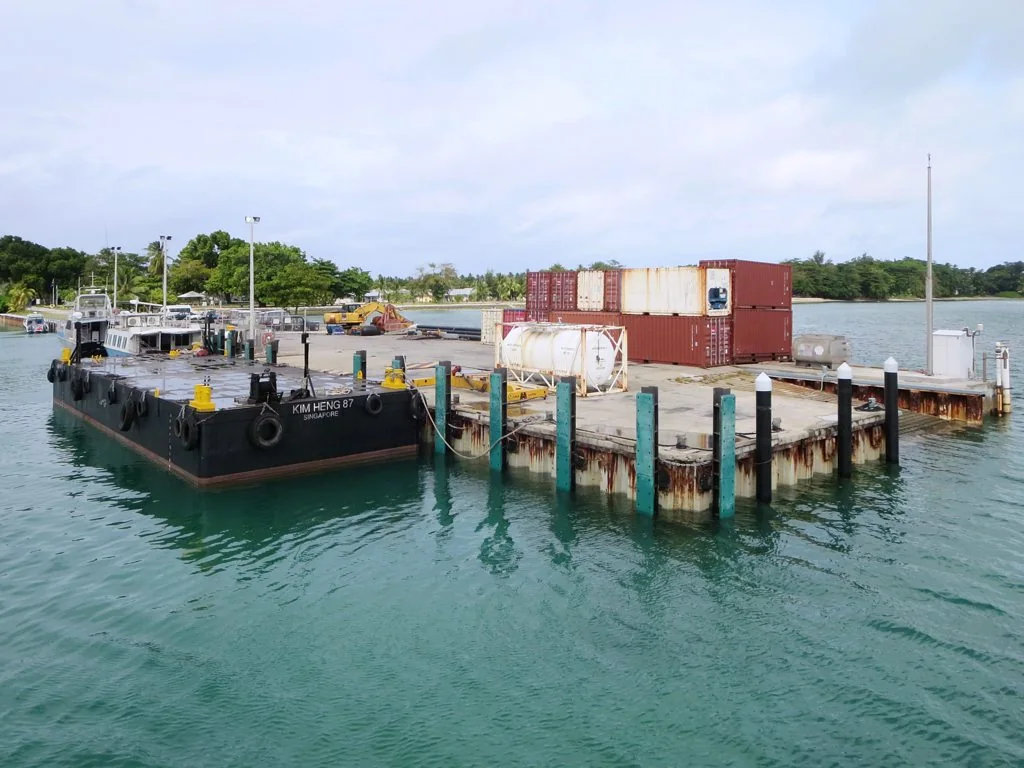
- Establish the applicable conditions for the goods, their origin and their route. Consult BICON or the responsible service for the actual commodity requirements.
- Where an import permit is required, obtain the grant before the goods leave the mainland. An application receipt alone does not satisfy that requirement.
- Follow the cleaning, packing and documentary conditions and retain the itemised inventory. Agree freight insurance, delivery responsibility and the address and island where the shipment will be received.
- Carry originals and accessible copies of identity, status, employment, housing, school and health records. Pack essential medicines and first-day supplies separately from the main freight.
Animal importation needs a specific local decision as well as the relevant biosecurity assessment. The territories department explains the Shire's discretion to refuse cat and dog import applications and to approve an assistance dog. Apply to the Shire in writing for that case before arranging transport. Consult the ranger service about the species and current local requirements; mainland ownership or vaccination records do not establish island approval. A guide about taking a Cocos cat to mainland Australia describes the opposite direction and is not authority to bring a pet here.
Price freight against the carrier's current available service rather than treating an older directory's sailing interval as a guaranteed delivery date. Confirm clearance and unloading arrangements before promising the landlord or employer that bulky items will arrive on a particular day.
08Book the flight, baggage and onward island connection
Arrange the complete journey to the actual home, including the crossing if staying on Home Island. Read Qantas's Perth connection instructions: Cocos flights use Terminal 1, which can require a transfer and baggage collection when connecting from flights using other Perth terminals.
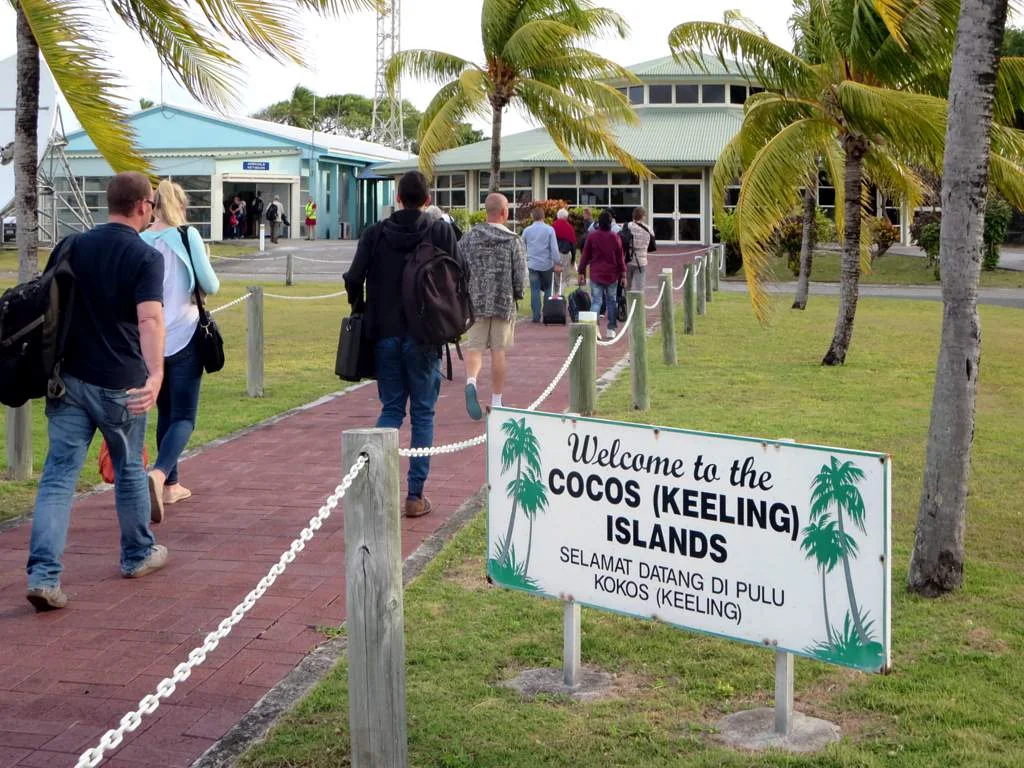
- Confirm the operating itinerary, connection time and the identification and entry documents required for the actual route.
- Read the Qantas island baggage exception. For bookings made or changed on or after 1 October 2026, the published allowance is one piece up to 23 kg per person, with one additional piece up to 23 kg available for purchase at the airport. Earlier bookings have different conditions.
- If carrying several pieces, follow the priority-bag instructions. Weight restrictions can mean other baggage follows on a later service; keep medicines, documents and essential clothing in the cabin within the applicable allowance.
- Confirm pickup, accommodation keys and any ferry connection with the host. Keep the address and a reachable contact available offline.
For Home Island arrival, arrange the journey from the airport to the West Island jetty and check the onward sailing for that day. Discuss a fallback with the host if the flight or crossing changes. Have food for the first evening and clarify how to collect any prearranged communications device. An airport arrival is not the same as reaching a Home Island property with every bag and shipment.
09Update agency records and complete missing Australian registrations
There is no new Cocos residence card simply for relocating from mainland Australia. Retain the relevant Australian status evidence and update the household's actual records. An existing tax file number continues to belong to you at the new address.
- Provide the employer with accurate payroll, work-entitlement and tax information. Check the first payslip against the agreed remuneration and deductions.
- If a TFN is needed, read the ATO's instructions for eligible foreign-passport applicants and use the official online service where its conditions apply. Australian citizens use the appropriate Australian-resident channel instead; do not apply for a replacement number merely because you moved.
- Use myGov's moving-house guidance to identify agency updates. Complete each relevant process and retain its acknowledgement.
- Update the bank, insurer, school and medical records separately. Address changes are not automatically shared with every organisation.
For a vehicle, the Cocos Shire provides the local registry service described in step 13. For Medicare, follow the eligibility and enrolment process rather than treating immigration approval as an automatic card. Keep a household record of reference numbers, expiry dates and outstanding actions, with documents available for appointments even if the internet connection is interrupted.
10Make banking, authentication and cash access work locally
Prepare banking access before relying on it for rent and freight balances. Update the account's address and contact details, test the card and decide how to receive authentication messages. A WiFi connection does not guarantee that every phone and mobile service will receive the bank's SMS.
- For a new Australian account, follow the bank's actual identification process. Westpac's new-arrival guidance is one starting point, but its verification options depend on circumstances; do not assume an island branch appointment is available.
- Complete any required mainland identity verification before departing if the bank directs you there. Provide the requested passport, address and tax-residency information.
- Ask the bank which authentication methods are supported by your own account and device. Test those methods while mainland assistance is still accessible.
- Carry an appropriate AUD reserve and small change for transport, then confirm local withdrawal arrangements.
The Community Resource Centre's own FAQ confirms its cash machine is accessible during opening hours and accepts most cards. This is more useful than older general statements that there are no ATMs. The current destination information lists a $100 withdrawal at the West Island CRC with an AUD 2.50 transaction charge and also identifies a machine at Shamroks on Home Island. Confirm availability and your own card's charges; neither is a promise of continuous cash access.
If considering Bank@Post, confirm the participating bank, eligible card and the particular postal agency's service before relying on it. Keep receipts for large payments and confirm the recipient's details directly with the contracted housing or freight provider.
11Document the actual lease, property condition and tenure
Obtain a written agreement for the particular house and occupants. Separate employer accommodation, a private tenancy and any Shire-managed arrangement: the existence of island housing does not create a general entitlement to an available home.
- Read the rent amount and frequency, advance payment, deposit, start date and end or notice terms. Confirm who receives and holds each payment and obtain receipts.
- Ask which tenancy requirements apply to the agreement. The territories consumer-service information identifies property-rental service responsibilities; obtain the current process rather than importing an assumed mainland deposit deadline.
- Inspect rooms, appliances, furniture, ventilation, water fittings and access. Record defects, meter readings, keys and an inventory with dated photographs.
- Confirm repairs, insurance responsibilities, permitted alterations and utility billing. For employer housing, include what happens after termination or a change in household eligibility.
For a land or business-premises proposal, consult town-planning information and the Shire directly. Its land-leases page was under review when checked; it does not establish an easy purchase route or an available residential lot.
Ask about the actual property's flooding, access and storm arrangements. The Shire's coastal-hazard update describes a strategic framework requiring further investigation and decisions, rather than a settled instruction that every home will be relocated. Assess the address and agreement on their own evidence and obtain the relevant planning advice before a major commitment.
12Arrange clinic access, cover and mainland referrals
The Indian Ocean Territories Health Service operates clinics on both islands. It describes limited inpatient capacity, with overnight care pending evacuation to Perth. A clinic is not a mainland hospital with every specialist permanently available.
- Establish Medicare eligibility and enrolment for each household member. Permission to work or remain in Australia is not the same as eligibility for every medical benefit.
- Contact the clinic on the island where you will live, bringing treatment summaries, prescriptions and relevant health records. The service lists West Island at 08 9162 6655 and Home Island at 08 9162 7609.
- Discuss medicine supply and the treatment that can be provided locally, through visiting services or by mainland referral. Arrange a transition supply and an actual follow-up plan.
- Ask about the charge for the particular consultation or examination. Covered consultations, dental care and occupational or visa examinations have different charging arrangements.
Read insurance terms for evacuation, mainland treatment, accommodation and an accompanying person where relevant. Ask about prior approval, exclusions and the costs the household must pay. Obtain the actual eligibility and arrangements for any patient-assisted travel rather than assuming a referral means the complete trip is funded. Keep the clinic and insurer contacts accessible when planning travel away from the islands.
13Connect communications and organise island transport and utilities
Ask the Community Resource Centre about a connection for the actual house and the first days. Its service page describes MiFi access, guest WiFi, computer access and printing. Public computer access is useful for a form; it is not a substitute for a private remote-work connection.
- Discuss MiFi hire, current charges and allowances with the CRC and use its booking service where appropriate. Arrange collection or delivery with the host before arrival.
- Test the actual device, connection and work applications. Ask about outages, weather effects and any available longer-term household setup.
- Check WiFi calling with the phone and operator. The CRC states that it is not guaranteed for every device; distinguish data connectivity from native mobile reception and SMS authentication.
- Agree the electricity and water account handover with the landlord, including readings, billing and responsibility for supply charges. Obtain a current tariff and a comparable bill; old schedules are not presented here as current prices.
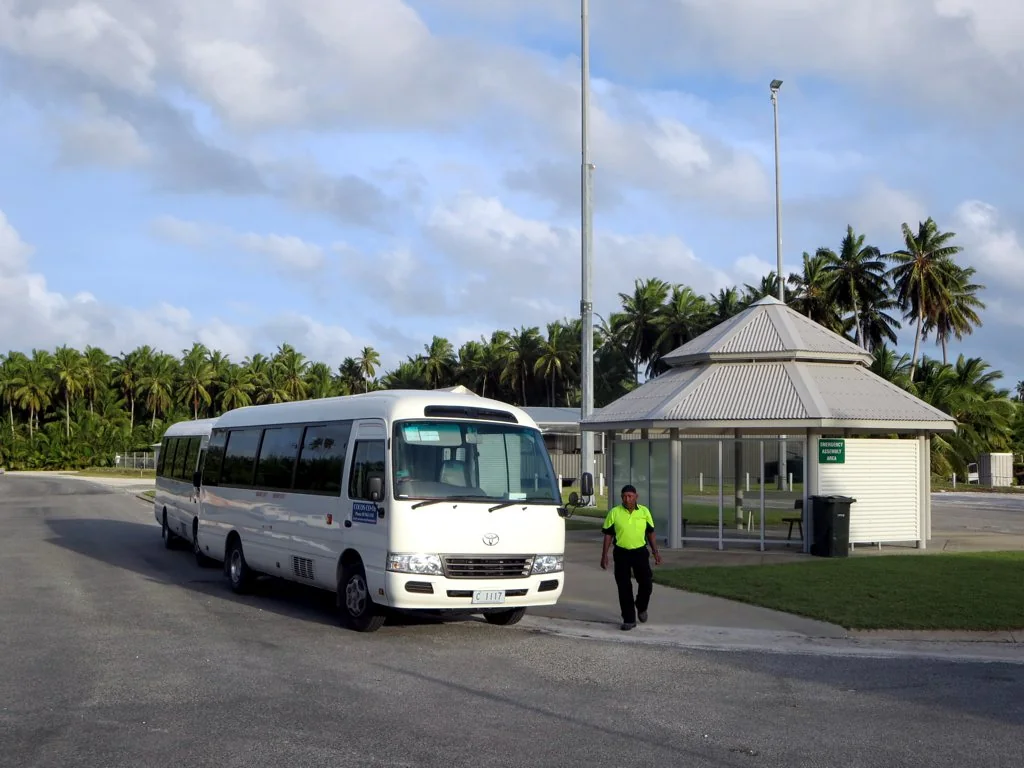
Use the ferry and connection bus around the real timetable, not as a mainland all-day route. For a bicycle or vehicle, arrange availability, storage, insurance and any shipping before relying on it. The Shire motor vehicle registry assists with registrations, transfers, licence renewals and address changes. Ask which identity, licence and vehicle documents your transaction requires and obtain the applicable resident conversion deadline and current fee.
Set up household waste arrangements with the Shire's current collection information: general collections are listed on Tuesday and Friday for Home Island and Monday and Thursday for West Island, with bins out before 7 am. Confirm the recycling cycle and arrange bulky waste through the Shire rather than leaving shipping packaging at an informal disposal site.
14Build the first-month routine and a local support network
Use the first month to test the arrangement you planned: the crossing, school journey, shopping, payments and access to care. Keep the current ferry timetable handy and plan appointments on the other island around both directions. Household time should include the trip to the jetty as well as the crossing.

- First week: complete the housing condition record, establish payment and communications access, meet the relevant school or clinic staff and practise the normal journeys.
- Second week: follow up freight clearance, deliveries, missing registrations and any connection appointments. Review groceries against the household's actual dietary needs and arrange recurring supplies where required.
- By the end of the month: reconcile the first bills and payslip, adjust the budget and resolve repairs or charge discrepancies. Review visa, licence, insurance and mainland-appointment dates where applicable.
- For continuing life here: identify a workable alternative when the usual ferry, driver, connection or supply delivery is unavailable. Keep the relevant provider contacts rather than relying on a single informal contact for every service.
The community libraries and Shire's community-group directory offer practical starting points, including community radio, historical interests, parent groups and seniors' activities. Ask about current meetings and participation rather than assuming directory contacts describe an event happening this week. The CRC also publishes The Atoll with local notices.
Respect Home Island's community customs and confirm visitor arrangements at religious places. The photograph shows the mosque dome, not an invitation to attend a particular ceremony. For a service issue, follow the territories department's provider and feedback guidance and retain the correspondence. By the month's end, the household should know its normal journeys, payment and care arrangements and the specific tasks still outstanding.
Sources & further reading
Reviewed 13 October 2026. Sources are linked beside the relevant instructions. Current operator instructions take precedence over older general directories. Household immigration, school entitlement, medical cover and animal-import decisions are separate. Where the school site is being rebuilt, its own current contact page and the education department campus description are linked together. Prices reviewed on 13 October 2026. The destination authority publishes one-way ferry and connection-bus fares of AUD 2.50 and AUD 0.50 respectively, and lists a fee of AUD 2.50 for a AUD 100 cash withdrawal at the West Island CRC. Household, rental, travel and setup budgets are hypothetical examples. Older Shire schedules are not quoted as current tariffs. Photograph credits, licences and capture years appear with the images.
Browse the source directory
- Home Affairs: visa explorer
- Home Affairs: VEVO and visa conditions
- Home Affairs: Skills in Demand subclass482
- Home Affairs: ImmiAccount
- IOTA: government career opportunities
- Australian Business Register: ABN application
- ATO: residency for income-tax purposes
- ATO: external territories and GST exports
- ATO: TFN instructions for migrants and visitors
- ATO: eligible TFN online application
- Home Affairs: restricted Investor Retirement subclass405
- Home Affairs: restricted Retirement subclass410
- Services Australia: Age Pension residence rules
- Services Australia: Centrelink residence and territories
- DAFF: Indian Ocean Territory-specific import rules
- DAFF: BICON import-condition and permit service
- Qantas: Perth terminal and connection instructions
- myGov: moving house and address updates
- Westpac: new-arrival account and identity verification
- Australia Post: Bank@Post services and participating banks
- Territories department: consumer and property rental service responsibilities
- Indian Ocean Territories Health Service: current facilities and charges
- Services Australia: Medicare eligibility and enrolment
- Territories department: service feedback and responsible agencies
- Territories department: Cocos travel and local services
- Cocos Tourism: Home Island
- Cocos Tourism: West Island
- Cocos Tourism: current ferry and connection bus information
- Cocos Tourism: updated practical essentials
- Cocos Community Resource Centre: locations and current hours
- CRC: MiFi, WiFi calling and cash-machine instructions
- CRC: internet, printing and community services
- CRC: MiFi booking service
- Cocos Islands District High School: current own contact page
- Education department: school-campus and year-level arrangements
- Education department: school enrolment requirements
- Shire: employment opportunities
- Shire: building and environmental-health application guidance
- Shire: starting a food business
- Shire: town planning and property-use information
- Shire: land-lease information
- Shire: final coastal hazard framework update
- Shire: animal control and ranger service
- Shire: motor vehicle registry
- Shire: waste services and collection
- Shire: community libraries
- Shire: community groups
- Qantas: current island baggage exception
Make your next step a practical one
Confirm the household Australian status, an actual home, the work arrangement and the school and care plan before shipping goods. Align the arrival with the ferry connection and establish communications and cash access for the first days.




