 Visa
Visa
Moving & Living - Denmark - Complete Guide
Move to Denmark in 14 practical steps: choose a city, arrange the right residence and work basis, budget deposits and school costs, then set up CPR, MitID, tax, banking, healthcare and transport.
Photo credit
A Copenhagen routine may combine a Metro journey from Nordhavn, a bicycle parked at Nørreport and appointments handled through Digital Post. In Aarhus, university life and neighbourhood streets stretch around the campus; Odense offers a different base on Funen. Moving successfully means connecting that everyday life to a real address, the right residence basis and Denmark’s public registrations. This journey explains the order, costs and actual services you will use, from an employment or study application to CPR, a doctor, banking and the first household bills.
Denmark at a glance
- Capital
- Copenhagen · København
- Currency
- Danish krone · DKK
- Language
- Danish
- Work, study and EU residence
- SIRI · Danish Agency for International Recruitment and Integration
- Resident number
- CPR · municipal Civil Registration System
- Digital identity
- MitID
- Official correspondence
- Digital Post
- Public payment account designation
- NemKonto
- Health insurance evidence
- Yellow sundhedskort
- Reviewed
- 13 October 2026
Follow your moving journey
Start at step 1, or jump to the task you are working on.
01Choose a city and test the neighbourhood commute
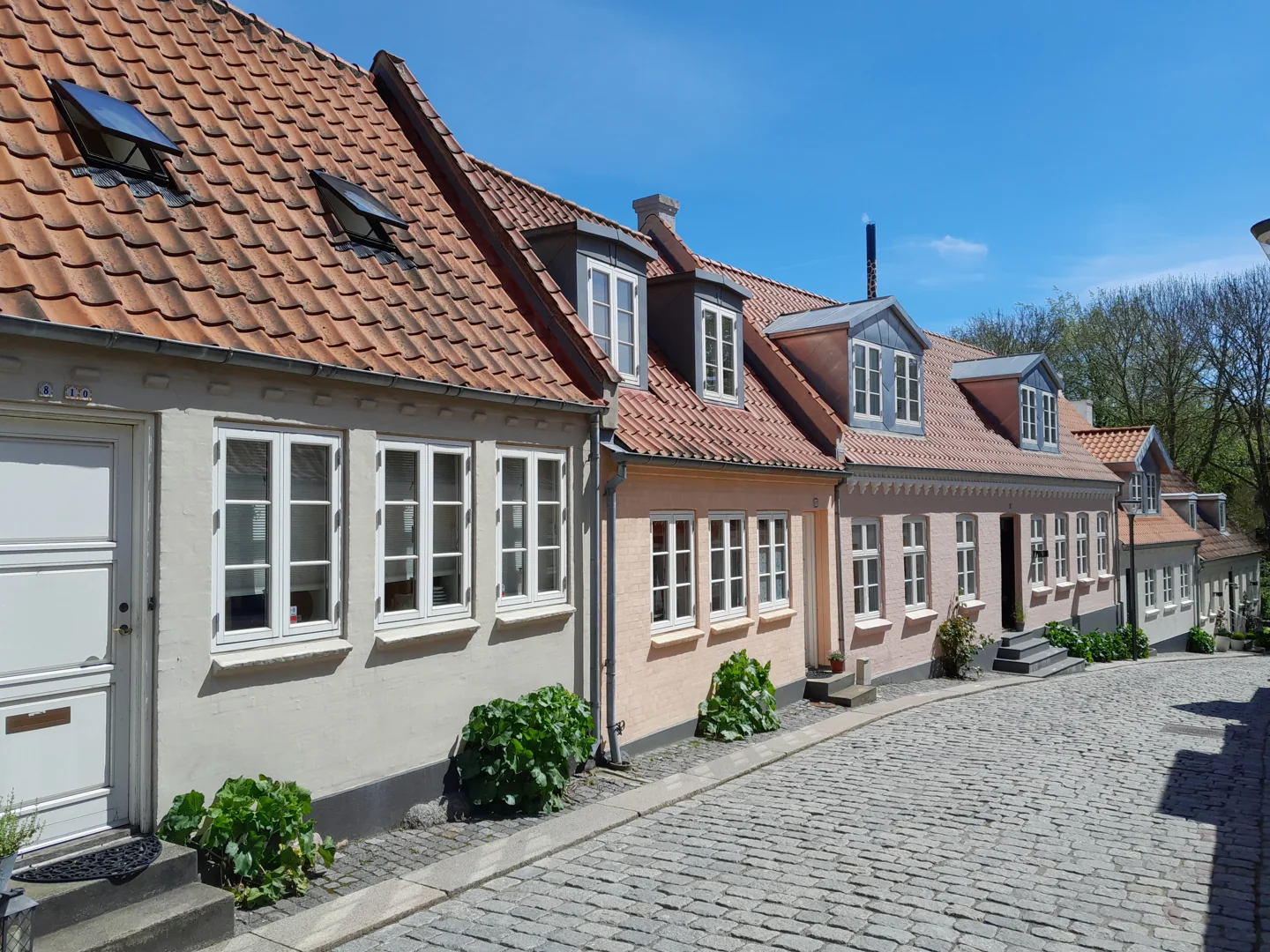
Choose the place you need to reach each day before choosing a postcard view. Copenhagen’s Nordhavn is a useful starting point if your child may attend Copenhagen International School; Nørrebro, Østerbro, Amager and Frederiksberg require different journeys to the same office. Frederiksberg is also a separate municipality, which matters when booking resident services. In Aarhus, compare a central or Trøjborg address with the particular university building you need. In Odense, identify whether your work or study is near the centre or a different site rather than assuming “Odense” means a walkable commute.
- Put work, school, groceries and a likely transport stop on one map. Enter the actual morning arrival time in the operator’s journey planner for Copenhagen and Zealand.
- Inspect a neighbourhood at the times you will use it. Look at bicycle storage, evening access and the walk from the stop, not just the apartment interior.
- Compare the complete address, monthly charge and travel time for at least two options. A cheaper advertised rent can mean a different transport budget.
- Identify the municipality of the selected address and its newcomer service before booking appointments.
Use International House Copenhagen, the City of Aarhus’s international services or International House Odense as practical starting points for the local sequence. These services can help you identify the right office; they do not provide an immigration exemption or guarantee an available home. Keep the move plan tied to an actual address rather than a district name alone.
02Choose the residence basis that fits your citizenship and purpose
Denmark has different procedures for Nordic citizens, EU/EEA/Swiss citizens and people outside those groups. A short Schengen visit is not an ordinary settlement or employment route. Do not use a visitor itinerary as your employment plan, or assume a residence permit from another European country authorises Danish work.
| Your position | Practical starting point |
|---|---|
| Citizen of Finland, Iceland, Norway or Sweden | You may live, study and work without an EU residence document; arrange the relevant municipal registration. |
| EU/EEA/Swiss citizen | Establish the qualifying worker, student, self-employed or sufficient-funds basis, then obtain the applicable EU residence documentation for registration. |
| Other citizenship | Apply for the appropriate Danish residence/work, study or family permission; read its actual start date and activity conditions. |
The official arrival guidance explains the Nordic distinction. SIRI’s January 2026 OD1A instructions identify the EU categories and the separate family-member form. Choose the category supported by your real circumstances, not whichever checklist appears shortest.
For qualifying employment outside the EU framework, the Pay Limit Scheme has a 2026 annual threshold of DKK552,000 and a DKK6,810 processing fee. The Supplementary Pay Limit Scheme uses DKK446,000 and the same fee, but adds conditions including a full-time position, the job’s prior posting on Jobnet and EURES for at least two weeks, and an unemployment-level condition. Meeting a salary number alone is insufficient.
- List citizenship, purpose and intended activity for every household member.
- Match the main applicant to the relevant SIRI route and download its current document checklist.
- Plan separate family applications where required; a spouse or child is not automatically included in the main permit.
- Confirm the application location, biometric appointment and start date before final travel commitments.
03Secure the job or business and document the permitted work
Use Workindenmark’s vacancy guidance to find relevant openings and prepare a targeted application. Ask an employer to explain the job’s pay, hours, pension contributions, holidays, notice period and relocation support in writing. Compare cash salary with the total package rather than assuming free accommodation counts towards an immigration salary threshold.
Under the ordinary Pay Limit Scheme, SIRI counts specified cash pay, pension contributions and holiday allowance, while benefits such as a company car or housing do not count towards the threshold. The offered salary and conditions must also meet Danish standards, and the scheme requires at least 30 hours a week. The resulting permission is linked to the job; changes and additional employment require attention to the actual permit rules.
- Agree who prepares the employer part and which documents you supply. Use the route’s case-order ID and payment instructions.
- For an employer-led AR1 application, the employer completes its part first; you then complete yours through the invitation using the agreed email address. Use the actual AR1 service linked by SIRI.
- Prepare the requested contract, passport copies, qualifications and authorisation for any regulated profession.
- Arrange biometric recording promptly. The employment route sets a 14-day period after submission; notify SIRI if appointment availability prevents meeting it.
- Before starting, read the decision’s work scope and dates with payroll or the relocation coordinator.
For an entrepreneurial move, Start-up Denmark requires an innovative growth business and expert-panel approval before the residence application. An ordinary restaurant, retail shop or passive shareholding is not automatically eligible. Registering a company alone does not authorise residence. No dedicated digital-nomad route was verified: a person working from Denmark for foreign clients must still establish the correct immigration and tax position. Accompanying employee-family permission generally permits work, but work for the sponsor’s own or closely related company can require separate authorisation under the family route’s rules.
04Budget the initial cash requirement and your net income
Build the budget in Danish kroner, DKK. The biggest first payment may be housing rather than a flight. Collect written figures for temporary accommodation, deposit, prepaid rent, freight, immigration, school and furniture before deciding how much cash must remain accessible.
| Cost | Use this verified basis |
|---|---|
| Qualifying salaried immigration | DKK6,810 processing fee under the two pay-limit schemes; additional mission/application-centre charges may apply. |
| Accompanying employee family | SIRI currently posts DKK3,080 per application, where that route applies. |
| Private rental upfront | Up to three months’ deposit and up to three months’ prepaid rent, separately from rent currently due. |
| Education | Use the particular school invoice or university programme fee, including non-tuition charges. |
| Commuting | Choose the actual zones and product; the 2026 DOT adult two-zone single ticket is DKK24. |
The deposit rule comes from the housing ministry, the family fee from SIRI, and the transport example from DOT’s schedule effective 18 January 2026. These are different service scopes, not a national living-cost basket.
For a hypothetical single adult in Copenhagen, you might initially allocate DKK10,000 rent, DKK2,800 groceries, DKK1,000 utilities, DKK300 phone/internet, DKK700 transport and DKK1,200 other spending: DKK16,000 a month by addition. Every allowance is a planning assumption, not a researched market average. It excludes tuition, tax and unusual healthcare or travel costs; replace each line with a quote or actual bill. At an assumed DKK10,000 rent, three months’ deposit plus three months’ prepaid rent plus the first month would total DKK70,000 before utilities.
Compare the job offer after payroll tax, pension and other deductions. Skattestyrelsen’s 2026 rate table includes the 8% labour-market contribution; it is not the total tax rate. Your preliminary income assessment must reflect expected income and deductions, including the relevant foreign income and assets when full Danish tax liability applies. Keep arrival-date balances, investment records, pension documents and foreign property information for that assessment. Remote foreign income is not automatically outside Danish tax.
05Arrange school placement or a university offer before moving
Begin with curriculum and language, then the commute. Municipal public school, the folkeskole, and private international school are different choices. Ask the municipality how a child arriving from abroad is assessed and allocated; do not assume an English-speaking child will simply enter an ordinary Danish class without support. Aarhus publishes school and childcare starting points and information on reception provision for children from abroad, which is part of its cost-free municipal school system.
- Collect recent reports, age and identity documents, language history and learning-support records.
- Contact the municipality for public-school placement, or use the Copenhagen International School application process for its Nordhavn campus.
- Ask about assessment, capacity, after-school care and the intended starting term. Application and payment are not a promise of admission.
- Obtain a written offer and invoice, then coordinate the child’s immigration file and housing address.
CIS’s dated 2026–27 financial document lists DKK155,000 annual tuition for kindergarten–Grade 5, DKK178,000 for Grades 6–10 and DKK215,000 for Grades 11–12. It lists a DKK3,000 application fee and DKK40,000 one-time registration fee. Its school-profile page instead says DKK30,000 registration: obtain the current written invoice to resolve that discrepancy. Using the dated schedule, a new primary pupil’s full-year tuition, application and registration would calculate to DKK198,000 before extras. Instalments add the stated administration charge; lunch and other activities may be separate. An October midyear start follows its quarter-based schedule rather than an assumed daily refund.
For a master’s course, Aarhus University’s current deadlines distinguish EU and non-EU applicants and winter from summer intake. Its fee rules generally charge non-EU/EEA/Swiss applicants EUR150 for processing, subject to exemptions; tuition depends on the programme and residence position. Obtain admission before completing the relevant study immigration process.
SIRI’s higher-education route currently costs DKK3,060. Its 2026 support benchmark is DKK7,426 per study month, capped at 12 months, DKK89,112; the page also explains the accepted first-semester tuition-payment alternative. State-approved programmes and newer non-state-approved applications have different work rights. Do not finance a move by assuming all student permits allow full-time work.

06Confirm a retirement or dependent move has a lawful basis
A pension can support living costs without creating a Danish pensioner visa. No ordinary third-country retirement route was verified. A retired Nordic citizen has different movement rights from a retired person requiring a Danish residence permit; family rules also depend on the sponsor’s citizenship and status.
EU/EEA/Swiss citizens can consider EU residence as a person with sufficient funds. SIRI assesses the household individually and requires evidence supporting at least the first 12 months, with continued self-support thereafter. Its 2026 non-provider reference is DKK7,095 a month before tax; the page lists different family categories. That is an immigration benchmark, not a realistic national household budget or proof that every pension satisfies the test.
- Assemble pension award and payment records, accessible savings and the household’s intended address.
- Choose the applicable residence basis and the required documents for the retiree, partner and any other dependent.
- For the sufficient-funds route, prepare current evidence in the named holder’s account and the requested access/support documentation where someone else funds the stay.
- Ask about healthcare coordination and foreign pension taxation before cancelling existing cover or changing payment arrangements.
Do not add Danish folkepension to your budget simply because you have moved. The state-pension service applies age, residence or earned-entitlement conditions and cross-border rules. Ask the responsible pension administration how your actual history is treated. A residence application, a pension entitlement and the tax treatment of a foreign pension are three separate questions.
07Prepare document originals, household goods and pet entry
Keep original identity and civil-status records in hand luggage, with secure digital copies. Include the permit decision or application record, employment or admission agreement, birth and marriage documents, custody evidence where relevant and prior Nordic registration information if applicable. Match names and dates across documents before appointments. Use the receiving authority’s translation instructions rather than paying for a translation that it will not accept.
- Make a checklist for each person and each appointment, showing originals, copies, dates and any authentication required.
- Give the mover an itemised inventory and the actual delivery address; agree who handles customs declaration and who pays storage if clearance is delayed.
- For a move from outside the EU, use Toldstyrelsen’s personal-property procedure. The relief depends on conditions including 12 consecutive months’ previous non-EU residence, the goods’ use and import timing.
- Prepare residence evidence and ownership records for valuable belongings, and the prescribed declaration. Do not interpret household-goods relief as automatic relief from vehicle registration taxes.
For a pet, choose the departure-country branch in the official dog guide or cat and ferret guide. Identification must precede the relevant rabies vaccination, and the primary vaccination normally needs a 21-day interval. The origin and transit determine whether a passport, endorsed animal-health certificate or antibody test is required. Use the current certificate model rather than an old template found online. Check dog restrictions before shipping; dogs remaining longer than four weeks must be registered in the Danish Dog Register within four weeks of arrival. Agree the airline arrangements only after the veterinary document dates and permitted entry point are clear.
08Arrive on the correct dates and make the first address usable
Carry the passport or accepted identity document and the permission supporting your entry, with work, study and accommodation details available offline. For a permit-based move, read its start date rather than assuming you can arrive whenever a flight is convenient. Tell the host your arrival time and obtain the exact address, floor and door designation used by the building.
- Complete the relevant entry formalities and retain the travel record you may need to document arrival.
- Reach the accommodation using a ticket covering the actual route. Copenhagen’s Metro, S-train and bus network uses zones; a ticket for a central journey may not cover your airport or suburban trip.
- Put your name on the mailbox and confirm which address details the landlord supplies for official registration.
- Test a telephone connection and retain enough accessible funds while local banking is arranged.
- Confirm SIRI or municipal appointment requirements with the relevant local service before travelling to the office.
Your initial priorities are a valid status, actual home and clear appointments. The CPR administration explicitly says you cannot register as a resident before actually moving to Denmark. A tax identification number arranged earlier for employment does not remove the need for resident registration. Where temporary accommodation is involved, ask the municipality which evidence and residence period it accepts; do not rely solely on an advertisement saying “CPR available”.
Keep the first few days flexible for identity and housing tasks. Tell the employer when the tax and bank arrangements are expected to be ready, and ask how the first payroll will be handled if a particular service needs more documents.
09Inspect the rental and separate deposit from prepaid rent
Read the whole lejekontrakt, including special conditions, before paying. Establish whether you are renting directly or subletting, who has authority to offer the home, the permitted period and the termination arrangements. Inspect the actual dwelling and compare it with the written address and included equipment. A deposit request without a lease is not a useful way to secure a home.
Under the housing ministry’s private-rental explanation, depositum secures obligations at departure; forudbetalt leje is prepaid rent that can cover the end of the tenancy as described in the agreement. Each can be up to three months’ rent. They are not two names for the same refundable pot, and the deposit generally cannot simply be used as your last rental payments.
- Record rent, deposit, prepaid rent and the first payment separately. Check whether heating, water, electricity and internet are included or additional.
- Read the special clauses on maintenance, notice, fixed term and departure condition; ask for clarification in writing where needed.
- At handover, photograph each room, appliances and meters, and obtain the keys and signed condition record.
- Send a dated written defects list within the officially advised 14-day period after taking over the home. Retain evidence that the landlord received it.
- Use traceable payment and save the lease, invoice and receipt together.
A conto utility amounts are advance payments, not necessarily the final cost. Ask when consumption accounts are reconciled and whether the prior tenant’s bills affect any quoted figure. If you later move, keep the condition record and termination evidence for the deposit settlement. Do not promise yourself a full refund before the actual tenancy obligations have been assessed.

10Complete SIRI, CPR, MitID and the tax-card sequence
Prepare the residence document or permit, identity, lease/address evidence and the relevant family and custody records. Take the municipality’s appointment checklist as the final guide. The sequence matters: Nordic citizens do not need the EU document, while an EU resident normally presents that document before municipal registration.
- Complete the appropriate SIRI identification appointment. For the online sufficient-funds application, SIRI requires appearance within 30 days, with the receipt and passport or national ID.
- Apply for resident registration through Borgerservice or the International Citizen Service serving your actual municipality. Ensure names, household relationships and address are entered correctly.
- If you already have a Danish personal tax number, give it to the municipality; the CPR office explains that the same number is retained when you become resident.
- Set up MitID using a supported chipped passport/ID and phone, or the relevant Citizen Service process if that method is unavailable.
- Open Digital Post and enable suitable notifications. Public correspondence is your responsibility from age 15; an English interface does not translate every message.
For payroll, use Skattestyrelsen’s foreign-employee instructions and its form 04.063 if the ordinary E-tax route is not yet available. Applications begin no earlier than one month before work starts; prepare the signed employment agreement, identity and relevant residence/work evidence. The agency states that salary withholding is 55% without a tax card, so tell payroll when yours is ready. A digital-form application normally takes about two weeks, rather than guaranteeing completion the day you arrive.
Once access works, review the expected income and deductions in forskudsopgørelsen, your preliminary assessment. Save the confirmation and update it if the salary or household’s taxable circumstances change.
11Open a payment account and designate your NemKonto
Ask the bank what its selected account requires before booking. Prepare identity, address and lawful-residence evidence, employment or other income information and the countries where you are tax-resident. Compare account, card, international-transfer and currency charges, not just a headline “free” account.
If ordinary onboarding stalls while you obtain CPR or MitID, ask specifically about a basal betalingskonto, a basic payment account. Finanstilsynet’s guidance says eligible consumers lawfully resident in the EU/EEA framework cannot be refused solely because they lack Danish residence, MitID or a Danish CPR number. Identity and anti-money-laundering checks still apply; the bank must decide within ten working days of a complete application. This is not automatic approval for an incomplete file or a right to credit.
- Submit the bank’s requested documents and retain the application record.
- Activate access and card securely, then test a small transfer before moving the entire relocation balance.
- Give payroll the correct details and retain the first payslip and payment confirmation.
- Designate an existing account as NemKonto for public payments. It can be Danish or foreign; the designation is not another bank product.
- Arrange rent and other recurring payments, retaining enough balance and reviewing the first debit.
Keep the NemKonto choice separate from SIRI’s salary-account condition. The ordinary and supplementary pay-limit schemes require a Danish account in your own name, with the applicable 180-day timing; some other schemes are exempt and internships use different timing. An overseas NemKonto does not satisfy a Danish salary-account requirement where your permit imposes one. Read the condition attached to your route rather than copying another newcomer’s deadline.
12Choose your GP and arrange care around your coverage
When resident registration establishes national health-insurance coverage, select a læge, your general practitioner, through the municipal process. The yellow sundhedskort records the details. The official card guidance gives an approximate two-to-three-week delivery period after registration; ensure your name and address allow it to reach you. Ask the municipality how to evidence entitlement while waiting, rather than assuming the absence of plastic means you must delay necessary care.
- Choose among the available GP options, considering location and appointment arrangements.
- Save the practice’s telephone number, opening hours and instructions for urgent same-day contact.
- Transfer a concise medical summary and medication information where ongoing treatment needs continuity.
- Identify a dentist and ask for expected charges. Budget separately for services and medicines that are not fully covered.
- Review private insurance for any pre-registration gap, travel, or other needs outside the public coverage you actually have.
The Danish healthcare system generally funds much care through taxation; it does not mean every treatment and product is free. Public GP and hospital pathways normally use referrals and regional arrangements. Use the linked provider directory to identify actual practices and pharmacies, and read hospital correspondence in Digital Post.
For life-threatening illness or injury, official emergency guidance directs you to 112. For a problem that cannot wait until the GP opens, use the out-of-hours service for your region. Copenhagen’s arrangements should not be copied as a national number for Aarhus or Odense. Find and save the regional contact before you need it; some emergency departments require a call before attendance.
13Connect the home and use current transport products
At handover, ask which services are already contracted and which you must arrange. Electricity supply, heating and water can be billed differently. The rent’s advertised total may exclude advance consumption charges. Obtain meter or supply-point details and readings so your first bill begins at the right date.
- Use the official electricity guidance to compare suppliers through Elpris.dk, the regulator’s comparison portal. Supply the meter/supply identifier, address and move date requested by the provider.
- Confirm with the landlord how heating and water accounts are handled and how a conto payments will be settled.
- Test mobile coverage and check the actual address’s broadband options before committing to a long agreement. Compare the total ongoing price, setup, equipment and notice period.
- Plan the work or school journey at real times and buy the product covering its actual zones or route.
- Set reminders to read bills and record relevant changes rather than assuming every payment is automatically arranged.
The transport operator’s current page says the old physical Rejsekort is discontinued. Use the Rejsekort app, Rejsebillet or the new Basiskort according to the current instructions. Basiskort provides a physical alternative; it is not the old card with a new label. Read the check-in/check-out requirements for your chosen product and compare a commuter option if you make the same journey regularly.
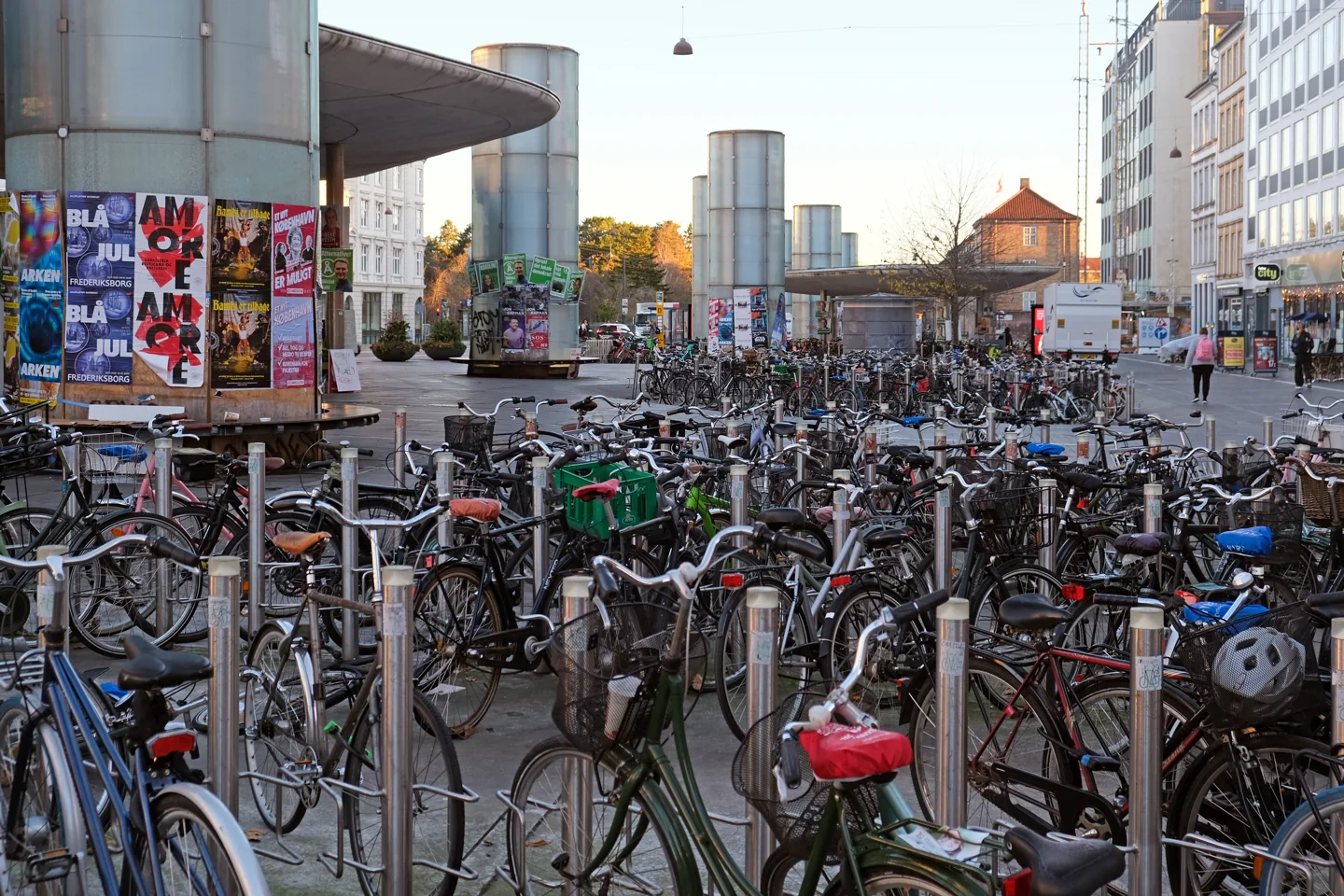
For Copenhagen and Zealand, DOT links maps and planned changes across buses, trains and Metro. Elsewhere, use the operator serving the actual local journey; do not apply a Copenhagen zone price to Aarhus or Odense. A bicycle can simplify a routine, but inspect parking and the route in the weather and light you will encounter rather than buying one solely from a summer travel impression.
14Finish the first-month tasks and build a regular community
Denmark’s digital services are useful only when you can access and regularly read them. Create a weekly household check for Digital Post, payments, school communication and tax information. Keep separate records for each family member; do not assume one adult’s login displays every appointment or obligation.
Use the municipality’s newcomer events and language information in Aarhus, or the equivalent city service for your home. Ask about the official Danish-education referral, deposit and module requirements for your status rather than enrolling on the assumption that every course is free without conditions. Try a library, sports association or recurring local activity that fits the weekly timetable; regular contact is more useful than a list of places you cannot reach after work.
- Residence: save each decision, application receipt and renewal date; identify what must be reported if the job or household arrangement changes.
- Address: confirm CPR details and mailbox names. For a later domestic move, official guidance requires reporting the address change no later than five days after moving.
- Payroll: compare the first payslip, tax card, pension deduction and bank payment; correct the preliminary assessment where needed.
- Home: retain the lease, handover photographs, defects report and utility references together.
- Family and health: confirm actual school/daycare attendance, after-school arrangements, GP access and card delivery.
- Budget: replace the planning allowances with the first month’s real spending and retain a reserve for the next large invoice.
By the end of the first month, the useful measure is whether everyday tasks work: you can receive official correspondence, reach work or study, pay the right bills and arrange care. If one task is stalled, identify the missing document or appointment and resolve that dependency rather than opening another unrelated application.
Sources & further reading
Reviewed 13 October 2026. Sources are linked beside the relevant instructions. Danish authorities, municipalities, actual school and university, and transport operators. Nordic, EU/EEA/Swiss and third-country procedures remain distinct. The guide incorporates the 2026 replacement of the physical Rejsekort and avoids old NemID instructions. Existing foreign tax numbers do not themselves establish resident registration. 2026 SIRI and DOT schedules, 2026–27 CIS fees and current AU application charges checked on 13 October 2026. CIS's school-profile registration figure conflicts with its dated financial document; the discrepancy is disclosed and a current written invoice advised. Budget allowances and rent calculations are hypothetical, not national market averages. Photograph credits, licences and capture years appear with the images.
Browse the source directory
- Life in Denmark: arrival and municipal registration
- International House Copenhagen
- City of Aarhus: international newcomer services
- International House Odense
- SIRI: Pay Limit Scheme, 2026 salary and fee
- SIRI: Supplementary Pay Limit Scheme
- SIRI: biometric recording
- SIRI: AR1 employment application service
- SIRI: January 2026 OD1A EU residence form and instructions
- SIRI: EU residence with sufficient funds
- SIRI: Start-up Denmark
- SIRI: accompanying family of an employee
- Workindenmark: finding vacancies
- Skattestyrelsen: foreign employee tax card
- Skattestyrelsen: digital tax-card form 04.063
- Skattestyrelsen: reporting foreign income and assets when moving
- Skattestyrelsen: 2026 tax rates
- City of Aarhus: school and childcare starting points
- Aarhus: education for children arriving from abroad
- Copenhagen International School: application process
- Copenhagen International School: 2026–27 fees
- Copenhagen International School: school profile and conflicting registration figure
- Aarhus University: tuition and application fee
- Aarhus University: current intake deadlines
- SIRI: higher education residence
- SIRI: current student work permissions
- Life in Denmark: state pension eligibility
- Toldstyrelsen: household goods when moving
- Danish Veterinary and Food Authority: dog entry guide
- Danish Veterinary and Food Authority: cat and ferret entry guide
- Life in Denmark: inspecting and renting a home
- Housing ministry: deposit and prepaid rent
- CPR administration: resident registration and tax numbers
- MitID: getting identification using a passport
- Life in Denmark: Digital Post
- Finanstilsynet: basic payment account rights and processing
- SIRI: scheme-specific Danish salary account requirements
- Life in Denmark: assigning a Danish or foreign NemKonto
- Life in Denmark: national health insurance card
- Life in Denmark: healthcare system and providers
- Life in Denmark: emergency and regional out-of-hours care
- Life in Denmark: electricity supplier choice
- Life in Denmark: household bills and address changes
- DOT: journey planning in Copenhagen and Zealand
- DOT: fares effective 18 January 2026
- Rejsekort: current app, Rejsebillet and Basiskort options
Make your next step a practical one
Confirm your household’s residence basis and start-date documents, then secure an actual registrable address and book the relevant SIRI and municipal appointments.




