Visa
Moving & Living - Gambia - Complete Guide
A practical moving journey for The Gambia: choose a Greater Banjul or inland base, distinguish entry from work and residence, plan 2026 costs, schools, TIN registration, housing, healthcare, NAWEC and transport.
Photo credit
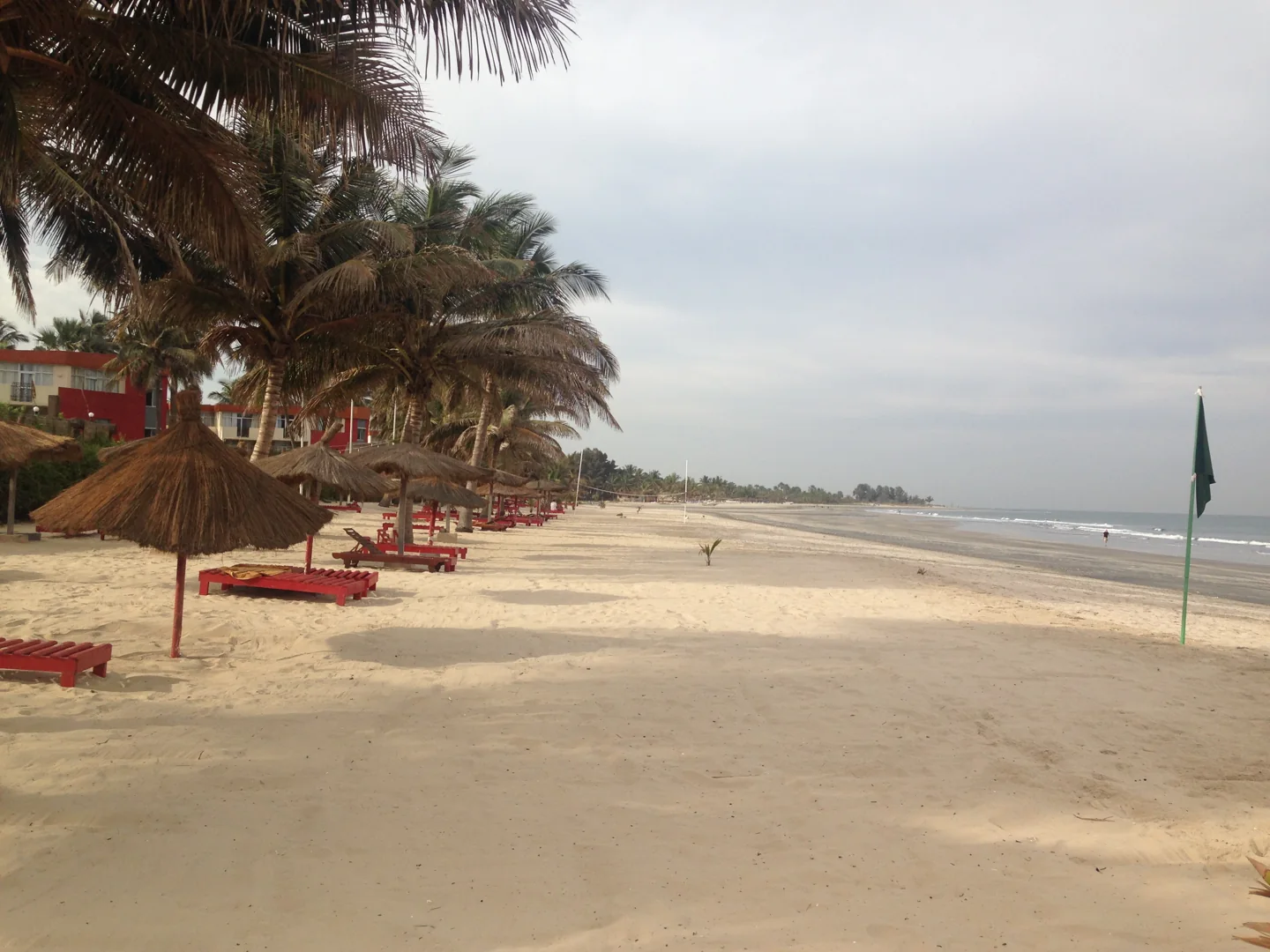
In The Gambia, the useful question is often which side of a journey you want to live on: near a school in Bakau, an office in Kanifing, services in Banjul or a workplace farther inland. Coastal holiday accommodation can help you explore, but a household needs an address with workable water, power, communications and everyday transport.
This guide takes you through fourteen decisions and tasks, from immigration and employment to school admission, shipping, registrations and the first month at home. The sequence puts documents before the services that depend on them and identifies where published information needs a current household-specific decision.
Gambia at a glance
- Capital
- Banjul
- Currency
- Gambian dalasi · GMD
- Administration
- English
- Immigration
- GID
- Tax authority
- GRA
- Personal tax identifier
- TIN
- Water and electricity
- NAWEC
- Health insurance authority
- NHIA
- Reviewed
- 14 October 2026
Follow your moving journey
Start at step 1, or jump to the task you are working on.
01Choose a town and test the journeys around it
Locate the reason for the move first: the workplace, course, school or household you are joining. Greater Banjul includes several distinct places; an address advertised as “near Banjul” does not tell you how your normal journeys will work. Request a map pin, the access road and a nearby landmark for every accommodation offer.
| Base to investigate | Useful starting point | Test before choosing |
|---|---|---|
| Banjul | GRA’s Revenue House on Liberation Avenue and Edward Francis Small Teaching Hospital | The actual journey from home to the relevant office or care appointment. |
| Bakau / Fajara | Marina International School in Bakau New Town | The school run, including collection time and any transport arrangement. |
| Kanifing / Serekunda | University administration and services around Kairaba Avenue | The correct campus or workplace entrance and access during busy periods. |
| Kotu / Kololi | A coastal base to investigate alongside your working address | Whether the accommodation is available for the full residential period and has the services you need. |
| Brikama or an inland destination | The actual receiving institution, with local tax and utility services | Care, communications and onward transport at that particular address. |
Confirm the anchors through the tax authority, hospital, school or university rather than using a property advertisement as proof. UTG’s programme may determine a different campus from its administrative address.
Book an initial stay that gives you time to inspect alternatives. Travel the work and school routes at the hours you would use them, then compare the time and transport cost with the rent saving. For a north-bank or river-dependent move, include the crossing itself in this trial.

02Arrange admission and choose the right residence category
Write down passport nationality and type, application country, purpose, planned duration and accompanying relatives. Give those details to the Gambian mission responsible for your location or the Gambia Immigration Department. Ask whether your passport needs a visa or entry clearance, where the document is issued and how your intended residence application follows admission.
GID distinguishes Permit A for residence without gainful employment and Permit B for residence and work. It also describes nationality-specific Non-Gambian ID arrangements. Ask for classification of your actual passport and activity; do not select a cheaper document simply because another nationality can use it.
- Prepare the issued visa or clearance where required, accommodation and purpose evidence, and the supporting records requested for each relative.
- Confirm the document’s validity, permitted journeys and conditions before buying an inflexible itinerary.
- Record the duration actually granted at entry. Arrange the appropriate extension or residence application before that admission expires.
- Keep the residence and work decision separate from visitor admission. An invitation, tourist stamp or property purchase does not prove permission to take a job.
For British-citizen passport holders travelling from the UK, current UK guidance states visa-free visits begin with a 28-day stamp, followed by up to two 28-day extensions, with a residence permit needed for longer stays. Do not turn a general statement about visa exemption into an automatic 90-day admission.
The GID entry page explains visa and clearance channels but retains older pandemic wording. Obtain current medical-entry instructions for your itinerary; the UK guidance requires yellow-fever evidence when arriving from a listed transmission-risk country. Other passports and routes need their own determination.
03Arrange employment or register the business behind your move
Have the employer name the post, work location and sponsoring entity in the offer. Ask who handles quota approval, payroll-tax payment, residence applications and renewals. Confirm whether the quoted salary is gross or net and whether housing, insurance, transport and dependant costs form part of the package.
GID’s expatriate-quota guidance places quota management under the Ministry of Trade, with immigration, labour and GRA involved. It describes an 80% Gambian and 20% non-Gambian workforce position linked to skills unavailable locally. An employer needs to address the actual position and approval, rather than treating payment as an unrestricted right to recruit.
The 10 March 2026 payroll notice makes the annual employer charge D30,000 for an ECOWAS expatriate or someone with special status, and D100,000 for other expatriates. These supersede older published figures. GRA states that employers should not deduct or recover expatriate payroll tax from employees. Distinguish this charge from your residence application and normal salary withholding.
- Employees: obtain the sponsor’s approval and payment evidence for your file and establish the authorised start date.
- Business founders: choose between sole proprietorship, partnership and company registration through the Single Window Registry. Obtain the correct document list for that form.
- For a sole proprietorship, the Ministry of Justice checklist specifies SWR3, proprietor identification and a TIN copy. It also explains the owner’s personal liability.
- Use GIEPA’s investment guidance to identify sector licences and any separate incentive application. Registration and tax identification do not replace personal immigration permission.
For overseas employment or clients, ask GID how the proposed remote activity is classified and ask GRA about its income treatment. The reviewed services do not establish a dedicated digital-nomad permit; do not assume Permit A’s no-gainful-employment condition permits your particular work.
04Price the move and separate the taxes that apply
Make the dalasi, GMD, the common unit for local quotations, while retaining any invoice genuinely priced in another currency. A school charging international tuition in pounds and a landlord quoting dalasis create different payment and exchange-cost questions. Ask your bank what amount arrives after transfer and conversion charges.
| Verified item | Amount and scope, reviewed 14 October 2026 |
|---|---|
| Airport security charge | USD20 on arrival and USD20 on departure, according to current UK travel guidance; stated exemptions apply. |
| NAWEC new-connection application | D500 non-refundable processing fee; survey and installation quotation are separate. |
| Sole-proprietorship registration | D500 on the Ministry of Justice’s published checklist; other business forms differ. |
| Marina international Year 1 tuition and access fee | GBP740 plus GBP60 per term for 2026–27, excluding development levies and other applicable costs. |
Sources: airport charge, NAWEC processing, registration and the school’s actual fee schedule.
List flights, temporary accommodation, shipping, applications, rental advance, deposit, agent fee, school admission, insurance and initial connections as separate moving costs. For recurring expenditure, record rent, utilities, groceries, transport, communications, tuition and healthcare. Refundable deposits belong in your cash requirement, not the monthly spending total.
Hypothetical housing example: a quoted D20,000 monthly rent would require D240,000 for twelve months if that particular contract demanded a full year in advance. Adding an assumed D20,000 refundable deposit creates D260,000 upfront. This illustrates arithmetic and cash planning; it is neither a national rental average nor a rule requiring annual prepayment.
Establish your actual GRA filing position using arrival dates, residence circumstances, income sources and any relevant treaty. Its PAYE salary calculator is different from the individual-business calculator. Overseas payment does not by itself remove Gambian tax obligations. The tax department lists 31 March for annual individual returns and fifteen days after month-end for employer PAYE schedules; determine which returns your circumstances require.

05Get admission and the full education invoice
Ask a prospective school how it places a transferring child, what records it needs, which curriculum leads to the next qualification, and how it handles learning or language support. Establish the actual school day and transport arrangement before choosing a home. An enquiry or application is not an admission decision.
- For Marina International School, use its own admissions contact, identifying the child’s current year and proposed start. The school-linked application service did not resolve during live checking, so ask admissions for the current submission channel.
- Prepare prior reports, identity and relevant learning or health information, then provide the exact documents and assessments requested by admissions.
- Obtain the decision and an invoice identifying the applicable fee category, term dates, development charges, equipment, uniforms and any transport or meal costs.
- Use the 2026–27 calendar for the actual start and holiday dates; a mid-year move needs confirmation of availability in the chosen year.
| Marina year group | International tuition per term, GBP | Access fee per term, GBP |
|---|---|---|
| Nursery / Reception | 730 | 50 |
| Year 1–4 | 740 | 60 |
| Form 1–3 | 910 | 80 |
| Form 5 | 1,490 | 110 |
The approved 2026–27 schedule separates international and Gambian rates. For Nursery–Year 4 it lists D40,000 total development fees. For older groups, its printed development total does not match the listed component sum: obtain the corrected invoice rather than using an assumed total. Tuition and access charges are termly.
For University of The Gambia, confirm the programme, teaching campus, foreign-qualification assessment and currently open intake with admissions. Its requirements page includes older dates and fees, so obtain the current payment instructions and application PIN procedure before using the portal. Transfer applicants should prepare transcripts and the institution’s requested recommendation evidence; recognition of prior study remains the university’s decision.
06Use the non-working route for a retirement plan
Start with what you will actually do: live on a pension, join relatives, manage investments, operate a business or continue paid consulting. Those situations cannot all be treated as a retirement visit. GID identifies retirees among users of Permit A, whose condition is residence without gainful employment. Have it classify any activity that goes beyond that description.
- Collect pension award statements, payment history and identity evidence. Ask the payer about an overseas address, life certificates and payment restrictions.
- Price regular incoming transfers, conversion and withdrawals with the bank. Test an arrangement that can meet local rent and bills without relying on a single card.
- Ask GRA about foreign-pension and other income treatment for the proposed residence. Retiring does not establish a tax exemption on every source of income.
- Get insurance quotations covering residential stays, existing conditions and evacuation. Check where the required treatment is actually available in your chosen area.
If a partner or other household member intends to work, explain that separately in the immigration discussion. Ask how dependants are documented and what changes when a child reaches adulthood. Keep the renewal responsibilities for the whole household in one calendar.
Inspect a prospective home for year-round access and water, electricity and ventilation rather than judging it from a holiday stay. Price recurring care and any transport to appointments before accepting a long rental advance. Build the plan around an actual residence decision and usable services, not a promise that purchasing property supplies permission.
07Prepare personal records, shipping and pet arrangements
Travel with passports, permissions, civil-status records, employment decisions, school documents and medical information in accessible luggage. Keep secure copies separately. Establish any certification or translation requested for a specific application; avoid commissioning a whole bundle until the receiving office identifies what it accepts.
For children, prepare evidence of the relationship and any consent or custody documents required for the journey. Current US travel guidance describes notarised consent for travel with one parent or another adult; households with other nationalities should obtain their mission’s instructions for the actual arrangement.
- List shipped goods, quantities and values and identify items previously used in the former home. Obtain the mover’s freight, clearance, storage and delivery quotation separately.
- Use a licensed agent for the GRA customs and ASYCUDA process. Give it the inventory and residence circumstances before requesting a duty assessment.
- Prepare the transport and supporting papers specified in GRA’s import guide, including bill of lading or airway bill, packing list, TIN and applicable permits.
- Discuss the passenger household-effects exemption against the actual shipment. A brochure mentioning former-residence belongings does not establish that every container, vehicle or new purchase is exempt.
For a pet, request the current species-specific requirements from the Department of Livestock Services through the Gambian mission before arranging the veterinary appointment and transport. USDA APHIS identifies that department as the competent veterinary authority, but its cattle certification period is not a dog or cat deadline. Obtain the import decision or instructions covering origin, transit, identification, vaccinations and certificate validity, then confirm airline acceptance. Retain the originals with the animal’s travel file.
08Make the first days work from a temporary address
Arrange the first transfer using the accommodation’s exact location and contact details. Agree the price basis, meeting place and procedure for a late flight. Save the information offline and have a way to reach the host that does not depend on your first local SIM.
- Keep issued entry documents and purpose, accommodation and health evidence ready for inspection. Check the date and duration recorded in the passport.
- Retain the receipt for the airport security charge. Current UK guidance describes payment at marked kiosks and warns that card machines may be unavailable. Its stated exemption covers children aged one or under and transit passengers; confirm application to your household.
- Obtain a receipt and address description from the host. Ask what lodging or local address evidence it can provide for the procedures ahead.
- Visit an operator care centre to establish communications, then give the working number to the employer, school and application contacts.
- Confirm the location, hours and required originals for the next immigration or tax appointment before making the journey.
Use the initial stay to observe the actual school run, food shopping, water supply and power arrangements. Record spending in dalasis from the first day and retain the bills needed to reconcile moving costs. A temporary address can be useful, but each bank or administrative service decides what evidence it accepts.
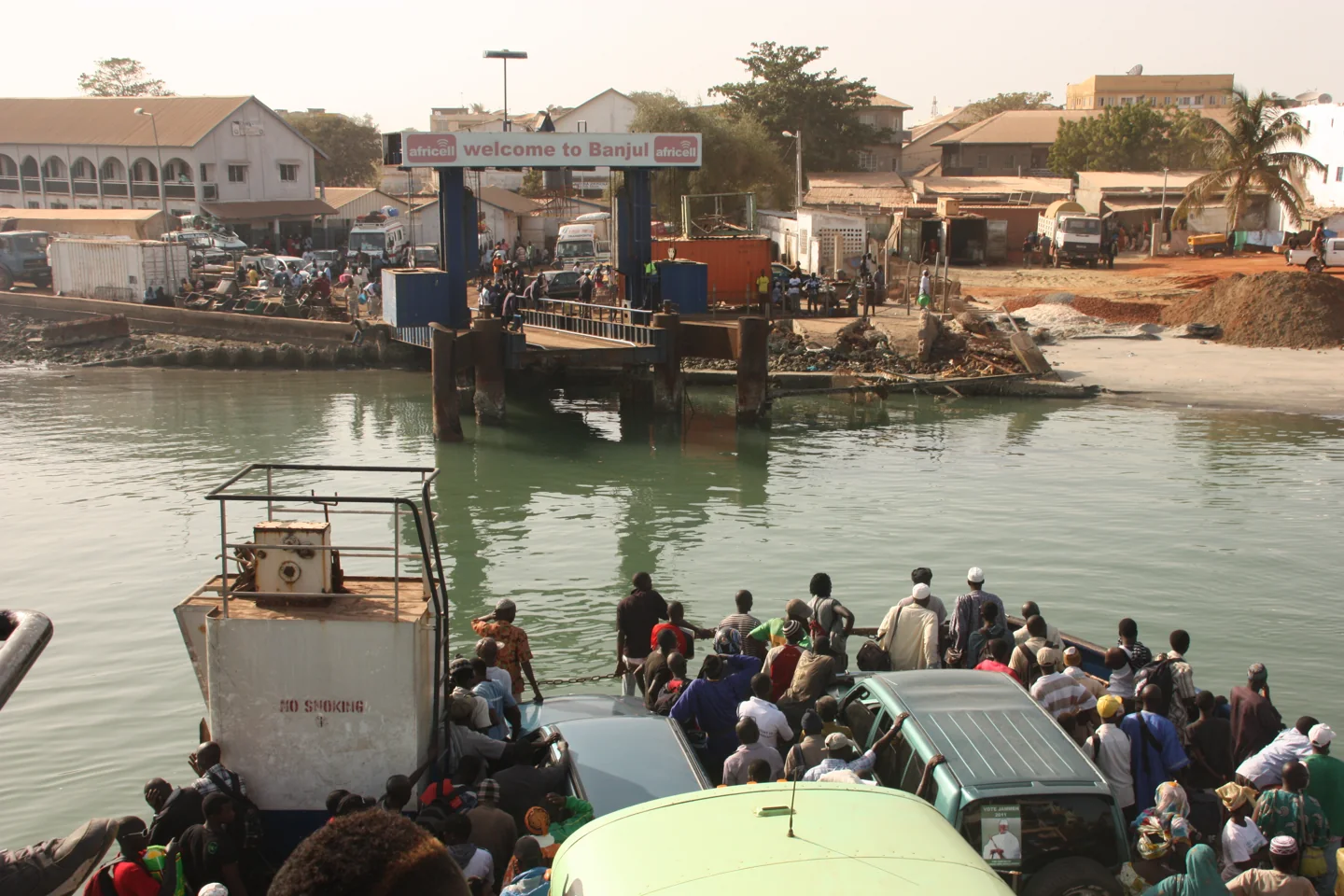
If travelling inland or across the river immediately, arrange that onward leg with the receiving institution. Include the journey from the airport, any crossing, luggage handling and the final transfer to the accommodation. Do not assume a flight arrival connects with a particular ferry or road service without confirming the date.
09Complete residence documentation and obtain a TIN
Take the current category checklist to the issuing centre with original documents and copies. GID’s published list includes passport, status evidence and embassy attestation; Permit B additionally needs the GRA payroll-tax receipt. Explain each dependant’s age and circumstances and obtain the documentation instructions for them.
- Follow the issuing process: obtain the prescribed form and payment receipt through the contracted bank counter, then complete the Justice of the Peace authentication required for the form.
- Attend the immigration interview and provide any further proof requested. Check spelling, nationality and birth details before biometric enrolment is finalised.
- Keep the receipt and collection instructions while printing and distribution are completed. Record the issued validity and renewal requirements rather than assuming the card is indefinite.
The published residence fee page is undated and nationality-specific arrangements can alter the charge. Obtain the amount for your actual passport and category at the issuing centre before payment. The Non-Gambian ID or Alien Card is a distinct route or accompanying document, not the Gambian citizen’s national ID application.
For a TIN, use the GRA taxpayer-registration process: complete, sign and date the application, attach accepted identity evidence and submit to the tax office or its currently supported online channel. A foreign passport is among the listed identity options.
The e-registration brochure describes temporary credentials, submission and a downloadable certificate after approval. The reviewed website’s login link led to an unavailable page, so obtain the working channel from GRA or use the tax office instead. Once issued, keep the certificate and update changes to taxpayer details. It will help with business, customs and bank procedures without replacing your immigration document.
10Open a usable account and local payment service
Ask a bank about the services you will use: salary or pension credits, international transfers, withdrawals, cards and bill payments. Obtain the current charge sheet and explain whether you are a resident or still completing residence documentation. Do not rely on an application being accepted without the bank’s verification.
Trust Bank Gambia’s current-account checklist provides a concrete starting point: a recent passport photograph, valid photo identification, TIN certificate, residence/work permission for non-Gambians and address proof. It accepts a utility bill or a letter from a Chief/Alkalo as listed address evidence. Ask how that applies to a newly arrived tenant whose bill is still in a landlord’s name.
- Assemble the relevant personal documents and obtain an appointment or the bank’s application instructions.
- Complete identity and account-purpose verification, signatures and any income or funds evidence the bank requests.
- Obtain account details, terms, access credentials and card-collection arrangements. Keep a second payment method available while activation is completed.
- Test a modest incoming transfer and withdrawal, then compare the actual charges with the quotation before routing all living funds through the account.
For mobile payments, QMoney Gambia provides a wallet service with registration through its app or *323#. Its website separates deposits and transfers from cash withdrawal charges and identifies supported bank links. Register in your own name, verify the recipient and confirm the applicable transaction fee before approving a payment.
Keep your own record of rent, utilities and school payments with the receipt and period covered. A mobile-money payment confirmation proves a transaction; it does not replace the landlord’s acknowledgement of what the amount settles.
11Inspect the home and agree the rental terms in writing
Inspect the actual unit, not only an example property in the same compound. Test water, lights, sockets, air-conditioning or fans, locks and included equipment. Ask how water is stored, whether the electricity meter is shared, and who manages faults. Visit the access road and drainage as part of deciding whether the home fits a residential stay.
- Establish the owner’s identity and authority to let the property. If an agent collects funds or signs, obtain its mandate and fee agreement.
- Request a written lease identifying the property, occupants, period and rent. Separate deposit, rent in advance, agent fees and recurring service charges.
- Set out notice, repairs, furnished inventory, restrictions on pets or business use, and how the deposit will be assessed and returned.
- Make a dated condition record with photographs, equipment, keys and meter references. Both parties should retain it.
- Pay by a traceable method with a receipt stating the property, payee, purpose and rental period covered.
No national rental average, mandatory advance period or general statutory deposit ceiling was verified for this guide. Treat the proposed amounts as terms to assess for that contract, with local legal assistance where a clause is unclear.
Before possession, establish who owns or operates the existing NAWEC account and how you will buy credit or pay bills. NAWEC’s new-connection process asks for property evidence, so a tenant needing a genuine new connection should coordinate the owner’s documents with the operator. A working meter, agreed payment responsibility and usable address proof are part of making the home operational.
12Arrange healthcare that is available and paid for
Arrange a travel-health consultation for your actual itinerary and circumstances. Current UK health guidance identifies malaria and other local risks, limited facilities and potentially high evacuation costs. Ask the clinician about prevention and the required vaccination evidence; obtain personal medical advice rather than choosing medicines from a general relocation guide.
- Request residential insurance quotations covering your proposed stay, existing conditions, prescriptions, hospital deposits, direct billing and evacuation.
- Give the insurer your city and ask it to identify available receiving facilities and the assistance procedure. Retain accessible funds for payments outside direct billing.
- Prepare a treatment summary and prescriptions. Establish whether each medicine can legally be brought in and whether local supply can continue it.
- Contact the local provider you intend to use, confirming appointments, current service availability, fees and its acceptance of the policy.
Edward Francis Small Teaching Hospital on Independence Drive in Banjul is a named starting point through its own website. Its published services do not establish that every specialist, medicine or scan is available for your visit; confirm the actual care needed.
The Gambian National Health Insurance Authority administers the national scheme and private-insurance framework. Ask it about your household’s eligibility, enrolment, contributions, active benefits and contracted facilities. Its general resident-membership statement should not be treated as proof of immediate free comprehensive care for a newly arrived foreign household.
Obtain emergency contacts and transport arrangements locally. The UK guidance says there is no direct equivalent of its 999 service and recommends establishing contacts in person. Save the hospital and insurer details as well as the route to care. Medicine restrictions can also affect ordinary prescriptions: have the responsible mission confirm the legal status before departure.
13Connect the home and test regular transport
For a genuine new NAWEC connection, assemble the owner’s property evidence, identification, nearest pole number and location sketch. Its FAQ gives a D500 processing fee followed by a feasibility survey, invoice and installation after payment. The stated survey and installation targets are not a guaranteed move-in date; normal service-distance limits can require an extension.
For an existing prepaid meter, record its reference and purchase credit through an authorised channel. Confirm how the household shares water and power bills. The published tariff page labels its 2023 schedules indicative, so obtain the tariff applicable to your account and examine actual consumption. Use the self-service portal where supported rather than estimating a national household bill.
Before signing for a home needing a new supply, ask NAWEC to assess the distance: its published limits are 45 metres from the low-voltage distribution point for standard electricity and 75 metres from the water main for standard water. Beyond those limits, establish the extension arrangements and cost before relying on a connection date. For electricity, NAWEC offers waiting for network expansion or arranging a private extension through a NAWEC-licensed contractor.
If the home still has a postpaid electricity meter, take a bill copy, nearest pole number and contact details to a branch to discuss prepaid conversion. Keep water readings with your bills; for a disputed charge, bring the bill and meter-reading card to the branch and request a review. NAWEC lists 1669 for utility faults and support.
- Visit a QCell care centre with identification and the device you intend to use. Establish the registration and data plan for that device.
- For an eSIM, the operator specifies device compatibility, a care-centre visit, paid activation and a QR code. Obtain the current activation quotation.
- For fixed internet, request a survey at the exact address. QCell’s help page says 5G fixed service requires a location survey, and mobile 5G needs activation and a signed acceptance form.
- Test your normal road journeys and agree taxi or arranged-driver price bases before relying on them for daily transport.
For Banjul–Barra or inland crossings, contact Gambia Ferry Services about the actual travel date, boarding, vehicle and passenger arrangements. Its reviewed tariff page did not supply a current fare table; obtain the ticket price rather than borrowing a quotation from a different crossing or an unverified booking service.
14Finish the first month and build a dependable routine
Make a simple household file with the residence and entry dates, TIN certificate, lease, utility references, bank details, education decisions and insurance evidence. Keep original documents secure, but make the copies needed for appointments easy to find. Record which application is pending and how to follow it up.
| First-month review | Evidence to keep |
|---|---|
| Immigration and employment | Issued permissions, receipts, collection instructions and sponsor’s renewal responsibilities. |
| Income and tax | First payment, payslip or pension statement, TIN and applicable filing dates. |
| Home | Lease, condition record, deposit receipt, meter references and repair contact. |
| Education | Admission, full invoice, school calendar and collection arrangements. |
| Care | Active policy or confirmed benefits, appointment contacts, payment and emergency plans. |
| Daily services | Verified commute costs, data plan, meter-credit method and actual first bills. |
Compare food shopping at the places you can conveniently reach. Ask prices for the same quantities and quality before comparing them, and keep transport costs in the calculation. Serekunda’s market and Bakau’s waterfront illustrate different everyday settings; historical photographs do not establish today’s stalls, opening hours or prices.

Build contacts through your actual school, course, workplace and neighbourhood. Begin with the people who help the household function: the landlord’s repair contact, utility desk, school administrator and a care provider. Ask the organising institution about clubs, public activities or parent events, with time, location and participation arrangements clear.
Review spending after the first complete billing period. Separate initial purchases and refundable deposits from ongoing costs, then adjust the budget using your own observations. Set reminders for document and insurance renewals, tax deadlines, school payments and any pension life certificate. When an address, employer or household arrangement changes, determine which records and permissions must be updated.
Sources & further reading
Reviewed 14 October 2026. Sources are linked beside the relevant instructions. Nationality exemptions differ from the duration granted at entry and from permission to work. Some official pages contain older prices or deadlines; newer dated notices govern the figures quoted here. Photograph dates do not establish current service availability. Targeted review on 21 October 2026 confirmed NAWEC connection and billing instructions, QCell eSIM steps and the nationality-scoped UK entry guidance; other sources retain the review date shown above. Reviewed 14 October 2026. March 2026 expatriate payroll tax is an employer cost. Marina's 2026–27 schedule separates GBP international tuition from GMD levies. NAWEC's processing fee excludes installation. Residence fee pages and 2023 utility tariffs are not presented as confirmed current charges; rental examples are hypothetical. Photograph credits, licences and capture years appear with the images.
Browse the source directory
- Gambia Immigration Department — residence permits
- Gambia Immigration Department — official service
- GID — entry requirements
- UK government — Gambia entry requirements
- GID — expatriate quota
- GRA — expatriate payroll notice, 10 March 2026
- Gambia — Single Window Registry
- Ministry of Justice — sole proprietorship
- GIEPA — investment steps
- GRA — Domestic Taxes Department
- GRA — TIN registration brochure
- GRA — domestic tax FAQs
- GRA — employment-income calculator
- GRA — business personal-income calculator
- Marina International School — official website
- Marina International School — 2026–27 fees
- Marina International School — 2026–27 calendar
- University of The Gambia — official website
- University of The Gambia — admission requirements
- University of The Gambia — student portal
- GRA — customs FAQs
- GRA — customs duty exemptions brochure
- GRA — importing by air, sea and land
- USDA APHIS — live animals to Gambia
- Trust Bank Gambia — personal current account
- QMoney Gambia — wallet service
- QCell — customer support
- QCell — eSIM
- QCell — help and coverage
- NAWEC — customer FAQ
- NAWEC — service tariffs
- NAWEC — self-service
- Gambia National Health Insurance Authority
- UK government — Gambia healthcare
- Edward Francis Small Teaching Hospital
- Gambia Ferry Services — official website
- Gambia Ferry Services — tariff service
- US government — Gambia travel guidance
Make your next step a practical one
Choose your actual school or working base, then establish the entry and residence category appropriate to the passport and activity.