Visa

Moving & Living - Hong Kong - Complete Guide
Move to Hong Kong step by step: select a neighbourhood, arrange work or study permission, prepare the household, obtain an HKID, and organise schools, tenancy stamping, banking, healthcare and transport.
Photo credit
Hong Kong’s daily geography is measured in station exits, harbour crossings, building entrances and hills. A flat in Kennedy Town, a Kowloon address and a home in Sha Tin can offer very different journeys even when the railway map makes them look close. Cantonese is important in everyday life; English and Chinese appear throughout administration.
This guide takes you through a practical move to the Hong Kong Special Administrative Region: choose the right immigration route, prepare your household, establish an identity card and payment arrangements, and turn an inspected flat into a working home. Immigration approval, an HKID and permanent residence are different things; the numbered journey keeps those tasks separate.
Hong Kong at a glance
- Geography
- Hong Kong Island · Kowloon · New Territories
- Currency
- Hong Kong dollar · HKD / HK$
- Everyday communication
- Cantonese; Chinese and English in administration
- Immigration
- Immigration Department · ImmD
- Identity document
- Hong Kong identity card · HKID
- Tax authority
- Inland Revenue Department · IRD
- Employee retirement savings
- Mandatory Provident Fund · MPF
- Public transport
- MTR, buses, trams and ferries
- Country calling code
- +852
- Reviewed
- 14 October 2026
Follow your moving journey
Start at step 1, or jump to the task you are working on.
01Choose the neighbourhood from the door-to-door journey
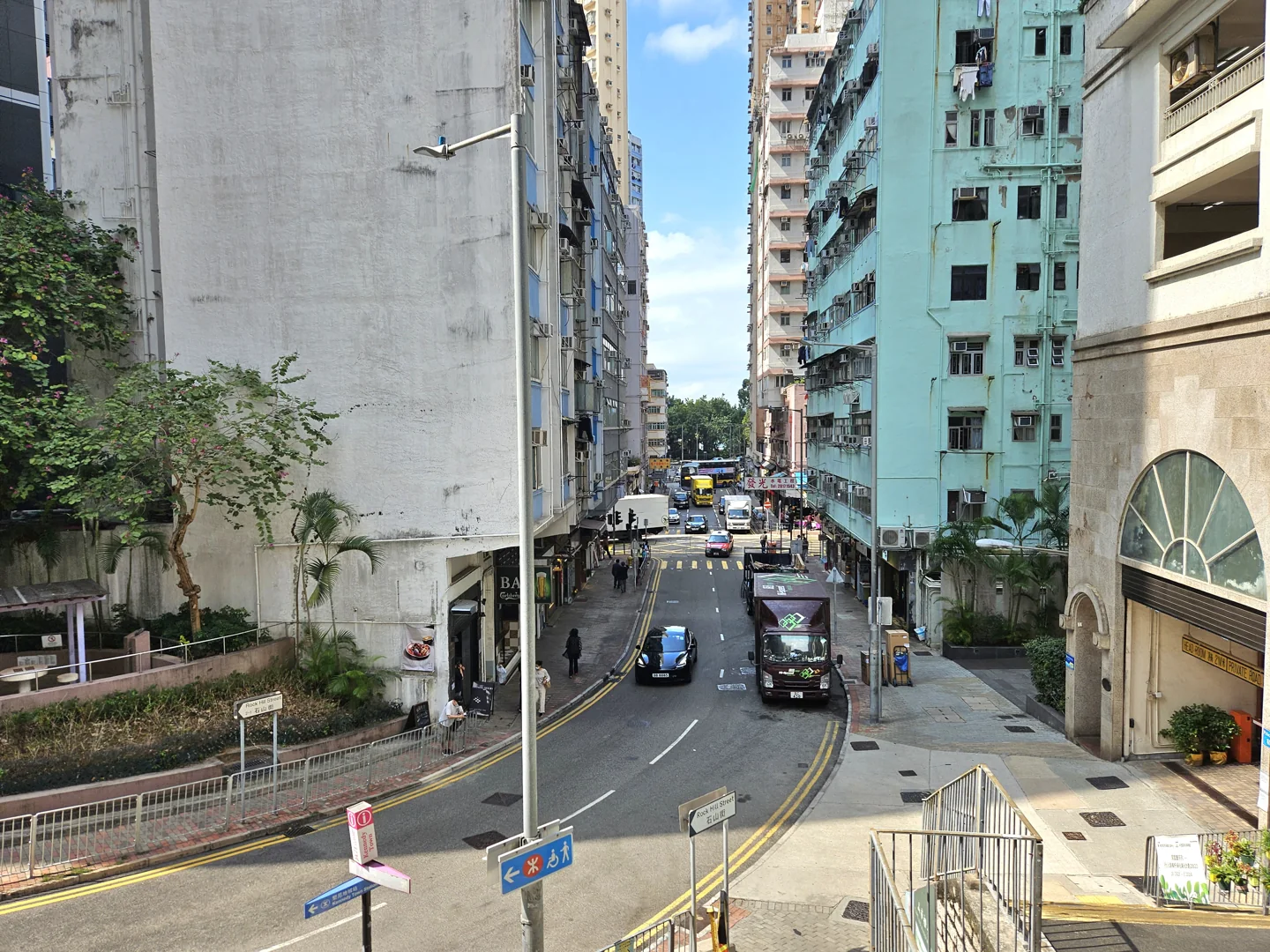
Choose the workplace or campus first, then compare the whole journey from a proposed flat. An MTR station name is only part of the trip: a building may be uphill, a station exit may be a long walk away, and changing lines can matter more than distance.
| Area to investigate | Useful comparison |
|---|---|
| Sheung Wan, Sai Ying Pun or Kennedy Town | Compare the walk to the Island Line and the slope between the station, groceries and building entrance. |
| Wan Chai or North Point | Test the workplace journey and street noise at the actual viewing time; distinguish a busy-road flat from an apartment facing away from it. |
| Tsim Sha Tsui, Jordan or other Kowloon addresses | Test any harbour crossing and the station exit serving the building, rather than assuming every Kowloon home has the same commute. |
| Sha Tin or Tai Po | Compare the East Rail journey, connection and local walk. Include school pickup and the trip home after evening activities. |
| Tung Chung or an outlying-island address | Work through the airport, rail or ferry connection and an alternative when the usual service is disrupted. |
- Put the employer, school, clinic and likely grocery stop on the same map. Ask each institution for the entrance you will actually use.
- Trial the route at the time you would travel. Note the station exit, lifts, stairs, road crossings and the final approach with luggage or a pushchair.
- Inspect the building as well as the flat: entrance access, lift, rubbish arrangements, maintenance and deliveries. Ask how visitors and contractors are admitted.
- Compare complete housing quotes, including management charges and any items billed separately. A lower rent can be outweighed by another daily connection or a school transport charge.
02Choose the permission that matches what you will do
Hong Kong has its own entry arrangements. A visa or residence permission for another jurisdiction does not answer the Hong Kong question. Start with the traveller’s nationality, document, current residence and purpose, using ImmD’s entry-permit requirements and the visitor application process where relevant.
| Proposed activity | Route to investigate |
|---|---|
| A confirmed professional job | General Employment Policy, or the applicable Mainland-specific arrangement. |
| Exploring opportunities as a qualifying talent | Top Talent Pass Scheme, with its own income or degree criteria. |
| Joining eligible family | Dependant residence, with relationship and sponsor conditions. |
| Enrolling on a course | Study permission in addition to institutional admission. |
| Establishing or joining a business | Investment as entrepreneurs; company registration is a separate task. |
The GEP requires a genuine relevant job offer, appropriate qualifications or supported experience, and market-level remuneration. It excludes Chinese Mainland residents under its ordinary arrangement and nationals of Afghanistan, Cuba and North Korea; overseas PRC passport holders need overseas permanent residence, or at least one year of immediately preceding overseas residence with an overseas application. Here, overseas excludes the Mainland, Hong Kong, Macao and Taiwan. Use the actual category instructions rather than treating it as open to every passport: General Employment Policy.
TTPS does not require an initial job offer. Category A requires HK$2.5 million in qualifying annual employment or self-owned-company income in the preceding year, excluding personal-investment income. Category B requires an eligible bachelor’s degree and at least three years’ work experience in the preceding five years. Category C covers eligible degree graduates from the preceding five years with less than three years’ experience, is quota-controlled, and excludes specified local graduates who should investigate IANG. The same three nationality exclusions apply: TTPS eligibility and current university list.
- Select the route and read its exclusions before collecting documents.
- Identify the employer, institution or family sponsor’s role, and give that party a deadline for its part of the file.
- Apply through the route’s official service and preserve the acknowledgement. Allow for additional-document requests before making a fixed moving commitment.
03Put the contract and operating plan in place
Agree the employment terms in writing. Ask for the salary currency, payment date, benefits, probation, notice, work location and proposed start date. Clarify whether the company pays relocation and application costs, and what happens if the start moves because approval is pending.
- For a GEP application, coordinate the applicant and employer submissions through the official online employment service. Give the employer clear copies of the qualifications and experience evidence it needs to support the role.
- Ask the employer to identify who will answer ImmD enquiries and inform you of requests or decisions. Keep a copy of the submitted job description and contract.
- Read the permission’s conditions before starting. Ordinary GEP employment is tied to approved employment; obtain prior approval for a change. A talent-route permission can have different conditions.
- Ask payroll how MPF is handled. For regular covered employees aged 18–64, enrolment is generally required within 60 days. Some entrants have specific overseas-retirement or short-permission exemptions; being foreign is not itself an exemption: MPFA employee coverage.
For covered monthly employees, employer and employee generally contribute 5% of relevant income. The current employee minimum is HK$7,100 and the maximum relevant income is HK$30,000, producing a HK$1,500 monthly mandatory cap for each side. Initial employee contribution holidays also apply: actual contribution rules. Ask payroll to explain the first payslip rather than assuming a deduction has been missed.
Entrepreneurs should prepare the business case before treating incorporation as permission to operate personally. ImmD considers a three-year plan, financial forecasts and economic contribution: investment as entrepreneurs. Use GovHK’s registration directory and the Companies Registry filing process for the separate company and business registrations.
No general digital-nomad route was verified in the reviewed material. Visitors normally cannot take employment, paid or unpaid, or establish or join a business. Describe a proposed remote-working arrangement to ImmD before relying on it: permissible visitor activities and specific exceptions.
04Reserve initial cash and understand the tax bill
Build the budget from the actual household arrangements. Separate money you spend from money you deposit and may recover, and keep tax savings separate from the bank balance used for day-to-day bills.
| Initial requirement | Recurring or later commitment |
|---|---|
| Flights, arrival transfer and temporary accommodation | Rent, management charges and the commute |
| Visa application and issuance fees for each relevant traveller | Permission extensions and document renewals when due |
| Negotiated rental deposit, advance rent and any agent commission | Utilities, groceries, mobile service and insurance |
| School application, acceptance deposit and applicable levy | Tuition, transport, meals and activities |
| Service and payment-card deposits | Tax demand, provisional tax and eligible MPF deductions |
Specified immigration schemes charge HK$600 per application, non-refundable, for each principal applicant or dependant. On approval, issuance is HK$1,300 for a relevant period over 180 days or HK$600 for a period not exceeding 180 days. These rules took effect on 26 February 2025; they are not every visa’s fee: scheme list and fee calculation.
Hypothetical rent example: a HK$20,000 monthly lease with a negotiated two-month deposit and one month paid in advance requires HK$60,000 for those items. This is arithmetic, not a market quotation or a statutory deposit rule. Temporary accommodation, commission and stamping can add to that initial amount.
Hong Kong’s tax year runs from 1 April to 31 March. Use the official salaries-tax calculator for the correct year and income. The basic allowance is HK$145,000 from 2026/27, following legislation enacted in May 2026. The HK$3,000 maximum one-off reduction concerns 2025/26 final tax, not a promised 2026/27 rebate: enacted allowances and year-specific relief.
- Ask payroll for an annual-income estimate and collect the records needed for the return.
- Reserve for the actual assessment and provisional tax; a first demand can require more cash than one year’s final liability alone.
- If chargeable and not already asked for a return, follow IRD’s notification requirement, normally by 31 July for salaries or property tax.
- If eligible circumstances justify provisional-tax holdover, apply under IRD’s conditions and time limits. It is a separate request, not a reason simply to skip payment.
05Secure the right school or university application
Make a child-by-child list of birth date, current year group, language, qualification system and support needs. Apply to the appropriate year rather than translating a foreign grade number automatically. Ask how prior study and any learning support are assessed.
For ESF Year 1 or Year 7 entry in August 2027, the central application period ran from 1–30 September 2026 and has closed at this review date. Later applications go to a waiting list by the applicable category and date. General applications operate separately through the year: central admissions dates; correct online application forms. Paying an application fee does not secure a place.
- Choose the correct intake and form, then prepare the identity and school records requested for that child.
- Submit the file and retain the reference. Ask admissions about the assessment and current availability before assuming a term start.
- Obtain the full offer terms: tuition, acceptance deposit, applicable capital levy, transport and notice requirements.
- For a public-sector placement enquiry, contact the Education Bureau’s Regional Education Offices or an appropriate school directly. A child admitted as a visitor ordinarily cannot enter school without ImmD clearance: placement eligibility FAQ.
ESF’s published 2026–27 primary tuition is HK$145,000 for Years 1–6, paid over ten months: HK$14,500 per payment month, not twelve equal calendar-month payments. Its primary/secondary application charge is HK$2,800; acceptance deposits and levies are additional. These amounts are not a quotation for 2027–28: year-specific school charges.
For university, HKU’s International/Non-JUPAS process opened on 23 September 2026 for 2027 entry. The first-round deadline is noon Hong Kong time on 25 November 2026; later consideration is rolling and subject to availability. Enter predicted or actual results and follow programme-specific document dates: HKU international application instructions. Its current FAQ quotes HK$780 for the 2027 application: HKU admissions FAQ.
Arrange study permission with the institution’s sponsorship process after admission. Before student employment, obtain the actual No Objection Letter and applicable conditions. The temporary exemption covers qualifying non-exchange students on full-time accredited local degree programmes of at least one academic year; it is not permission for every course or dependant.
06Match retirement or family plans to an eligible route
A pension payment alone is not a verified ordinary retirement-residence route. Begin with the status you actually qualify for: an existing right to remain, a recognised family relationship or a distinct qualifying admission scheme.
Under the dependant policy, recognised spouses or qualifying partners and unmarried dependent children under 18 can apply under eligible sponsors. Parents aged 60 or over can apply where the sponsor is a permanent resident or has right to land or unconditional stay; that parental option does not generally attach to an ordinary time-limited professional visa. Afghan and North Korean nationals are excluded. Mainland applicants need the applicable qualifying sponsor exception; former Mainland residents with Macao identity cards held for under seven years face an additional restriction unless admitted through the One-way Permit Scheme: exact relationship and sponsorship rules.
- Have the sponsor identify the applicable status and provide evidence of the relationship, support and accommodation.
- Prepare a separate document list for each applicant. Establish who signs a minor’s application and whether additional parental or guardianship evidence is needed.
- Budget care, insurance, prescriptions and accessible housing around the actual household. Trial the building lift and the route to routine appointments.
- Check work conditions independently: dependants of study entrants need prior approval to work, whereas the policy permits employment for several other eligible sponsor categories.
The New Capital Investment Entrant Scheme is a separate substantial-investment route, not a low-cost pension visa. Current eligibility includes net assets of at least HK$30 million over the prescribed six-month period and HK$30 million in qualifying investments, with other conditions. Eligible groups include foreign nationals except those of Afghanistan, Cuba and North Korea; Chinese nationals with foreign permanent residence; Macao residents; and Chinese residents of Taiwan. Follow InvestHK’s actual eligibility assessment before committing funds. Its current FAQ identifies a designated-account investment-assessment change for applications submitted from 1 November 2026: current application changes.
07Build the document pack and schedule the animal move
Keep each traveller’s passport, application, permission and family evidence together. Use the travel document’s exact name on submissions.
- Obtain the route-specific document checklist. For a professional file, coordinate the photograph, travel document, qualifications and experience evidence with the employer’s contract and business documents.
- Where a document is not in Chinese or English, arrange the certified translation ImmD requires. Ask the receiving institution whether it also needs an original, authentication or separate academic verification before paying for extra services.
- Prepare scans that retain every relevant edge and page. Check the portal’s actual format and size limits before the submission deadline.
- For belongings, measure the flat’s entrance, lift and furniture space before shipping. Ask the carrier to quote packing, delivery, access limitations and storage separately.
- Bring essential documents and medication with you. An arriving shipment should not contain the only copy needed for an appointment.
Dogs and cats require an AFCD Special Permit in advance, including for transit. Use the animal’s actual source country or place to select Group I, II, IIIA or IIIB; those groups have different quarantine requirements. Mainland origin is now Group IIIA: AFCD’s current origin groups.
For Group IIIA, the process involves microchip, vaccination and rabies-antibody evidence, a reserved quarantine space, permit and health certification; minimum post-arrival quarantine is 30 days. The posted permit fee is HK$432 for one animal and HK$102 for each additional animal on the same permit and shipment. Notify the arrival officer at least 24 hours ahead: Group IIIA’s ordered application instructions.
Give the veterinarian the relevant group’s terms and work backward from the permitted arrival date. Do not book an animal’s final travel until the permit and required space are confirmed. Airline transport acceptance is separate. AFCD also requires a licence and rabies vaccination for dogs over five months; ask how those will be completed for the arriving dog.
08Enter under the approved status and complete the first journey
Before flying, save the approved e-Visa and a printable copy where applicable, the accommodation address and sponsor’s contact. Ask the host to provide the building name and entrance instructions as well as a map pin.
- Present the travel document and applicable permission at immigration. Check the admitted status and limit of stay rather than assuming the application’s proposed dates are the arrival record.
- Keep the landing or permission record with the e-Visa and passport. It may be needed for later identity, banking or extension tasks.
- Choose an onward journey that accommodates the luggage and final building entrance. If using Airport Express, plan the connection from the station to the accommodation, not just the airport train.
- After reaching the temporary base, test phone access, door entry and the next day’s route. Contact the sponsor with the actual arrival date.
- Put each traveller’s permission expiry and required first registration in the calendar before scheduling other appointments.
MTR’s current Airport Express guide lists an adult airport–Hong Kong Station single journey at HK$120 using Octopus or eligible contactless payment, versus HK$130 for a single-journey ticket. The fare arrangement dates from the June 2025 adjustment and was checked on 14 October 2026; connection benefits have conditions: Airport Express fare and interchange instructions. Select the actual destination station and payment method.
Keep Mainland or Macao travel as a separate permission question. A Hong Kong admission or first identity card does not by itself establish the right to enter those places.
09Register for the Hong Kong identity card
A new arrival aged 11 or over who is permitted to stay for more than 180 days must register for an HKID within 30 days of arrival, unless exempt. First registration has no fee; replacements can be chargeable. This card records local identity and is not automatically a permanent identity card: registration rules and documents.
- Use the ImmD appointment and pre-fill entry point and select a Registration of Persons Office handling your application type. Check the office, time and required originals.
- Bring the valid travel document and evidence of residential status. For an applicant aged 11–17, arrange the required parent or legal guardian’s attendance and identification.
- Attend in person, complete the officer’s checks and retain the acknowledgement. Follow the stated collection instructions and date rather than estimating when the card will be ready.
- Collect the card through the permitted process and verify the personal details. Keep the acknowledgement until collection is complete.
The booking system’s future appointment window does not cancel the statutory arrival deadline. If the available appointment presents a problem, contact ImmD promptly with the arrival and permission details, rather than simply waiting beyond 30 days.
After receiving the card, update the institutions that initially used a passport or temporary record. Keep the old and new identification details linked correctly so payroll, banking and school records refer to the same person. Tell each provider about an address change through its own process.
Set up tax administration alongside these tasks using the actual IRD notice and individual tax service. An employer’s reporting or an HKID application is not a substitute for your own return when IRD requires one. Preserve payslips and the employer’s annual records from the start.
10Open an eligible account and test payments
Ask about a named product and application channel. HKMA explains that banks do not all use an identical checklist: identity, address information and the actual customer circumstances matter. Use the regulator’s account-opening guidance to prepare, then obtain the bank’s own requirements.
- Identify the documents you currently hold: passport, immigration evidence, HKID if issued, actual residential address and source-of-funds information.
- Choose a channel you are eligible to use. HSBC offers HKID and eligible overseas-passport mobile applications with age and location conditions, as well as other channels; it does not promise every passport can use the app: HSBC’s Hong Kong opening process.
- Read the balance and fee conditions before depositing money. For non-HKID holders opening HSBC One from 1 January 2026, the posted HK$100 monthly below-balance fee is waived under the specified HK$10,000 average relationship-balance condition over three consecutive months. Accounts opened with HKID have different conditions: the actual product terms.
- Activate access, test a modest transfer and confirm the received amount. Save the support details and ask about any early transfer or cash-withdrawal limits.
- Give payroll the confirmed account details and verify the first payment before relying on the account for automatic deductions.
FPS enables participating banks and wallets to transfer Hong Kong dollars or renminbi using identifiers such as a mobile number or email. Register through your own provider, select the right account and confirm the displayed recipient before approving a payment: Faster Payment System.
For a rental deposit, tuition payment or service bill, match the payee and reference to the agreement. Keep the bank receipt with the invoice or contract. A successful small test also helps reveal a wrong currency, missing reference or unexpected charge before a larger transfer.
11Inspect the flat and complete the tenancy paperwork
Obtain the proposed agreement before signing. Check the landlord’s identity and authority, exact premises, rent, term, break clause, deposit, notice, repair obligations and any separately payable management charges, rates or government rent.
- Inspect water pressure, air-conditioning, drainage, windows, ventilation and the included appliances. Ask whether repairs will be completed before possession and record the promise in writing.
- Take photographs of the condition and inventory with the other party. Record the electricity and water meters and the handover date.
- Agree the payment method, receipt and deposit-return conditions. Establish whether an agent’s commission is payable, by whom and at what point.
- Complete stamping within 30 days of execution. All executing parties are liable for stamp duty, so specify who submits and pays, then keep the certificate with the agreement: IRD tenancy-stamping process.
- For an ordinary domestic tenancy, ask the landlord for the relevant RVD notice record. Form CR109 is due within one month; regulated subdivided tenancies have a different notice framework: RVD’s tenancy requirements and assistance.
Lease stamp duty depends on the term. For a term exceeding one year but not exceeding three, the rate is 0.5% of annual or average annual rent. Deposits are excluded; rounding and counterpart rules still apply: official lease rates.
Hypothetical stamping example: a two-year lease at HK$20,000 monthly has annual rent of HK$240,000. At 0.5%, the lease duty is HK$1,200, before any applicable counterpart charge. This is not a rent quotation, and it does not determine how the parties share the payment.
Read special terms carefully if the listing is a subdivided unit, serviced accommodation or another unusual arrangement. Do not assume the standard ordinary-flat paperwork covers it. RVD offers advisory and mediation services; bring the actual contract and payment records when asking about a dispute.
12Confirm healthcare eligibility and choose routine care
Public healthcare eligibility is more specific than simply “being in Hong Kong”. HA includes HKID holders with valid relevant permission, resident children under 11 and certain approved persons. An identity card from an expired permission does not establish eligibility. Use the actual documents when asking the provider to classify the patient.
| HA public service from 1 January 2026 | Eligible Person | Non-eligible Person |
|---|---|---|
| Accident and Emergency attendance | HK$400; triage Categories I and II exempt | HK$2,100 |
| Acute/general inpatient daily charge | HK$300 for acute general beds | HK$7,400 for general hospitals |
These are published public-service categories, not private-hospital package estimates. Additional services have their own charges and conditions: HA’s current fees and eligibility. Do not budget using the older A&E amount.
- Ask the employer which medical policy is provided, who is covered and when it starts. Get the insurer’s local provider and pre-authorisation instructions.
- Bring a concise clinical history and prescriptions with generic medication names. Arrange the first routine appointment before the existing supply runs out.
- Have the clinic or hospital confirm the accepted identity documents, appointment route and payment arrangement. For non-emergency specialist care, ask how referrals and booking are handled.
- Compare private insurance against the care actually needed, including exclusions, deductibles, limits, maternity and ongoing conditions. Confirm direct billing rather than assuming reimbursement is immediate.
- Save the appropriate emergency-care location and an accompaniment contact alongside the insurer’s assistance number.
HA introduced additional safety nets in 2026, including an annual spending cap on covered public charges. Its scope and exclusions matter; it is not a ceiling on every private service or self-financed item: fee reform and assistance mechanisms. Ask the hospital how the mechanism applies before treating it as part of your own budget.
Check every household member separately. The adult’s documents, a child’s resident status and a visiting relative’s insurance can lead to different arrangements even when everybody lives temporarily at the same address.
13Activate the home services and test the commute
Ask the landlord which services the property uses and whether an existing account must be transferred or closed. Copy the account and meter details at handover, and agree who settles earlier consumption.
- For CLP supply, use the residential opening or name-transfer service with the accepted identification and exact premises. Submit requested supporting documents within its stated seven-day period. The deposit is assessed from expected usage, normally no more than the highest expected 60-day charge: CLP deposit rules.
- For HK Electric supply, use its separate moving-in service. Confirm the start date and account-holder details rather than assuming a CLP application covers every address.
- Take up the water account through WSD’s incoming-consumer process, coordinating the reading with the departing account holder. Its posted domestic deposit is HK$400; closure and refund are separate tasks: water deposit and final-reading instructions.
- Register a local SIM before activation. HKID holders normally use iAM Smart; other accepted identification follows the provider’s process. Use OFCA’s real-name rules and its official brand-specific registration links.
- Have the internet provider confirm service to the actual flat, installation, equipment, contract period, total monthly price and move-out terms. Test indoor mobile reception before choosing a backup connection.
For everyday transport, the Standard On-Loan Octopus has a posted HK$50 deposit plus the initial stored value; sold tourist products and mobile versions have their own conditions: Octopus card options. Test the actual journey and keep enough balance for the return.
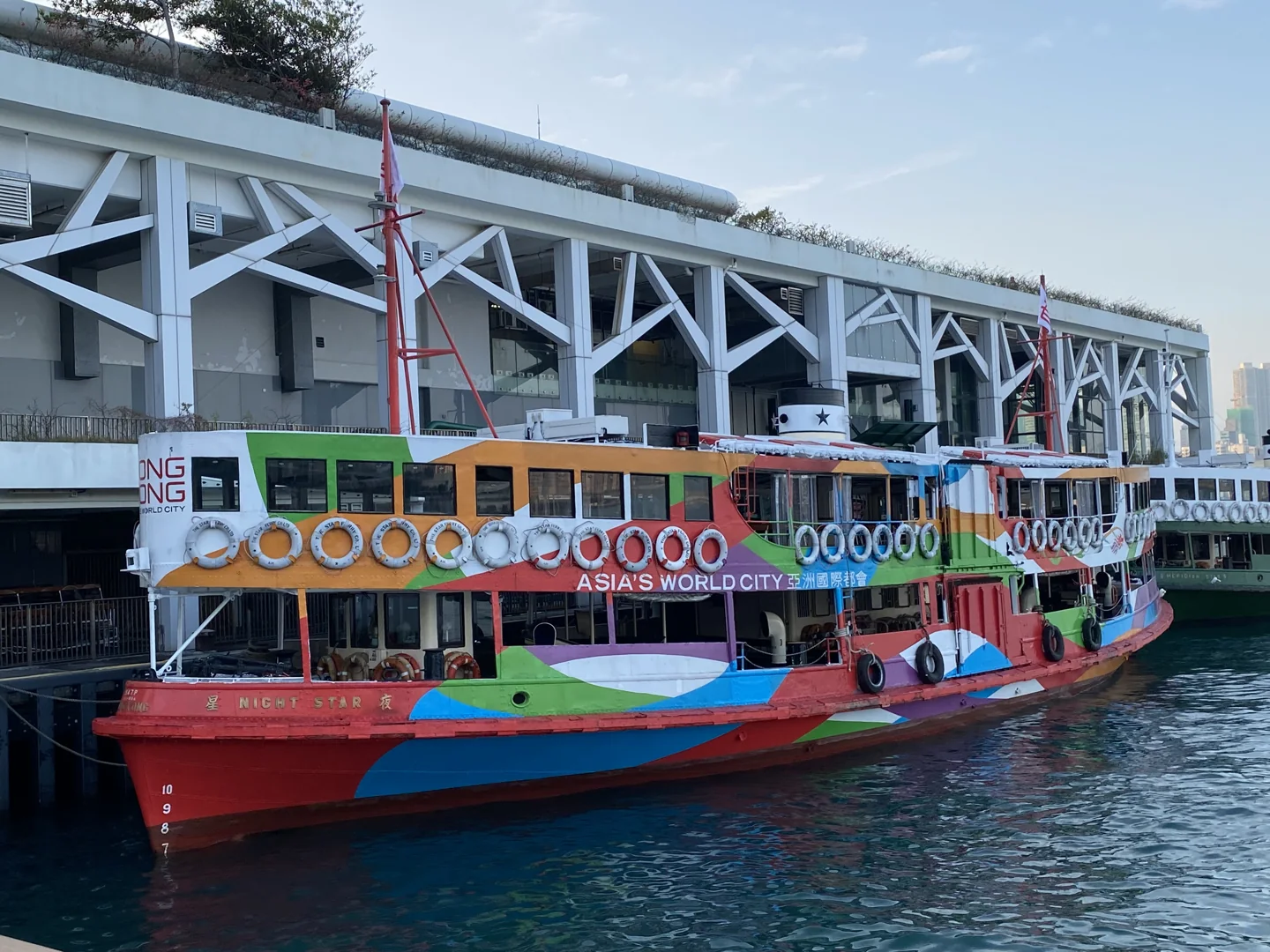
Star Ferry’s Central–Tsim Sha Tsui regular upper-deck adult fare is posted at HK$5 on weekdays and HK$6.50 on weekends and public holidays. Choose the actual regular route and deck; a harbour-tour ticket is a different product: current ferry services and fares. The photograph below shows a vessel at Wan Chai, not a promise about the boat allocated to your trip.
Install HKO’s MyObservatory and check transport operators when weather warnings affect the journey. Agree the workplace or school’s disruption instructions in advance so the household knows who should remain at home and who collects a child.
14Complete the first-month tasks and build a local routine
Review unfinished tasks weekly: identify the owner, required document and next confirmed action, and preserve the government deadlines.
- On arrival: save every traveller’s admission record and calendar the limit of stay. Notify the sponsor and identify the HKID registration deadline where applicable.
- Before the first full working week: test the commute, payroll details and any school collection arrangement. Check the employer’s MPF and insurance start position.
- After handover: retain the inventory, meter readings, tenancy certificate and landlord-notice evidence. Confirm who receives each bill.
- Before tuition or household payments: test the payment method, exact payee and reference. Separate deposits, levies and monthly charges in the budget.
- Before medication runs out: establish the routine provider and obtain the next prescription through the appropriate local process.
- At month’s end: compare actual spending with the initial plan, resolve unexplained charges and prepare the documents for the next appointment.
For a practical community starting point, apply for library borrowing through Hong Kong Public Libraries’ resident registration service using the actual identity and recent address evidence. A library visit, school parent contact or regular local activity is easier to sustain when it fits a journey you already make.
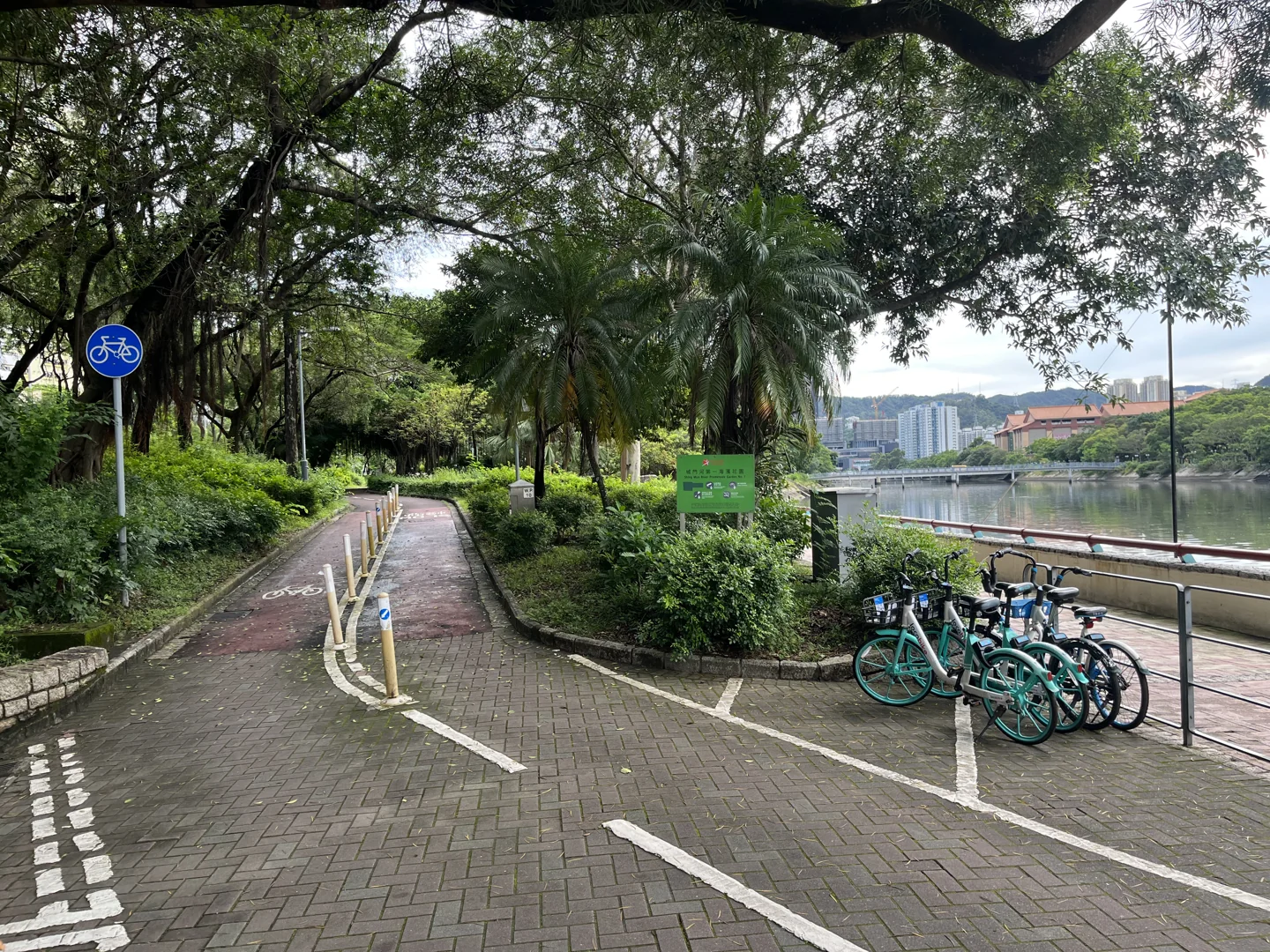
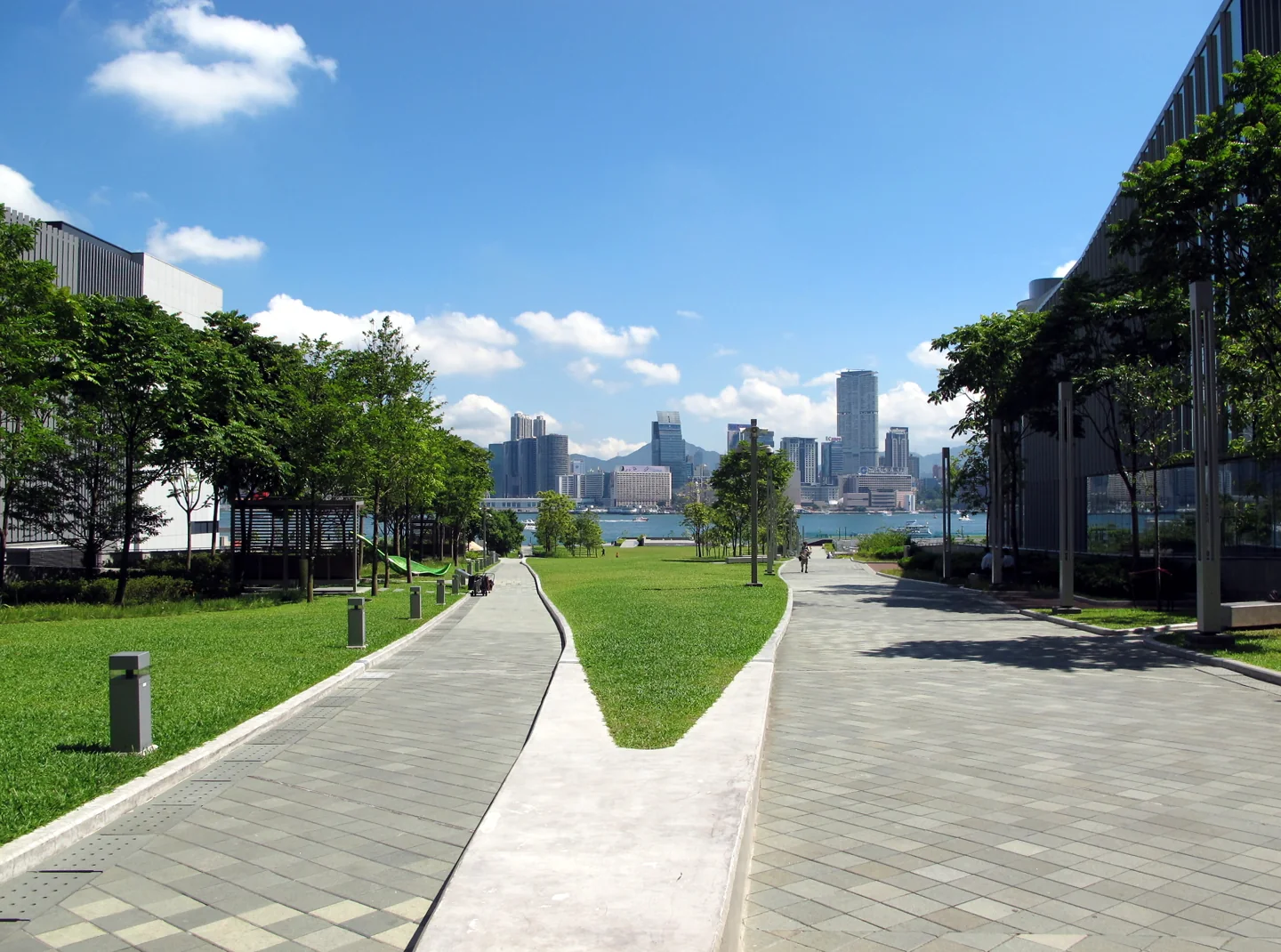
Investigate public spaces such as Tamar Park or the Shing Mun riverside for a regular outing. The photographs are dated views rather than current event announcements.
Keep a longer-term calendar too. For a GEP extension, ImmD’s current window begins three months before expiry and it advises applying at least six weeks ahead. Follow the route’s actual conditions and retain the decision before relying on continued permission. Add school withdrawal notice, insurance renewal and lease dates alongside the immigration reminder.
Keep the household’s travel, identity, work, tax, tenancy, banking and medical records retrievable, with current contact details. Maintain a dated list of approvals, pending tasks and payments.
Sources & further reading
Reviewed 14 October 2026. Sources are linked beside the relevant instructions. Hong Kong has its own immigration procedures. Route eligibility depends on nationality, travel document, application location and household relationship. Permanent residence is not established by receiving a first HKID. The 2026–27 tax allowances cited here were enacted in May 2026; proposed measures and prior-year rebates are not treated as current-year entitlements. Pet quarantine follows the actual origin group, not one universal rule. Amounts checked on 14 October 2026. Hospital Authority charges took effect on 1 January 2026. Immigration specified-scheme fees took effect on 26 February 2025. School fees retain their 2026–27 academic-year scope; the HKU application amount refers to 2027 entry. Operator prices without an effective date are labelled posted. Rental examples are hypothetical and refundable deposits are separated from expenses. Photograph credits, licences and capture years appear with the images.
Browse the source directory
- Immigration Department — visitor and transit applications
- Immigration Department — visa and entry-permit requirements
- Immigration Department — permissible visitor activities
- Immigration Department — General Employment Policy
- GovHK — online employment application
- Immigration Department — Top Talent Pass Scheme
- Immigration Department — dependant residence
- Immigration Department — specified-scheme fee structure
- Immigration Department — investment as entrepreneurs
- GovHK — business and company registration
- Companies Registry — electronic incorporation and filings
- IRD — enacted 2026–27 tax measures
- GovHK — salaries-tax computation and calculator
- IRD — notify chargeability
- IRD — provisional-tax holdover conditions
- MPFA — employee mandatory contributions
- MPFA — employee coverage and exemptions
- ESF — primary and secondary admissions
- ESF — actual online application instructions
- ESF — 2026–27 school fees and charges
- Education Bureau — newly arrived school placement
- Education Bureau — placement eligibility FAQ
- HKU — International / Non-JUPAS applications
- HKU — international admissions FAQ
- Immigration Department — study permission
- New CIES — current eligibility
- New CIES — rules and current application changes
- AFCD — dog and cat import categories
- AFCD — Group IIIA permit and quarantine sequence
- MTR — Airport Express guide
- Immigration Department — first identity-card registration
- Immigration Department — card appointments and general information
- HKMA — account-opening requirements
- HSBC — Hong Kong account-opening channels
- HSBC One — 2026 non-HKID conditions
- HKMA — Faster Payment System
- RVD — tenancy matters and assistance
- IRD — tenancy stamping FAQ
- GovHK — current lease stamp-duty rates
- Hospital Authority — 2026 fees and eligibility
- Hospital Authority — healthcare fee reform and safety nets
- CLP — open or transfer a residential account
- CLP — residential deposit assessment
- HK Electric — moving in
- Water Supplies Department — taking up an account
- Water Supplies Department — domestic deposit and closure
- OFCA — real-name SIM registration
- OFCA — official prepaid registration channels
- Octopus — Standard On-Loan card
- Star Ferry — regular services and fares
- Hong Kong Public Libraries — borrower registration
- Hong Kong Observatory — MyObservatory
Make your next step a practical one
Choose a base around the actual workplace or school, identify each household member’s immigration category, and arrange the document and arrival dates before committing to a long tenancy.