Visa
Moving & Living - Latvia - Complete Guide
Move to Latvia in fourteen practical steps: compare Riga and regional cities, choose the current immigration route, arrange work and school, budget, register, rent, bank and settle in.
Photo credit
Latvia can mean a flat beside Riga’s tram network, a coastal home in Jūrmala or a working base in Liepāja. The practical differences are the daily journey, winter housing costs, school access and the documents that connect your household to local services.
This guide follows fourteen steps from choosing that base to completing the first month. It incorporates the Immigration Law that took effect on 15 September 2026 and separates visitor entry, residence and permission to work.
Latvia at a glance
- Capital
- Riga
- Currency
- Euro · EUR
- Official language
- Latvian
- Immigration authority
- PMLP · OCMA
- Personal identifier
- Personas kods
- Tax authority
- VID · SRS
- Medical emergency
- 113
- Reviewed
- 14 October 2026
Follow your moving journey
Start at step 1, or jump to the task you are working on.
01Choose a base around work, school and winter travel
Start with the locations you must reach several times a week. A Riga employer, the University of Latvia and an international school in Piņķi can pull a household in different directions. Put each address on one map before choosing a neighbourhood.
| Base | Practical starting points | Test before committing |
|---|---|---|
| Riga | Centrs for central destinations; Āgenskalns across the Daugava; Teika or Mežaparks for a different residential base | The actual tram or bus stop, bridge crossings, building heating and school journey |
| Piņķi and the western outskirts | Consider alongside a confirmed school place at the International School of Latvia | Both adults’ work journeys, school-bus arrangements and access without a car |
| Jūrmala | Compare homes around the railway stations you would actually use, including Majori and Dubulti | Walking distance to the station and the full winter door-to-door commute |
| Liepāja | Compare the centre around Rožu laukums with addresses towards the Seaside Park or Karosta | Your specific workplace, school, public transport and specialist healthcare |
- Choose two possible bases and list three suitable streets in each. Use the Liepāja city map and Vivi’s train services to investigate real connections.
- Book temporary accommodation that lets you inspect homes. Walk the route to a supermarket, pharmacy and transport stop; repeat the work journey at the time you would commute.
- Ask each landlord for a winter utility bill and details of the heating system. A lower advertised rent does not answer the question of total monthly housing expenditure.
In Āgenskalns, the market at Nometņu iela 64 is a useful place to investigate everyday shopping and local events. Compare neighbourhoods through tasks like these rather than through a promise that one district suits every newcomer.
02Choose the route for every household member
Latvia’s new Immigration Law took effect on 15 September 2026. Treat a visitor’s permission to enter, a right to reside and permission to work as separate decisions. Older pages may still describe the previous law.
| Your situation | Start here | Key distinction |
|---|---|---|
| EU, EEA or Swiss citizen | PMLP’s Union-citizen registration guidance | Use the free-movement basis that fits employment, study or sufficient resources; applicable registration exceptions exist |
| Third-country local employee | An employer’s approved sponsorship and the official migration guide | Residence must include the appropriate employment rights |
| Remote worker for an OECD-based employer, or eligible OECD-registered self-employed person | The dedicated remote-work long-stay visa | This route does not permit local Latvian employment |
| Student, family member or qualifying pensioner | The relevant PMLP route, supported by admission, relationship or pension documents | A principal applicant’s eligibility does not establish the whole household’s eligibility |
- Write down citizenship, current legal residence, work plans and accompanying relatives. For EU movers staying beyond three months, identify the registration basis and any applicable exception, such as certain students or jobseekers.
- For a third-country application, select the actual purpose in PMLP’s migration application service. Obtain the resulting document list and appointment instructions.
- Confirm where to submit. The current law, Section 32, allows specified representation, lawful in-country and securely signed electronic submissions; a Schengen-based representation requires lawful residence in that state. Arrange the eligible channel before paying for travel.
- Prepare each relative’s route separately. Under the September changes, students can bring family under the student-family provision only if they are NATO-country citizens or doctoral students. Obtain confirmation before reserving a family home.
Russian and Belarusian citizens face route-specific restrictions. In particular, the current law excludes Russian citizens from the ordinary employment and remote-work visas, subject to the stated seasonal exception. Use PMLP’s current route advice for the exact nationality and circumstances.
03Secure lawful work, remote-work evidence or a business plan
For an EU, EEA or Swiss employee, PMLP confirms that work may begin once the employment contract is signed. A third-country employee needs the relevant employment entitlement. A job advertisement, company registration or visitor entry alone does not establish it.
- Search the NVA CV and vacancy portal, then ask the employer whether it will sponsor your actual role. Discuss the gross salary, deductions, probation, workplace and proposed starting date in writing.
- For a recruitment case requiring NVA involvement, the employer publishes the vacancy and assesses candidates. NVA’s procedure calls for assessment by the eighth working day and normally an opinion by the tenth; the employer then has one month after a positive opinion to request the immigration invitation or sponsorship.
- Provide the employer with the passport information and qualification evidence it requests. Keep the approved sponsorship reference and a copy of the contract or draft used in the application.
- Before starting, compare the decision with the employer and job. Put any proposed change of role, employer or hours to PMLP before treating the original approval as transferable.
For remote work, the June 2026 PMLP checklist requires the relevant OECD connection, evidence covering the preceding six months and income of at least EUR 4,538 a month. Employees need employer confirmation of six months’ employment and remote duties, together with the prescribed official employment evidence. Self-employed applicants need the relevant tax-authority income certificate. The policy must cover Latvia and Schengen with at least EUR 42,600 liability, and the application also needs accommodation evidence, passport, form, photograph and fee.
Discuss Latvian payroll, social insurance and information security with the overseas employer before departure. For a business, make a separate project file: customers, activities, ownership, funds and the residence basis. The September announcement confirms that buying property no longer provides a new residence route. The newly described state-fund investment option was not operational at the announcement date; do not budget it as an available application.
04Build separate moving and monthly budgets, then assess tax
Keep refundable deposits, one-off fees and recurring bills in different columns. Request quotes in euros, with VAT, payment dates and cancellation terms shown. An immigration subsistence threshold is evidence for an application; it is not a promise that the same amount covers your household’s life.
| Expense | What to collect | Verified starting point |
|---|---|---|
| Migration | Route-specific application, consular, translation and card charges | March 2026 PMLP schedule: ordinary temporary-permit review EUR 160 within 30 days, EUR 280 within 10 working days or EUR 560 within five working days; card production separately EUR 45 or EUR 80 |
| Initial housing | First rent, agreed deposit, any disclosed agent charge and temporary accommodation | The residential deposit limit is two months’ rent; calculate against your actual offer |
| Monthly housing | Rent, heating, management, water, electricity, internet and waste charges | Use the property’s invoices, especially a winter month |
| Regular transport | Municipal pass, train tickets or car expenses | Riga’s standard monthly municipal ticket is EUR 30; rail is separate |
| Healthcare and education | Coverage premium, uncovered treatment, school fees, bus and activities | Apply the written policy and the school’s current schedule |
Hypothetical housing calculation: suppose an inspected flat is quoted at EUR 650 a month with a two-month deposit. First rent plus deposit is EUR 1,950. Add a hypothetical EUR 400 temporary stay and EUR 205 for standard permit review plus ordinary card production: EUR 2,555 before travel, translation, insurance or other charges. These are illustrative housing quotes, not observed market averages. The deposit remains tied up after arrival.
- Make a second budget for an ordinary month. Insert actual rent and utility evidence, then your household’s food, transport, insurance, childcare and other commitments.
- Ask payroll for a net-pay illustration with the applicable allowances and social contributions. VID’s 2026-applicable table lists 25.5% on annual taxable income up to EUR 105,300, 33% above that, and an additional 3% on relevant annual income above EUR 200,000; these are not universal deductions from gross salary.
- Send VID the move date, declared address, travel history, foreign income and any other country’s residence certificate. Its 9 October 2026 guidance includes a Latvian declared residence or 183 days in a relevant twelve-month period among domestic residence tests, with treaty circumstances considered separately.
Keep travel and income records from the start. Request a written answer about overseas work and pension income rather than assuming that a remote-work visa removes tax obligations.

05Arrange a school place or programme admission
Make the school decision early enough to influence housing. For Riga municipal education, use the city’s enrolment service and its school-territory catalogue. Ask the intended school about placement in the child’s year, Latvian-language support and the documents needed for a transfer during the school year. An address shortlist is not an allocated school place.
- Collect school reports, the child’s identity and birth documents, vaccination record and details of any learning support. Send these to the admissions contact using its stated process.
- For the International School of Latvia in Piņķi, follow the school’s own application steps. Its offer depends on suitability and space; return the enrolment contract only after checking the school journey and charges.
- Get the complete first-year invoice. The 2026–2027 schedule lists Grades 1–5 annual tuition at EUR 17,200, new-student annual capital fee EUR 2,500, one-time registration EUR 1,450 and application EUR 50: EUR 21,200 calculated before optional transport or additional support. The school bus is listed at EUR 2,300 per pupil; request the available route.
- Ask how an October or later arrival affects tuition, support costs and refunds. The registration and capital charges are not prorated. Keep the written terms with your move budget.
For higher education, choose a specific programme and intake before making an immigration application. The University of Latvia’s degree process uses apply.lu.lv and requires final qualification documents, translations and programme-specific evidence. It publishes a non-refundable EUR 170 application charge and an estimated four to six weeks for academic recognition; acceptance and a residence-hall place remain separate decisions. Do not interpret its limited winter-intake information as every programme being open.
At Rīga Stradiņš University, read the chosen programme’s requirements, submit through the university admission portal, then follow its instruction to identify the application number to admissions. Budget accommodation around the actual teaching site.
After acceptance, obtain the study agreement, immigration sponsorship information and accommodation confirmation where required. Reconfirm accompanying-family eligibility under the September law before relying on an older university relocation checklist.
06Confirm pensioner eligibility and long-term healthcare
Latvia has a pensioner residence provision, but it is nationality- and eligibility-dependent. The current law, Section 27(1)(34), provides up to two years for a person meeting the relevant visa-waiver treaty conditions, Latvian retirement age and subsistence requirements. Russian and Belarusian citizens are excluded from this specific provision.
- Ask PMLP whether your citizenship and personal circumstances meet the provision. If you are an EU, EEA or Swiss citizen, discuss the separate sufficient-resources registration basis instead.
- Obtain an official pension statement showing the regular payment, recipient and payment period. The March 2026 subsistence schedule gives EUR 1,231 monthly personal regular pension for the pensioner route. The older pensioner checklist still contains earlier amounts; use it for document categories, not current figures.
- Prepare the passport copy, application, photograph, income evidence and fee required by PMLP’s pensioner document guidance, with the current route confirmed in writing.
- Price healthcare before choosing the location. If another eligible European state remains responsible for your cover, request an S1 and register it in Latvia; otherwise arrange suitable private insurance and a plan for regular treatment.
The Latvian old-age pension service lists age 65 and at least twenty years of insurance for its ordinary entitlement. Moving to Latvia does not itself create that contributory pension. Obtain advice on your existing pension’s payment abroad and tax position, including currency conversion if it is not paid in euros.
Inspect an actual accessible home: entrance steps, lift, bathroom, pharmacy and the winter walk to transport. Make a second list of recurring prescriptions and appointments. Confirm who can provide them, how they will be paid for and how you will reach the provider without assuming that every coastal or regional address has the same services as Riga.
07Prepare documents, household shipments and pets
Build one folder per household member, with an index of originals, certified copies, translations and expiry dates. Keep civil-status documents separate from employer, school and tax evidence so the same original is not accidentally sent to two places.
- Download the route-specific list from PMLP’s migration guide. Obtain the required passport copies, photographs, criminal-record evidence where applicable, relationship documents, funds and purpose-of-stay records.
- Follow the Foreign Ministry’s origin-specific authentication rules. Documents from EU/EEA states, Switzerland and the UK excluding overseas territories do not require legalisation or apostille for Latvian institutions under its guidance. Other Hague-country documents use the issuing country’s apostille; non-Hague documents follow the legalisation chain. Translation is a separate issue.
- Apply the September language rules: initial visa and temporary-residence documents may be Latvian or English; renewals and inviter documents require Latvian. Ask which pages must be translated before paying for an entire file.
- Make a household inventory with ownership and use evidence. For a move from outside the EU, VID’s relocation relief requires qualifying habitual residence outside the EU for twelve consecutive months and generally six months’ prior use of the property. Relief from duty and VAT is conditional, not automatic.
- Agree who lodges the customs declaration through EMDAS: you, an authorised broker or the mover. Provide the inventory, prior-residence evidence and proof of the intended Latvian home. Observe the twelve-month import window and restrictions on disposing of relieved property.
For dogs, cats or ferrets, use PVD’s rules updated for the EU framework effective 22 April 2026 and the European Commission’s origin-specific entry guidance. Plan identification, valid rabies vaccination, the appropriate passport or certificate, any required antibody test and the designated entry checks in the right order. Latvia does not accept the specified young animals whose vaccination is missing or not yet valid.
Give the vet the country of origin, transit route, owner’s travel date and animal’s arrival date. Ask the airline separately about carrier dimensions and carriage conditions. Keep the original veterinary papers accessible with the animal; do not bury them in the household shipment.
08Complete the arrival declaration and first essentials
Run one final passport-specific check through the Foreign Ministry’s entry guidance. The electronic travel declaration is a separate obligation for the people it covers; it is not a visa or residence approval.
- Read the current declaration exemption list. It includes specified nationalities and holders of Latvian-issued visas or residence permits. A permit from another Schengen state does not by itself put every nationality in the exempt group.
- If required, submit at eta.gov.lv at least 48 hours before arrival, including relevant transit. Enter the actual route and accommodation; retain the email notification. The traveller completes the form personally, with parents or guardians completing it for minors.
- Keep passport, immigration decision or visa, accommodation address, insurance and sponsor contacts together in hand luggage. Record the entry date and retain relevant travel evidence for subsequent applications and tax records.
- Reach the temporary home, obtain written accommodation details and confirm its address for your scheduled appointments. Ask the employer or university to check the next steps against your actual decision.
- Obtain a local number through LMT’s prepaid-number service or another operator. Compare SIM and eSIM compatibility, included calls, data validity and renewal terms. Keep access to the old number until banking and other authentication have been transferred.
Make the first week manageable: one immigration appointment, one housing inspection period and time for school or employer onboarding. Locate the nearest pharmacy and food shop before scheduling a day of distant appointments. Save the address in Latvian as well as any translated version so a driver or receptionist can identify it.
09Collect residence documents, declare the address and activate tax access
Read the immigration decision before booking card collection. Identify the document, collection conditions and dates that apply to you. The new system changes annual registration for new temporary permits, while older permissions may have transitional conditions; follow your own decision rather than a blanket yearly checklist.
- Book the PMLP appointment through the authority’s residence service. Bring the passport and requested evidence, and arrange any required Latvian medical statement and insurance before collection. Confirm the current medical requirement with the office for your route.
- Check the issued document: name, validity, personal identifier and employment conditions. Record the personas kods consistently for banking, school and other services, and retain the collection receipt.
- Once living habitually at the new address, complete the applicable residence declaration. PMLP states a one-month duty after a change of habitual home for the covered resident categories.
- Use the current online declaration service with supported eID, eSignature Mobile or qualified Smart-ID authentication. If that is unavailable, arrange the in-person channel; the listed charge is EUR 4.27, while the electronic declaration is free.
- Open VID’s Electronic Declaration System using the access method you qualify for. Read the 2026 authentication guidance; restricted username/password exceptions do not mean every newcomer can use that method.
In EDS, check the recorded residence periods and send the necessary residence-status information through correspondence with VID. Ask the employer to confirm payroll registration and the appropriate electronic tax-book settings. Tax residence, the address declaration and the immigration decision are related records with different purposes.
Create a calendar entry well before the document expires, allowing time for translations, an appointment and processing. If you move homes, update the address record and the organisations using it. If work, study or the household’s sponsorship changes, get the applicable immigration instructions before assuming the original arrangement continues.
10Open a suitable account and establish everyday payments
Choose a bank by its actual eligibility and service conditions. SEB Latvia’s personal-customer guidance requires a connection to Latvia, such as living, working, studying or close family. It specifies a Latvian residence permit for non-EEA and non-Swiss citizens, alongside identity and supporting evidence.
- Book the correct appointment rather than assuming app onboarding accepts your passport. Describe your citizenship, residence document and income source when booking.
- Bring the passport or accepted identity document, residence evidence and the work, study or family document establishing the Latvian connection. Prepare tax-residence and source-of-funds information; the bank may request statements or further evidence.
- Request the price list that applies to your document and account category. Compare account maintenance, debit-card charges, transfers, cash withdrawals and foreign-currency conversion. Introductory offers should not be entered as permanent monthly prices.
- Set up the bank’s supported authentication and check card delivery. Make a small transfer and payment before moving a large balance or relying on the account for rent.
- Give the employer the correct IBAN and ask when the first salary will arrive. Retain pension, salary or savings documents for significant incoming transfers.
For a rental transfer, match the beneficiary and account details with the signed agreement. Put the payment month and property reference in the transfer description, then save the confirmation. Record a deposit separately so it can be reconciled at the end of the tenancy.
Keep an alternative payment method during onboarding. Budget enough accessible money for temporary housing and the first invoices if the bank needs further checks. When replacing a telephone number or identity document, update the bank promptly and test access while the old authentication method still works.
11Inspect the home and agree a written rental contract
Read the advertisement’s financial terms carefully. Īres maksa is rent, drošības nauda is the security deposit and komunālie maksājumi refers to utility-related payments. Translate unfamiliar lines before comparing two properties.
- Inspect the actual flat with the landlord or authorised agent. Test the windows, heating controls, hot water and appliances. Check access, noise and space for the household’s daily activities.
- Ask for recent and winter invoices showing how heating, water, management and other charges are billed. Identify whether electricity is directly contracted or paid through the landlord or building manager.
- Confirm who can sign for the property and who receives payment. Request the landlord’s ownership or authority evidence before agreeing the beneficiary details.
- Use a written agreement with the address, occupants, definite term, rent, payment dates, utility arrangements, permitted rent changes and termination conditions. The Residential Tenancy Law limits the security deposit to two months’ rent and requires the relevant contractual payment arrangements.
- Attach a handover record: dated photographs, furniture and appliance inventory, meter readings, keys and existing damage. Obtain a receipt or bank record for rent and deposit.
Discuss pets, smoking, guests, repairs and address declaration before signing. Ask how a leaking pipe or failed heating system is reported and who authorises a repair. If a term is material to the move, put it in the agreement; an advertisement or viewing conversation is difficult to reconcile with a later invoice.
For a family moving around school, check the assigned location and transport arrangement before exchanging the temporary home for a long tenancy. For a remote worker, test the actual connection and desk space. Ask about cancellation if an application outcome or employment start changes; do not assume the landlord shares that risk.
12Establish healthcare eligibility and register a first contact
Do not infer public healthcare entitlement from a temporary residence card or a payslip alone. The National Health Service’s eligibility guidance identifies categories such as permanent residents and EU/EEA/Swiss workers or self-employed people and their families. Other categories and limited entitlements require their own assessment.
- Ask NVD to confirm your household’s funding basis. Give the citizenship, residence status and employment or foreign-insurance information; retain the answer with your policy.
- If another EU/EEA country, Switzerland or the UK insures you while you live in Latvia, request an S1 from that competent authority. Submit the original S1 and registration application to NVD with the actual address and contact information. Its guidance provides a separate identifier questionnaire where needed, including for family members.
- Locate a family doctor serving your address and ask about registration. Confirm that the practitioner provides the state-funded service if you intend to use that funding, and how referrals and appointments work.
- For private cover, compare outpatient visits, prescriptions, diagnostics, ongoing conditions, dentistry, maternity and exclusions. Ask the insurer and clinic whether payment is direct or requires you to pay and reclaim.
- Arrange continuity of regular treatment. Bring medical summaries and prescription details and identify the Latvian clinician who will review them; a foreign prescription or medicine name may need clarification.
Save 113 for a medical emergency and use the Emergency Medical Service’s guidance on when to call. Keep the home address and entrance instructions ready. For ordinary consultations, use the agreed family-doctor or clinic arrangements instead of making the emergency number your general appointment service.
13Set up utilities and learn the transport system
Set up services against the address and contract you actually have. A building may include some services in a manager’s invoice while others require an individual account. Clarify the arrangement at handover so the first bills do not duplicate a landlord payment.
- For electricity, follow Elektrum’s contract process or compare another supplier’s written offer. Have the property reference, meter information, opening reading and authority to contract available. Check the energy price, standing or distribution charges, term and exit conditions.
- Confirm how heating, water, waste and building management are charged. Record the customer references and reporting dates. Match the first bill to the opening readings and the tenancy’s responsibility split.
- Use the operator’s address check before ordering home internet. Agree installation access with the landlord, then compare router charges, minimum term and cancellation. Keep mobile data available during installation.
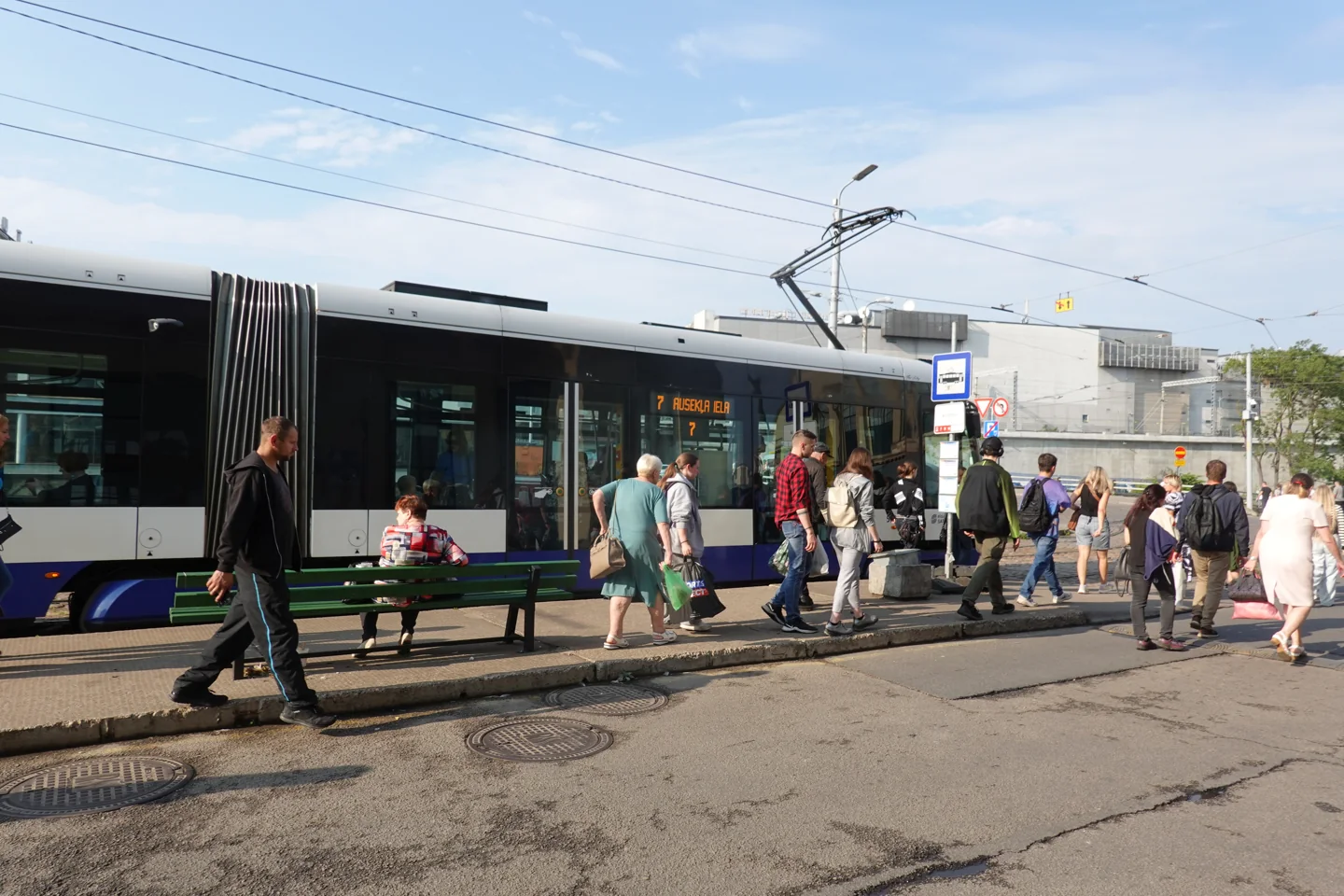
- For Riga municipal trips, the 90-minute ticket costs EUR 1.50. Validate on every tram, trolleybus or bus you board, including a transfer. It covers the operator’s routes, not every transport service in Latvia.
- If you travel often, compare the EUR 30 standard one-month ticket, valid from first validation. As a calculation, twenty EUR 1.50 tickets cost EUR 30; choose against your actual trip pattern. Discounts require the qualifying category and correct ticket medium.
- For a Jūrmala commute or regional travel, use Vivi’s ticket and timetable service separately. Check the station, departure, ticket conditions and last useful return service before settling on a home.
If driving, consult CSDD’s foreign-licence guidance. EU/EFTA and UK licences have different treatment from other licences, which generally require exchange after a year in Latvia and the applicable checks and driving test. Plan the procedure before the deadline rather than after the document stops being usable.
Try the household’s full weekday route with bags or a pushchair if relevant. Include walking, waiting and the final stretch to work or school. Keep a backup route for a missed connection; the fastest summer test is not the whole year’s routine.
14Complete the first month and build a local routine
Close the administrative loop before adding more commitments. Confirm that the immigration document, declared address, payroll, bank account and healthcare arrangement describe the same household circumstances. Use a short checklist rather than relying on a collection of appointment emails.
| First-month task | Keep as evidence |
|---|---|
| Residence document and any remaining collection conditions | Decision, issued card, receipts and the next applicable date |
| Address and tax records | Declaration confirmation, EDS access and the residence-status enquiry |
| School, employer and banking setup | Written confirmations, tested payments and the first salary or fee date |
| Housing and utilities | Signed contract, opening inventory, readings and first reconciled bills |
| Healthcare | NVD confirmation or registered S1, provider details and insurance documents |
| Everyday travel | Correct ticket arrangement, working route and a practical backup |
- Contact the Society Integration Fund’s One Stop Agency if you fall within its eligible newcomer groups. Its current programme supports legally residing third-country nationals and people needing international protection, with regional and remote arrangements. Describe the specific problem and bring the relevant letter or contract.
- Choose one regular activity near home: a language class, school-parent activity, library visit or park walk. Keep it easy enough to repeat during an ordinary working week.
- Visit Āgenskalns Market or another nearby shopping place with a list of your household’s usual purchases. Record your own basket cost; it is more useful to the monthly budget than an unsupported countrywide grocery estimate.
- Prepare the winter routine: suitable shoes and outerwear, a well-lit route, the actual heating bill and somewhere to spend time outside the flat. Review the commute when weather changes.
- Set a monthly document check. Keep renewal preparation, insurance expiry and school-payment dates visible, and ask the responsible authority about any change in sponsorship or household situation.
Latvia’s new law introduces integration obligations with a deferred start on 31 December 2027, according to PMLP’s September announcement. Do not treat that future obligation as an already-expired arrival deadline. Learning Latvian now can still make appointments, neighbourhood relationships and school communication easier.
Sources & further reading
Reviewed 14 October 2026. Sources are linked beside the relevant instructions. The new Immigration Law replaced the 2002 law on 15 September 2026. Older service pages may retain superseded article numbers, permit durations or subsistence amounts. Use the current law and latest authority schedule together. Nationality restrictions, family eligibility and application location remain specific to your case. Reviewed on 14 October 2026. School fees apply to 2026–2027; migration charges retain the authority’s March 2026 schedule. Riga transport prices are the operator’s posted fares. Housing calculations are hypothetical quotations, not a Latvian monthly living-cost estimate. Photograph credits, licences and capture years appear with the images.
Browse the source directory
- Latvian Parliament — Immigration Law effective 15 September 2026
- PMLP — September 2026 immigration changes
- PMLP — residence routes and official application guide
- PMLP — personalised migration application guide
- PMLP — EU, EEA and Swiss residence documents
- PMLP — employment of foreigners
- State Employment Agency — third-country recruitment
- State Employment Agency — CV and vacancy portal
- PMLP — remote-work long-stay visa
- PMLP — March 2026 subsistence amounts
- PMLP — visa-free-country pensioner documents
- Social Insurance Agency — old-age pension
- PMLP — residence application and card fees
- State Revenue Service — October 2026 residence assessment
- State Revenue Service — personal income tax rates
- State Revenue Service — EDS access
- State Revenue Service — Electronic Declaration System
- International School of Latvia — admission steps
- International School of Latvia — 2026–2027 charges
- Riga Municipality — enrolment service
- Riga Municipality — school catchment catalogue
- University of Latvia — degree admission process
- University of Latvia — application portal
- Rīga Stradiņš University — undergraduate applications
- Rīga Stradiņš University — admission portal
- Foreign Ministry — foreign documents for Latvia
- State Revenue Service — relocation from outside the EU
- Food and Veterinary Service — current pet entry rules
- European Commission — pets arriving from outside the EU
- Foreign Ministry — entry into Latvia
- Foreign Ministry — electronic travel declaration
- Interior Ministry — electronic travel declaration service
- PMLP — declaring a home address
- State Services Portal — residence declaration
- SEB Latvia — becoming a personal customer
- Latvian Parliament — Residential Tenancy Law
- National Health Service — access to medical assistance
- National Health Service — registering foreign S1 cover
- Emergency Medical Service — calling 113
- LMT — obtaining a prepaid number
- Elektrum — electricity and gas contracts
- Rīgas satiksme — 90-minute ticket
- Rīgas satiksme — one-month ticket
- Vivi — train tickets
- CSDD — foreign driving licence exchange
- Society Integration Fund — One Stop Agency
- Riga tourism authority — Āgenskalns Market
- Liepāja tourism authority — city map
Make your next step a practical one
Choose the city around work and school, confirm the route for every household member, and collect written housing and insurance quotations before fixing the move.