Visa

Moving & Living - Lesotho - Complete Guide
Move to Lesotho in fourteen practical steps: choose Maseru, Roma or a regional base, arrange immigration and work permits, prepare documents, register, bank, rent and settle in.
Photo credit
Lesotho’s daily geography matters: a home in Maseru, a university base in Roma and a job near a regional town lead to different journeys and service arrangements. The move also needs a plan for South African transit, local residence paperwork and payments in loti or rand.
Follow these fourteen steps to connect your immigration route with employment, education, housing and the first month. They use current official services and identify the few published schedules that need an individual written confirmation.
Lesotho at a glance
- Capital
- Maseru
- Currency
- Loti · LSL; plural maloti
- Official languages
- Sesotho and English
- Immigration authority
- Home Affairs
- Tax authority
- Revenue Services Lesotho
- Local identifier
- NICR non-citizen enrolment
- National ambulance line
- 121
- Reviewed
- 14 October 2026
Follow your moving journey
Start at step 1, or jump to the task you are working on.
01Choose your base around work, study and daily services
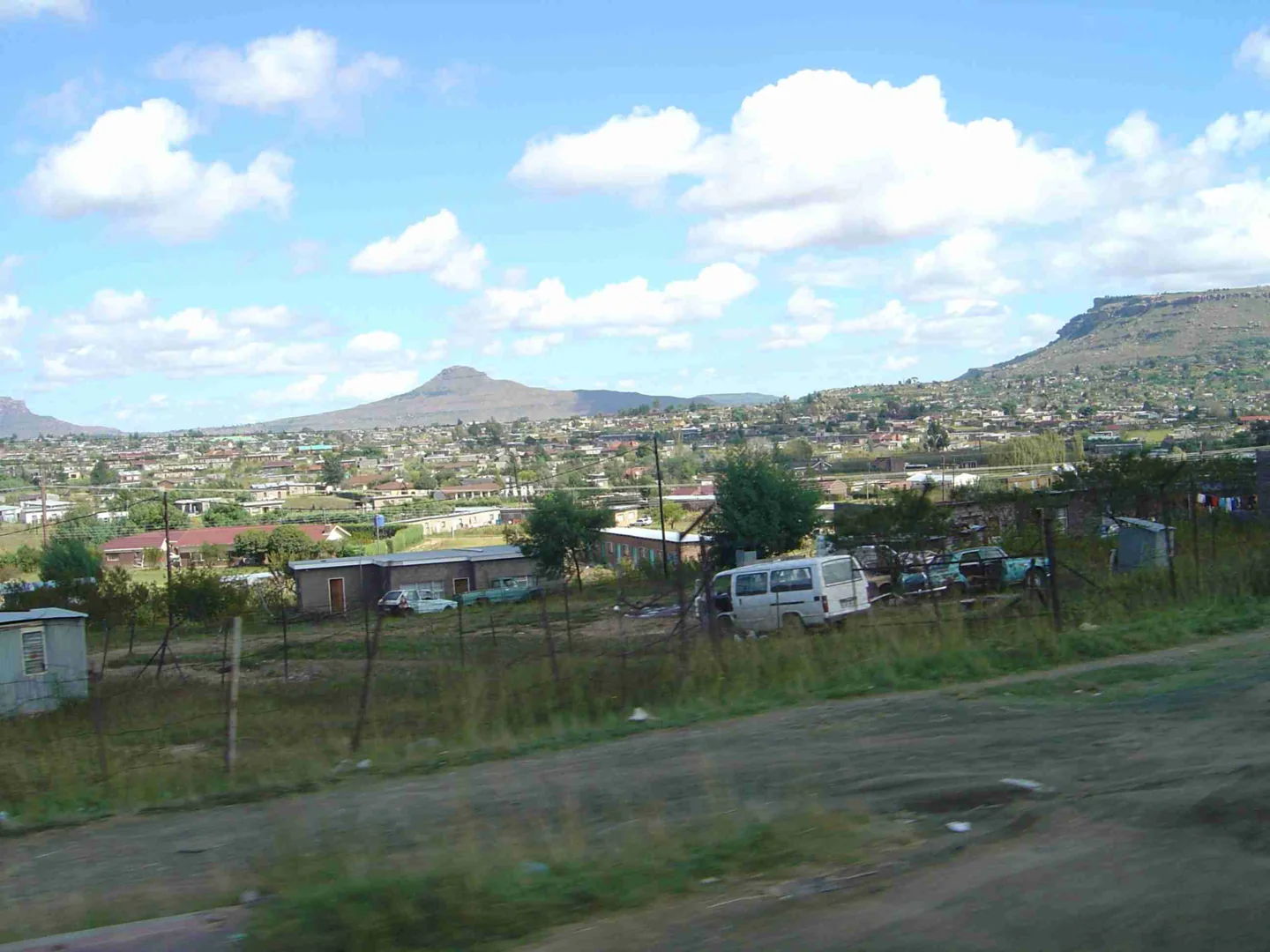
Begin with your daily destination. Maseru is the starting point for a capital-based job or school; Roma is the practical comparison for the National University of Lesotho. A regional appointment calls for a search around that workplace, rather than an assumption that everything can be reached easily from Maseru.
| Base to investigate | Questions to answer before renting |
|---|---|
| Maseru | Which neighbourhood places you near the actual office or school? Test addresses in areas such as Old Europa and Hills View or Thetsane against that journey. |
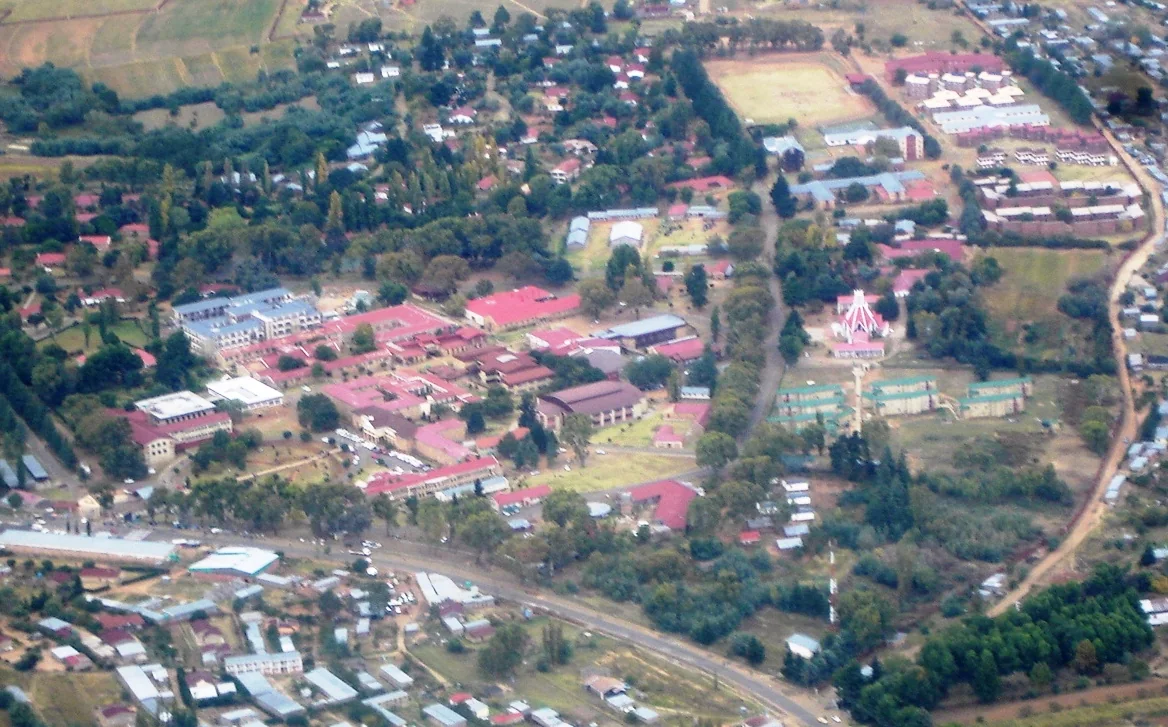
| Roma | How will you reach the university, buy groceries and obtain healthcare? Compare campus accommodation with a specific off-campus home. |
| Hlotse or another regional town | Does the home serve your local appointment? Establish banking, school and treatment options without relying on capital-city facilities for every task. |
- Map your workplace or campus, a suitable clinic, school and regular grocery stop. Inspect the routes at the times you would use them.
- Ask about the property’s electricity meter, water connection, heating, access road and mobile coverage. Test services at the home, not merely in the town centre.
- Compare furnished temporary accommodation with a longer rental after viewing. An initial flexible booking gives you time to resolve practical gaps.
- Use the tourism authority’s place directory to understand the surrounding area; leisure descriptions do not establish a home’s commute or service quality.
Allow room in the decision for winter heating and the journey after dark. Get answers for the particular building and street rather than assigning one price or lifestyle to an entire neighbourhood.
02Choose the correct entry and residence category
Home Affairs lists temporary, two-year, study and indefinite residence categories, with purposes including business, family, teaching and medical work. A visitor stay does not itself authorise employment or establish eligibility for an indefinite permit. Name your proposed activity when asking for the appropriate category.
- Give the responsible mission or Home Affairs your nationality, current country of residence, reason for moving, intended dates and household relationships.
- Use the entry-visa charter for the applicable supporting documents. Business, study and family cases require different sponsor, admission, relationship or financial evidence.
- Follow the current Home Affairs eVisa notice: it says the system is suspended and directs online applications to VISA-Applications.Immigration@gov.ls. Obtain the submission and payment instructions through that designated channel; do not assume an older eVisa checkout is operational.
- Confirm the residence category for each family member. The spouse-joining-spouse checklist includes relationship and sponsor-status evidence; marriage alone is not an issued permit.
- Keep the authority’s response and the exact document list with your travel file before paying for non-changeable arrangements.
The visa charter posts M1,000 for single entry and M2,000 for multiple entry in the relevant paid categories, but does not establish a current effective date for every case. Request your assessed invoice. A verified digital-nomad or ordinary retirement category was not found; describe any overseas employment or pension-funded plan explicitly rather than relabelling it as tourism.
03Arrange work permission with the employer or business adviser
The Labour Act 2024 replaced the older Labour Code. Sections 161–163 distinguish the work permit from residence, require applications to the Director of the National Employment Service and provide for the prospective employer to submit the file. The labour-market assessment considers whether a qualifying Lesotho citizen is available.
- Ask the employer to identify your permit type, occupation and residence category. Agree who prepares the application, pays assessed charges and follows up.
- Supply identity, qualifications, employment history and the signed contract in the required form. Have HR confirm any professional-registration requirements for your occupation.
- Track the work-permit decision separately from Home Affairs residence. Keep approval and validity dates in your own file before starting the authorised duties.
- For renewals or a change of employer, ask the National Employment Service how your existing permission must be handled; do not assume it transfers automatically.
Home Affairs publishes an employment-service link on its application page. Use the employer’s confirmed filing procedure if that service is unavailable. The Act contains a distinction for temporary service providers; it should not be treated as a blanket exemption for any contractor or remote worker.
Business owners can start with Digital Business Registrations for entity and licence services. Those registrations do not replace personal work and residence approval. The foreign-business permit charter contains a material capital discrepancy: its wording says “two million” but its numeric figure is M2,000,000,000. Ask Trade to confirm the applicable requirement in writing before committing capital; this guide does not select one as a verified threshold.
04Calculate the initial move, recurring costs and take-home pay
Use maloti, written as M or LSL, for the working budget. The loti is pegged one-to-one to the rand, and both currencies are accepted in Lesotho, as explained in the UK government’s entry and money guidance. Confirm bank conversion and transfer charges separately when income arrives in another currency.
| Item | Verified scope or calculation | How to budget |
|---|---|---|
| Business-category residence | The government charter posts M3,000 for two years in this category. | Category-specific residence charge; do not assume it includes work-permit or facilitation costs. |
| Application facilitation | The ministry-linked service posts M2,800; see step 9. | Obtain a current invoice and establish which other fees remain payable. |
| Local minibus commuting | M15 in the Road Transport Board’s May 2026 announcement. | Hypothetical 22 workdays × two single trips × M15 = M660, excluding connections. |
| Bank maintenance | Standard Lesotho Bank’s Nala page posts M30 monthly for its bundled option. | Product-specific recurring cost; transactions and alternatives have separate terms. |
| Electricity connection | LEC posts M100 for a domestic survey application. | Only when a new connection is needed; installation is quoted separately. |
| Housing and education | Request written home and school invoices; university schedule conflicts are explained below. | Separate deposits, advance payments and one-off charges from ordinary monthly spending. |
Hypothetical housing example: M5,000 first-month rent plus a M5,000 deposit and a quoted M1,000 agency charge requires M11,000 at signing. These are invented inputs illustrating cash timing, not a Maseru price survey or prescribed deposit.
The current RSL PAYE table applies from 1 April 2026: the first M6,480 of monthly chargeable income is taxed at 20%, the excess at 30%, with a M1,020 non-refundable monthly credit. For hypothetical chargeable income of M10,000, tax is M1,296 + M1,056 − M1,020 = M1,332. M8,668 remains before other deductions; chargeable income need not equal gross salary. The authority’s current directory links this table rather than the obsolete indexed downloads.
Give payroll or an adviser your arrival dates, other income, overseas work and household circumstances. Request a residence and treaty assessment instead of treating an immigration permit as the tax test. Ask which annual returns apply, even when PAYE is deducted.
05Obtain the school place or university offer and its actual invoice
For a Maseru school, Machabeng College’s own admission process starts with an enquiry about the class and available place, followed by records and identity evidence, assessment where required, review and a conditional offer. Its published process is useful; unfinished programme details and template calendar entries should not be used as your timetable.
- Send the child’s current reports, age, curriculum and support needs to admissions. Request the exact document list and assessment arrangements.
- Obtain tuition, registration, transport and any boarding charges in one dated quotation. Confirm the assigned campus and start date before choosing housing.
- For Roma, read the NUL International School’s 2027 notice. Its 31 August 2026 application deadline has passed, and the notice reports no new places in grades 1–6 or S2–S4. Ask about the next available application opportunity rather than assuming all grades remain open.
- University applicants should use NUL’s current admissions instructions, choose the programme and intake, and organise qualification assessment where required.
The undergraduate prospectus directs international qualification questions to the Examinations Council of Lesotho and describes specified qualification exceptions. It requires financial clearance before academic registration, residence admission or attendance, and identifies the International Students Office as a contact for study-permit assistance.
Tuition needs an individual invoice. The 6 August 2026 fee circular is headed 2026–2027, but its table columns say 2025–2026. It prints Bachelor of Commerce amounts of M24,860 for local/SADC students and M33,200 for international students; the earlier 2026–2027 download prints M36,718 and M49,036. These are conflicting published figures, not two verified current options. Ask the Bursary which approved amount and classification apply to you.
06Confirm a lawful basis for a pension-funded or non-working move
A pension can finance the move, but does not itself create immigration permission. A dedicated retirement route with verified ordinary eligibility was not established in the Home Affairs material reviewed. Start by describing your circumstances to Immigration: nationality, family connection, planned length of stay and whether you intend any paid activity.
- If relying on family, establish the particular relationship category and sponsor documents. If no eligible basis is confirmed, keep the proposed long-term move provisional.
- Ask the pension administrator how payments continue abroad, which account it accepts and what proof-of-life or address changes it requires.
- Separate pension income available for living costs from restricted investments or a home you have not yet sold. Test the payment route before depending on it.
- Arrange cover for regular treatment, medication and any evacuation needs. Obtain the insurer’s acceptance of your age, residence and pre-existing conditions in writing.
- Give a tax adviser pension statements and residence details so that withholding and filing are assessed correctly.
If the plan includes consulting, a business partnership or remote paid services, describe those activities before applying. Non-working residence should not be used as an assumed work exemption. Likewise, an indefinite category appearing on a service menu does not establish that a new arrival qualifies.
For the home search, include heating, access to a suitable clinician and a transport alternative in the monthly budget. A property that works for occasional visits may require different arrangements for a year-round household.
07Prepare certified documents, belongings and animal entry
Build one folder per person with passports, approvals, civil-status records, qualifications, admission or employment correspondence and photographs. Keep originals in hand luggage and secure digital copies elsewhere. Ask the receiving office which certification and translation it accepts before paying for a document service.
- Use the category checklist to separate documents obtained abroad from those obtained in Lesotho. For example, the business-residence checklist specifies origin-country police clearance for first applications, local police clearance and a medical certificate completed by a government practitioner in Lesotho.
- Record issue dates and the receiving office’s validity requirements. Get the current exception for children from the applicable procedure; the published lists do not all describe the age exception identically.
- For belongings, prepare an inventory, ownership evidence and shipment documents. Obtain a broker’s itemised quote for declaration, assessed taxes, storage and delivery.
- For animals, establish the permit, veterinary and transit requirements before booking carriage. Carrier acceptance is a separate decision.
Use RSL’s customs procedures to identify the declaration route. A universal current duty-free household-relocation allowance was not verified here; ask for the treatment of your actual inventory rather than assuming ordinary baggage rules cover a container.
The Trade Portal’s veterinary procedure describes a consolidated Lesotho National Single Window process from September 2025 and requires a valid rabies certificate for dogs and cats. Its health-attestation column expressly treats dogs and cats differently from other commodities. Obtain the permit’s species- and origin-specific conditions. The government animal service charter posts M200 for pets and lists vaccination and transit evidence; confirm the assessed charge and document list for your itinerary.
08Plan South African transit and organise the first days
Plan the South African part of the journey separately from Lesotho permission. If your itinerary includes entry into South Africa, repeated border crossings or a return journey through it, establish the requirements for your nationality and the precise transit arrangement. Holding a Lesotho permit does not itself grant South African entry.
- Confirm passport validity and blank-page requirements for the complete journey with the responsible authorities and carrier. The UK entry page’s 90-day visitor rule is for its stated British-passport scope, not all nationalities.
- Carry entry approval, sponsor or accommodation details and the documents requested for admission. Check that the passport is stamped and record the permitted stay.
- Use the arranged airport or border transfer, agreeing destination, fare and payment method before setting off. Save accommodation directions that work without mobile data.
- Notify HR, school or the university office of arrival. Book the local medical, police-clearance or filing appointments required by your checklist.
- Visit an authorised mobile outlet to arrange a registered number and establish the provider’s identification procedure for your circumstances.
For the temporary home, request emergency contacts, electricity top-up instructions and water arrangements. Test the connection needed for work or study. Identify a nearby shop, pharmacy and the transport route you will use for appointments.
Keep enough accessible money for ordinary payments while banking and permit decisions are pending. Save receipts and acknowledgement documents, and establish who is holding any original passport. An application appointment should not be mistaken for a completed immigration decision.
09Submit residence, identity and tax registrations in their proper sequence
Start from the ministry’s residence-service link, which leads to its facilitation partner. The linked site retains old notices, so confirm the current appointment location and assessed invoice rather than interpreting a 2022 banner as today’s closure.
- Follow the form and appointment entry point. Complete the category file before submission, with the required certified copies and local medical or police documents.
- The published application steps post M2,800, describe approved bank prepayment or card payment at the centre, and say cash is not collected there. Establish whether this charge is additional to your government-category fee.
- Bring passport, printed form, appointment letter, payment proof and supporting documents. The service asks applicants to arrive fifteen minutes early and enrol fingerprints and a photograph. Keep the acknowledgement receipt for collection and follow-up.
- For a student, use the study-residence checklist with the admission evidence and university assistance. Ask Immigration which duration and procedure apply to the particular programme.
The government’s non-citizen ID enrolment service lists certified copies of passport, origin-country birth certificate and residence permit where applicable. Enrolment is free; its estimated one-hour service time is not a promise that a finished card arrives immediately. Ask NICR which office handles your case and retain its collection instructions.
For taxable employment or business activity, arrange a TIN with Revenue Services Lesotho. Use the eRegistration forms: ordinary individual applicants and sole traders use different forms. Keep your identifier and confirmation with the employer or business records. Immigration, identity and tax files are separate; completing one does not automatically complete the others.
10Open a suitable account and test everyday payments
Ask a bank branch to assess your nationality, permit, income and intended account use before relying on approval. Standard Lesotho Bank’s Nala page lists age eighteen or over, identity/passport, proof of income and proof of residence. Confirm the documents and product available to a foreign applicant; the page is not a promise of automatic acceptance.
- Take the branch’s current checklist, originals and requested copies. Explain whether income comes from employment, a pension or an overseas payer.
- For address evidence, ask what the bank accepts. Its chief’s confirmation template provides a local way to document physical residence, with identity and income evidence. Use the bank-approved form and the appropriate local chief’s confirmation.
- Compare monthly maintenance, cash withdrawals, transfers and card costs. Obtain the schedule for the exact product before signing.
- Test a small payment or transfer and confirm how the landlord, school and providers want to be paid. Keep the transaction reference and receipt.
Nala’s posted bundled monthly fee is M30; the page also describes a pay-as-you-transact alternative. The figure is product-specific and undated, so use the schedule supplied with your own application for the final budget.
Vodacom M-Pesa advertises no joining or monthly charge and supports transfers, airtime and electricity purchases. Transaction charges still need to be considered. Its conditions require customer identification; higher-tier registration includes residence and income evidence. Ask the outlet which documents and limits apply to you rather than treating a registered SIM as a completed wallet application.
11Inspect the home and put the rental obligations in writing
Request a written offer for the exact home, including duration, rent, payment dates, deposit, notice and every additional charge. Separate a property’s land-title lease from your residential rental contract: the documents serve different purposes. The Land Administration Authority is the starting point for title and land-record questions.
- Verify the landlord or agent’s authority to let the property. Match the unit and address to the contract and have unclear terms reviewed locally.
- Inspect heating, hot water, roof condition, drainage, locks and access. Test electricity and mobile reception, and ask how water interruptions are handled.
- List included furniture and appliances. Photograph defects and meter readings, and have the landlord acknowledge the handover record.
- Agree repairs, payment responsibility, notice, renewal and deposit deductions in writing. Specify whether amounts are payable in maloti or rand and how receipts are issued.
- Establish whether utilities remain with the owner, transfer to you or require a new connection. Obtain the relevant account and meter details before moving in.
A current national deposit cap or standard agency commission was not verified for this guide. Use the actual agreed amounts in the initial-cash calculation and have the contract reviewed before paying several months in advance.
Ask for recent electricity and water bills to see what the quoted rent excludes. For a shared property, establish how consumption is divided and who receives the bill. A furnished description should be checked against an inventory rather than assumed to include all equipment needed for winter living.
12Arrange insurance, routine treatment and emergency contacts
Ask the employer or insurer how your household obtains outpatient appointments, hospital treatment and specialist care. The UK government’s healthcare guidance is a starting point for medical and insurance planning; apply it alongside your actual policy and residence circumstances rather than assuming every foreign resident receives the same funded care.
- List regular medication, conditions and expected consultations. Get written acceptance of pre-existing conditions and any exclusions, waiting periods or patient contributions.
- Identify a nearby clinician and the appropriate hospital referral route. Ask the insurer which facilities it recognises and whether it pays directly or requires reimbursement.
- Arrange prescriptions and medical summaries for continuity of care. Establish the availability of the medicine itself rather than depending on a familiar brand name.
- Confirm specialist referral and medical-evacuation arrangements where needed. If treatment may involve South Africa, resolve its entry requirements and insurance authorisation separately.
- Save assistance numbers and tell another household member where policy and medical documents are kept.
The Lesotho government lists 121 as the national ambulance line. The UK emergency-contact page lists 112 for combined ambulance, fire and police services. Keep the numbers labelled with their source and the insurer’s assistance contact alongside them.
For planned treatment, request the facility’s estimated charge and authorisation requirements before the appointment. An overseas card or policy certificate is not itself confirmation that a local provider will accept direct billing.
13Activate phone services, utilities and a workable daily journey
Vodacom’s SIM-registration page describes free registration at its centres and lists a national ID. It does not give a complete foreign-passport procedure. Take your passport and available local status or ID evidence, ask the authorised outlet how your case is registered, and confirm with customer care on 114 if necessary. Do not assume the old published registration deadline is a current new-arrival exemption.
- Test calls and data at the home. Record bundle validity, recharge instructions and roaming conditions before using the phone across the South African border.
- For an already connected home, establish the electricity meter and account arrangements with the owner. For a new supply, LEC’s procedure begins with electrician wiring certificates, passport/ID evidence and a survey application. The posted domestic survey charge is M100; the connection itself is quoted.
- For water, WASCO checks whether the area is reticulated and surveys the distance from the main. It posts a M50 survey charge and distance-dependent connection costs; obtain an address-specific quote rather than treating that first charge as the full installation.
- Use WASCO’s billing instructions to identify the account, payment and query arrangements. Ask who settles existing balances before the handover.
The Road Transport Board announcement reported by LENA on 7 May 2026 set local 4+1 taxi fares at M17 and minibuses at M15 from the following Monday, with Sprinters and buses at M10. These dated local figures do not price a private hire, airport transfer or any long-distance journey. Confirm the category and fare before boarding.
Test the school or work route and a practical alternative. Drivers should use the current road-travel guidance for licence and weather conditions, especially before mountain journeys; a road’s appearance on a map does not establish a fixed travel time.
14Build a routine and finish the first-month record
Use the places connected to your household’s real activities to meet people: school introductions, a campus society or a suitable local course. For cultural learning, Morija Museum and Archives describes its museum, arts centre and the Hub’s creative programmes. Ask the organiser about the current activity rather than treating an old festival or project date as an upcoming event.
- Review each person’s permission, collection appointment and expiry. Put a named contact and next action beside every unfinished immigration or identity item.
- Compare the first bills and receipts with the budget. Adjust electricity, transport, groceries and payment charges from your own spending record.
- Check that banking, school and healthcare arrangements work in practice. Resolve any missing authorisation or document while the relevant office can still explain the file.
- Keep payroll certificates and income records for the annual return. RSL’s filing guidance identifies relevant supporting evidence, including P16 employee certificates, and the 30 June income-tax payment deadline. Use the current eFiling service and confirm the return that applies to you.
- Back up permits, contracts, account confirmations and receipts securely. Record the custody of any originals still held by an office.
A food stop near campus or a regular neighbourhood shop can make the week easier to organise. The dated Roma photograph shows one such setting; it does not promise that the same vendor or service remains available now.

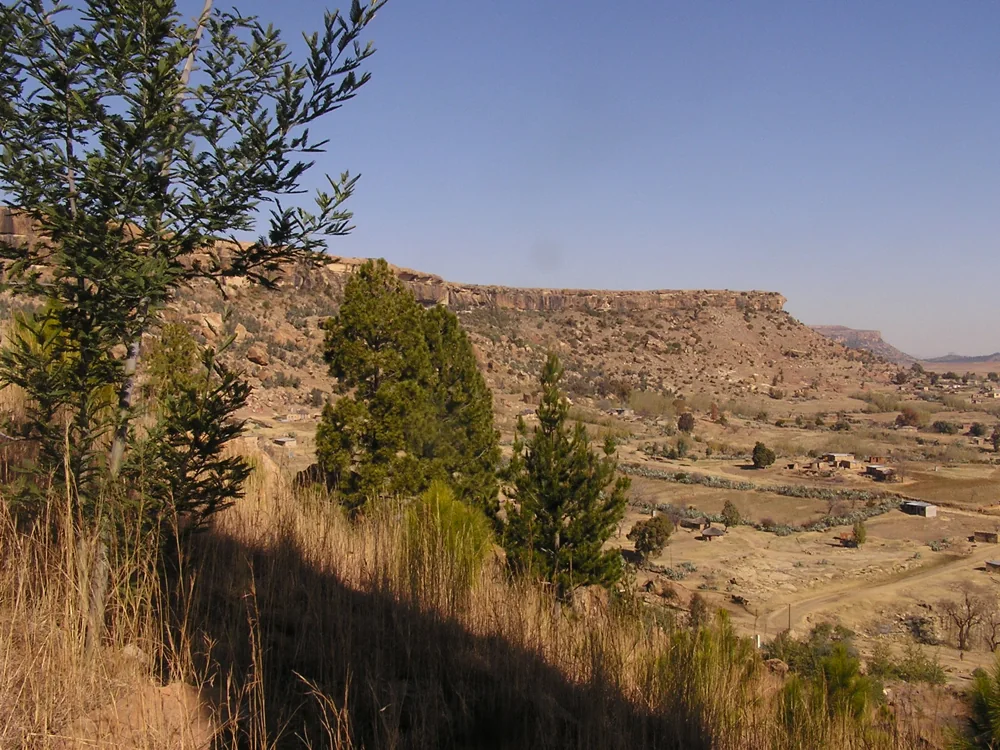
For time beyond the daily route, Thaba Bosiu is a useful place to begin learning about the country’s history and landscape. Plan visits around current access and weather information. At the month’s end, your priority is to close the remaining practical gaps and schedule renewals early enough to gather the required documents.
Sources & further reading
Reviewed 14 October 2026. Sources are linked beside the relevant instructions. The eVisa page currently directs applicants to an email channel. Older permit-site notices and forms do not establish current closure dates or fees. University fee documents disagree on amounts and year labels; obtain a dated invoice. Entry, residence and work permission remain separate. Reviewed on 14 October 2026. PAYE figures apply from 1 April 2026. Local transport figures retain the May 2026 announcement date. Permit and provider figures are posted schedules without a verified effective date. Housing calculations are hypothetical. Photograph credits, licences and capture years appear with the images.
Browse the source directory
- Lesotho Communications Authority — reporting areas
- Government — Thetsane locality in Maseru
- Home Affairs — immigration categories
- Home Affairs — suspended eVisa service and application email
- Government — entry-visa service charter
- Government — residence-permit charter
- Home Affairs — residence application service
- Ministry-linked facilitation service — business residence checklist
- Ministry-linked facilitation service — spouse residence
- Ministry-linked facilitation service — student residence
- Ministry-linked service — form and appointment entry point
- Ministry-linked service — application steps
- Government Gazette — Labour Act 2024
- Government — digital business registrations
- Government — foreign business permit
- Revenue Services Lesotho — taxpayer registration
- Revenue Services Lesotho — eRegistration forms
- Revenue Services Lesotho — current tax-table directory
- Revenue Services Lesotho — current 2026–2027 PAYE table
- Revenue Services Lesotho — filing income-tax returns
- Revenue Services Lesotho — eFiling service
- Machabeng College — own admission process
- National University of Lesotho International School — 2027 notice
- National University of Lesotho — admissions and services
- National University of Lesotho — 2026–2027 undergraduate prospectus
- National University of Lesotho — August 2026 approved-fee circular
- National University of Lesotho — earlier fee download
- Government — ID enrolment for non-citizens
- Standard Lesotho Bank — Nala account
- Standard Lesotho Bank — chief’s address confirmation
- Vodacom Lesotho — M-Pesa features
- Vodacom Lesotho — M-Pesa conditions
- Vodacom Lesotho — SIM registration
- Lesotho Electricity Company — new connection
- WASCO — water connection procedure
- WASCO — billing and connection FAQ
- Land Administration Authority — land services
- Revenue Services Lesotho — customs procedures
- Government — live-animal import service
- Lesotho Trade Portal — veterinary import procedure
- Lesotho News Agency — Road Transport Board fare announcement
- UK Government — Lesotho entry and South Africa transit
- UK Government — road travel in Lesotho
- UK Government — healthcare in Lesotho
- Government of Lesotho — national services and ambulance
- UK Government — emergency contacts
- Lesotho Tourism Development Corporation — places and local information
- Morija Museum and Archives — cultural activities
Make your next step a practical one
Confirm the route for every household member and the South African journey, then organise employer or school documents and a temporary base before paying for the move.