Visa
Moving & Living - Macao - Complete Guide
Move to Macao in fourteen practical steps: choose a neighbourhood, arrange work or residence permission, plan schools and costs, then set up housing, healthcare, banking and transport.
Photo credit
Macao combines the compact streets of its peninsula with Taipa’s residential neighbourhoods, Cotai’s large resort workplaces and quieter parts of Coloane. Where you live matters most when it connects sensibly with your shift, your children’s school or your university campus.
This guide follows the move from choosing a location to completing the first month. Start with the permission you actually need: a visitor’s allowed stay, a worker’s blue card and a Macao resident identity card are different documents, with different consequences for your family and everyday services.
Macao at a glance
- Main areas
- Macao peninsula · Taipa · Cotai · Coloane
- Official languages
- Chinese and Portuguese
- Everyday language
- Cantonese
- Currency
- Pataca · MOP
- Immigration authority
- Public Security Police Force · PSP
- Worker identification
- Non-resident Worker’s Identification Card · blue card
- Emergency
- 999
- Reviewed
- 14 October 2026
Follow your moving journey
Start at step 1, or jump to the task you are working on.
01Choose a neighbourhood around your daily journey
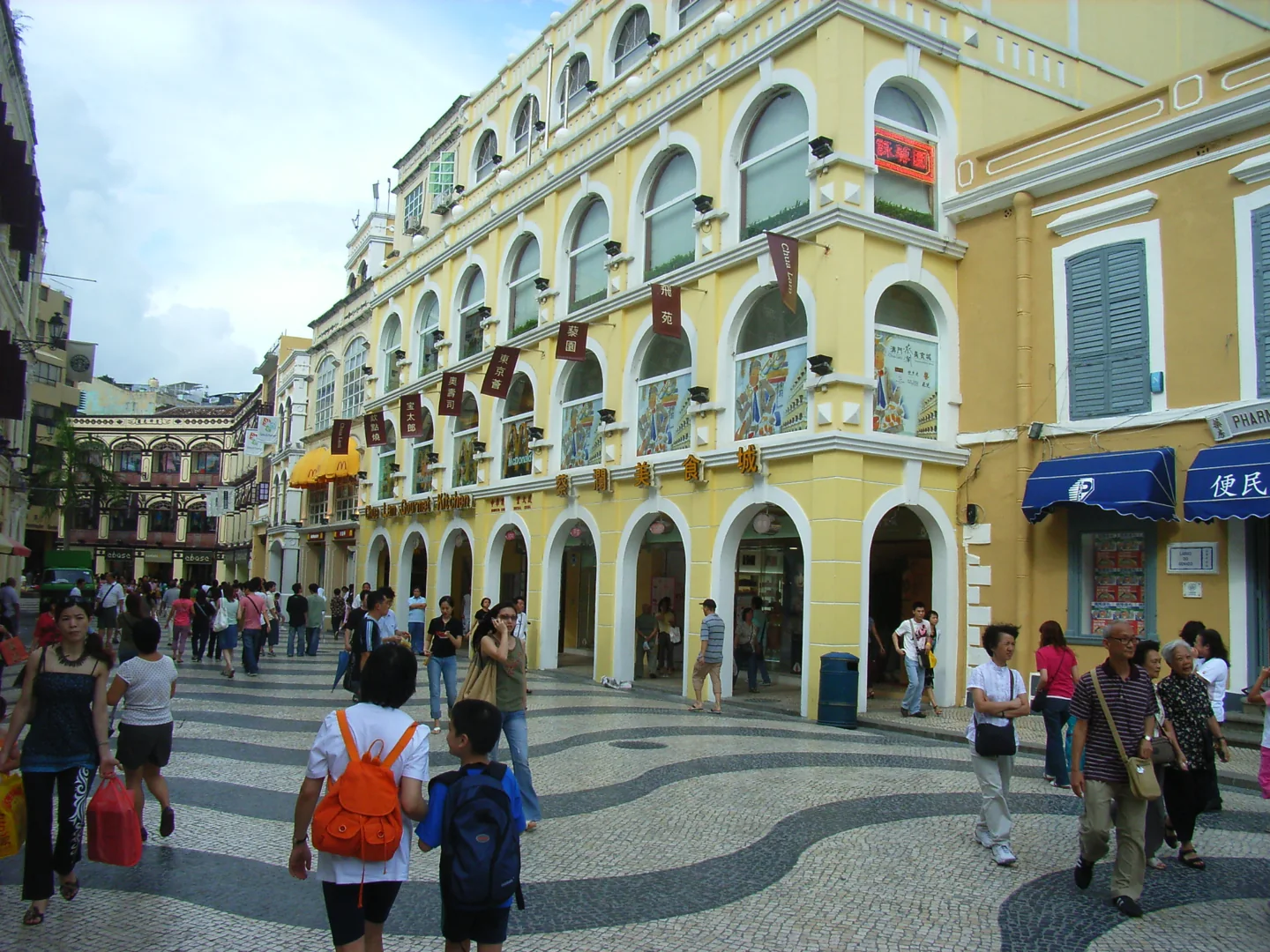
In Macao, a short distance on the map can conceal a bridge crossing, a crowded interchange or an awkward journey after a late shift. Choose a home around the place you must reach repeatedly. Taipa Village is useful for exploring daily shops and local streets; Cotai’s resort entrances require more precise planning than simply choosing “near Cotai”.
| Area to explore | Practical reason to consider it | Test before signing |
|---|---|---|
| Macao peninsula: NAPE, São Lourenço or the northern districts | Different residential settings within the peninsula; useful when employment and everyday errands are here. | The actual bus stop, building entrance, lift and walk to groceries. |
| Taipa: residential streets around Taipa Village or near Avenida de Guimarães | A starting point for households comparing Taipa schools and journeys toward Cotai. | The school entrance and the route at dismissal or shift-change time. |
| Coloane: village streets or Seac Pai Van | Options for a different daily setting, with access to Coloane’s outdoor spaces. | The full commute, evening return and the home’s immediate services. |
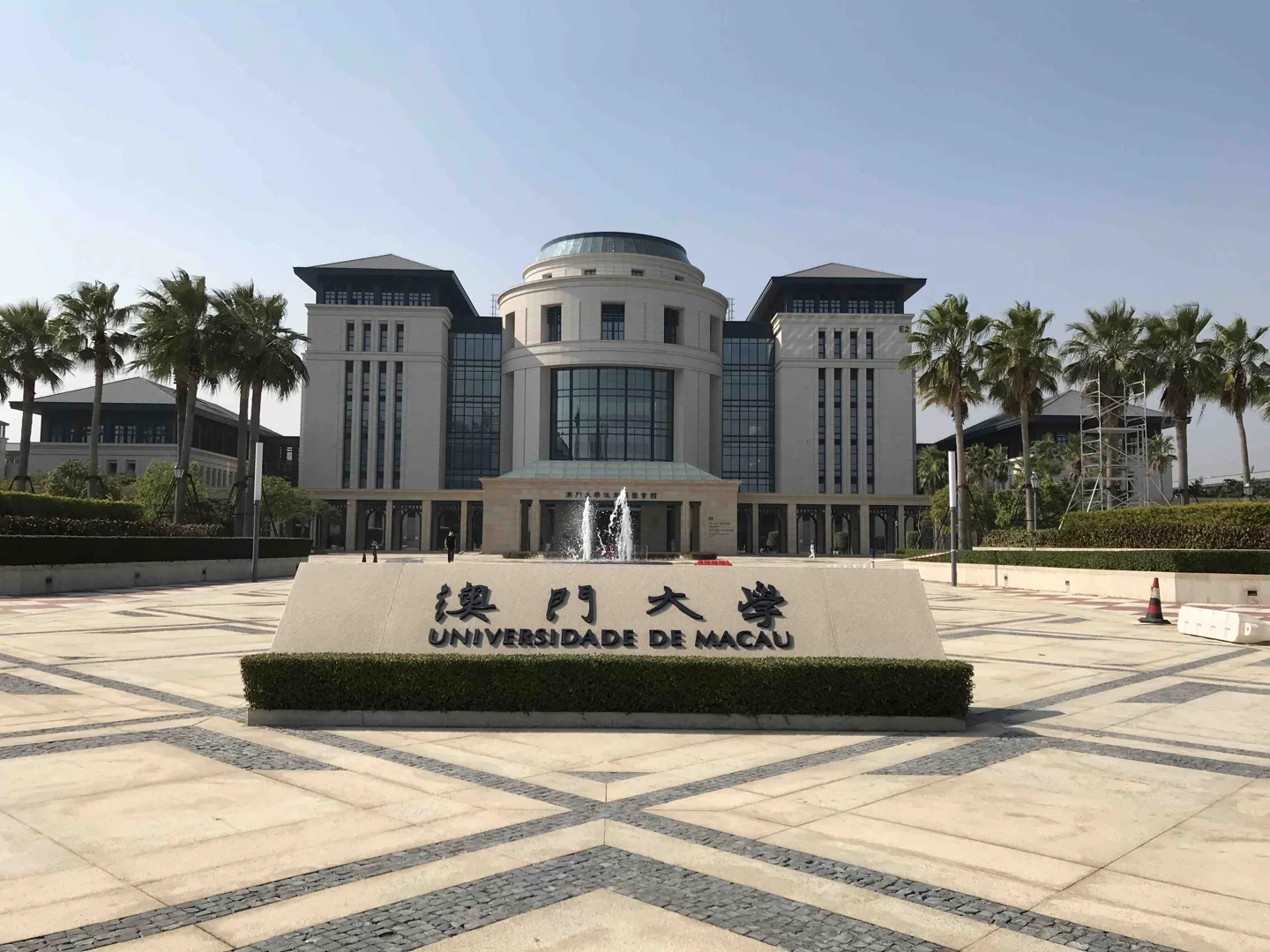
| University of Macau campus | A separate location for students and staff; accommodation depends on university arrangements. | Campus accommodation eligibility and the relevant public-bus route. |
- Mark your workplace, school or faculty entrance, rather than the centre of a large complex.
- Compare the bus connections with the Transport Bureau’s information and the university’s campus transport page where relevant.
- Visit two or three shortlisted buildings. Note ventilation, street noise, stairs, lift access and the walk home after dark.
- Use a temporary base until you can inspect the apartment and test that journey yourself.
The Transport Bureau’s bus information and University of Macau transport page provide practical starting points. Living in Hengqin across the boundary involves separate mainland entry and residence arrangements; a Macao permission does not settle those questions.
02Choose the correct entry, stay or residence route
Macao administers its own immigration procedures. Treat the purpose of the move as the first decision: employment, university study, an eligible family application, talent recruitment or another assessed residence category. Visa-free visitor entry establishes a permitted visit; it does not establish permission to work or become a resident.
| Your purpose | Start here | Important distinction |
|---|---|---|
| Employment | Employer and Labour Affairs Bureau authorization, followed by PSP worker formalities. | A blue card identifies a non-resident worker. |
| University study | Admission followed by the student special-stay procedure. | A university offer and a permission to stay are separate. |
| Joining a worker | PSP’s eligible-worker family procedure. | Family eligibility is limited to workers recognised as having specific qualifications beneficial to Macao. |
| Talent recruitment | The Talent Development Committee’s programme and application platform. | Categories have different professional, employment and residence conditions. |
| Other residence applications | The relevant PSP residence category. | Submission is an assessed application, not an entitlement based on a bank balance. |
- Read the PSP entry table for your passport and travel-document category. The passport normally needs validity extending at least 90 days beyond the intended stay.
- If you hold a Bangladesh, Nepal, Nigeria, Pakistan, Sri Lanka or Vietnam passport, arrange the required advance Macao visa through the responsible Chinese embassy or consulate.
- Read the application service for your actual purpose: eligible workers’ families, non-resident students or residence applications made by Others.
- For talent recruitment, compare the category conditions before using the application platform. The third round accepts applications from 2 December 2025 to 1 December 2026; acceptance remains selective.
IPIM’s current eligibility page is particularly important: new property-investment residence applications have been closed since April 2007, and its former management/technical-personnel route closed to new applications in July 2023. Buying an apartment is therefore not a shortcut to residence.
For an eligible worker’s family application, assemble the worker’s documents, the joining relative’s travel identification, relationship evidence and the required recent payslips. A spouse or de facto partner also needs the relationship declaration. Submit the PSP family application, retain the acceptance receipt and arrange the relative’s personal fingerprinting after approval. Until special stay is granted, the relative remains subject to the visitor stay limit.
03Arrange an authorized job or business activity
Ask a prospective employer to explain which authorization it is obtaining, which worker category applies and who will coordinate the PSP appointments. A job offer is useful evidence, but the authorization process must still cover the actual employing entity and role.
- Obtain a written offer covering basic pay, working hours, accommodation or housing allowance, insurance and relocation expenses. Clarify which benefits include family members.
- Have the employer use the Labour Affairs Bureau’s non-resident worker forms for its category. Keep a copy of the official authorization and the documents supplied in your name.
- Ask whether your case is skilled, non-skilled or domestic-helper employment. The PSP sequences differ: do not follow another employee’s entry instructions merely because both eventual cards are blue.
- Plan the lawful starting date with the employer. Actual temporary worker authorization can permit work before the plastic card is collected; a visitor entry slip alone does not.
The detailed category sequence is in the PSP worker application service. This is also a reason to keep approval messages and receipts together: the wording of the permission matters more than the appearance of a card.
For self-employment, begin with the responsible Labour Affairs department and the special-stay procedure for authorized personal-benefit activities. That procedure requires prior work authorization and staged examination. Incorporating a company or serving overseas clients does not by itself grant permission to live and work in Macao; no general digital-nomad route was verified for this guide.
If your contract ends or the employer changes, make the next immigration arrangement part of the transition rather than assuming the existing card follows you to a different job. The IPIM explanation of blue-card status also makes clear that this period of lawful non-resident stay is different from residence.
04Build a move budget and confirm payroll tax treatment
Use the currency printed on each quotation. A property advertised in Hong Kong dollars and a school invoice in patacas are not interchangeable budget entries. Request a written rental breakdown, a school fee schedule and the employer’s actual benefits before calculating what remains from your salary.
| Initial moving costs | Recurring living costs |
|---|---|
| Flights, temporary accommodation and shipment quotation | Rent, building charges stated in the lease and household groceries |
| Deposit, first rental payment, agreed agency fee and signature recognition | Electricity, water, phone and home internet |
| Immigration documents and category-specific fees | Transport, insurance and medical expenses outside the policy |
| School application and advance payments; pet preparation and import | School instalments, lunches, transport and optional activities |
Worked transport example: 44 ordinary bus journeys at the approved stored-value fare of MOP 3 cost MOP 132. The same number at the MOP 6 fare costs MOP 264. This is arithmetic using the published fares, not a household living-cost estimate.
Keep education costs separate. The International School of Macao publishes MOP 135,000 annual tuition for Grades 1–3 in 2026/27, before excluded extras. Dividing that by twelve gives MOP 11,250 a month for budgeting, although the actual payment schedule is different. Its fee schedule explains the exclusions and advance payment.
- Ask payroll how professional tax is withheld and which personal details it needs.
- Read the Financial Services Bureau’s current tax obligations. For 2026 it publishes a MOP 144,000 exemption limit and a 30% reduction in professional-tax liability. These measures are not a flat tax rate or a ready-made calculation of net salary.
- Resolve continuing tax obligations in the country you leave, especially if you retain a home, business or overseas income.
- Reserve money for delayed pay, temporary accommodation and a return journey; choose that amount around your circumstances.
05Apply for a suitable school or university place
Begin with the language of instruction, your child’s year level and the school journey. Ask how previous study will be assessed and what support is available for a child joining mid-year. A school place cannot substitute for the child’s immigration permission.
- For The International School of Macao in Taipa, use its current online application process. Prepare identification, the required stay evidence, reports and any applicable transfer or reference documents.
- Ask admissions which immigration evidence it can accept in your circumstances. Its list includes specified application evidence and a parent’s employer letter in appropriate cases; these documents do not themselves approve the child’s stay.
- Budget for assessment: the application fee is MOP 1,500. Kindergarten through Grade 3 use an interview; Grades 4–11 involve a written assessment and interview.
- Read the 2026/27 schedule before accepting: Grades 4–6 cost MOP 147,000 annually, Grades 7–9 MOP 154,000 and Grades 10–12 MOP 168,000. Lunch and bus services are extra. Government subsidy treatment depends on the child’s Macao resident identification.
- Arrange immigration formalities for the child through the applicable family or student route, then confirm the starting date and transport.
For higher education, the University of Macau is a practical starting point. Its direct-admission rules cover specified Macao and non-Macao applicants, excluding mainland China applicants from that particular category. The published 2026 application window ended on 9 April; use the next intake’s actual dates rather than assuming applications remain open.
For new 2026/27 non-local undergraduates, the university tuition schedule lists MOP 61,300 per semester: MOP 490,400 for a four-year course or MOP 613,000 for five years. Accommodation and other charges need their own budget. After admission, complete the PSP student-stay procedure; do not treat the offer as permission to take employment.
06Confirm a lawful basis before planning retirement
Macao’s compact geography may appeal to someone with family or existing connections here, but a pension is not a residence route on its own. No ordinary retirement visa was verified in the current services reviewed for this guide. Establish your qualifying category before making an irreversible move.
- Ask PSP which residence category can actually apply to your relationship and personal circumstances. Use the application made by Others where appropriate, with the supporting evidence it requests.
- Separate an application based on family connections from a plan merely to rent or buy property. IPIM’s property-investment category accepts qualifying renewals and dependent extensions of older approvals, not new applications.
- Confirm whether the residence category requires habitual residence and what happens when you spend extended periods abroad. Obtain the conditions relevant to your own approval.
- Have your pension provider confirm overseas payment arrangements, currency conversion and any continuing proof-of-life requirements.
- Price health cover and regular treatment before choosing a home. Ask the insurer about existing conditions, age limits and family members.
A practical retirement viewing should include the building’s lift, steps between the street and entrance, access to groceries and the journey to your actual clinic. Compare the full routine with the household’s mobility needs rather than selecting a home only for its view.
If your proposed residence basis is uncertain, keep the plan at the exploratory stage. A permitted visit can help you inspect neighbourhoods and speak to the authorities, but its expiry still controls how long you may remain while investigating.
07Prepare the correct documents, shipment and pet permission
Collect originals while you can still obtain replacements from the issuing authority. Build the pack around the application: employment, family reunion, student stay and resident status require different evidence.
- Keep identification, approval letters, photographs, relationship evidence and educational records together, with readable scans stored separately.
- For an assessed residence application, follow the PSP document list for criminal records, means of support, address evidence and any repatriation guarantee. Check certification and language requirements before paying for translations.
- Have a mover itemize goods, restricted items, customs handling and delivery costs. Ask how the shipment will be declared under Macao Customs’ rules. A traveller’s allowance is not a blanket tax exemption for a household shipment.
- Carry prescriptions and the medical history needed for continuing treatment. Arrange any special medication import question before travel.
Bringing a dog or cat: start with IAM’s country-specific health conditions. A 12 June 2026 announcement removed mandatory 30-day quarantine for eligible arrivals from rabies-affected origins when the specified microchip, vaccination, antibody report, official health certificate and arrival inspection requirements are satisfied. It does not exempt every animal automatically.
- Obtain IAM’s live-animal import licence, matching its 30-day validity to travel; its published processing target is three working days.
- Arrange the required dog licence where applicable, and book entry inspection at least one working day ahead. Confirm the permitted breed, origin conditions and inspection availability before reserving transport.
- Budget the listed MOP 100 dog/cat inspection and MOP 4 form charge. A first dog licence is MOP 300 for a neutered dog or MOP 900 otherwise, plus 10% stamp duty, with three-year validity.
08Enter using the correct permission and organize the first days
Keep the documents for the purpose of entry in your hand luggage. Save the address of your first accommodation in the form the driver and immigration officer can use, including the building name and entrance.
- Present the travel document and visa or other entry evidence required for your category. A mainland China or Hong Kong permission does not replace Macao’s own entry requirements.
- For non-skilled workers and domestic helpers, use the employer-arranged work-purpose entry permit where required. Skilled workers have a different PSP follow-up sequence; follow the instructions supplied for your approval.
- Read and save the entry or stay record. Put its expiry and any immigration attendance date in your calendar rather than working from a generic “three-month visa” assumption.
- Set up a reachable phone number, contact the employer or university and confirm the next appointment. Keep copies of the accommodation booking and approval evidence available.
- Locate a grocery shop, pharmacy, bus stop and suitable clinic near the temporary home before starting the more time-consuming registrations.
The PSP entry service sets the actual allowed stay by nationality and document. It also publishes visitor subsistence amounts by length of visit; these are entry conditions, not an estimate of your monthly rent or the savings needed for relocation.
If entering for work, distinguish receiving a temporary worker authorization from simply passing immigration as a visitor. Keep the employer’s name and contact available so the follow-up can be coordinated promptly.
For an emergency call 999. Give the incident, exact location and assistance required, following the PSP emergency-call instructions. Save the accommodation’s address on your phone so another household member can make that call too.
09Complete your worker, student or resident identification
Your next counter depends on your status. PSP deals with stay and residence permissions; the Identification Services Bureau issues resident identity cards to eligible applicants. A blue card does not become a resident card simply because you have rented a home.
The PSP worker formalities are handled at the Immigration Building, Travessa Um do Cais de Pac On, Taipa. Match the subdivision and appointment to your document, using the current appointment instructions.
- Workers: complete the formal examination, pay the published MOP 100 card charge and use the receipt to collect the card at the stated place and date. Follow the PSP application service for the actual category.
- Use the worker appointment instructions for the temporary authorization you hold. Attend on the expiry or other date specified for that procedure; an arbitrary earlier visit may not complete the examination.
- Students: complete the online process and save its QR code, then attend with the original identification and required documents. Mainland students’ endorsement arrangements differ; other non-resident students must apply before their current allowed stay expires. The student service explains the sequence.
- Approved residents: obtain the residence certificate and apply for the resident identity card using the qualifying documents.
For the PSP “Others” residence category, the published charges include MOP 200 service and a MOP 20,000 residence fee unless an exemption applies. Approved applicants subject to that residence fee must show payment within 20 non-extendable days. The certificate instructions require applying for the identity card within 90 days of its issue.
Keep the authorization separate from the identification card, and record both expiry dates. If you replace the passport used for your worker or special-stay application, update the PSP record and authorization slip. A pending application does not by itself remove the need for a valid current stay.
10Open the right bank account and arrange everyday payments
Decide what you need the account to do: receive wages, pay rent, hold patacas or another currency, and send money abroad. A bank’s online opening option can have narrower eligibility than its branch service.
- Use BNU’s account-opening information as one practical starting point and read the linked current opening guide. Its digital opening is for eligible Macao ID holders aged at least 18, who are not US citizens and have only Macao tax residency.
- If you are a non-resident worker or otherwise outside the digital conditions, arrange a branch appointment. The guide’s branch instructions request identification, blue card and address proof for non-Macao-ID applicants.
- Ask which additional employment, source-of-funds or overseas tax information is needed in your case. Bring originals and the copies requested.
- Compare charges for the actual services you will use: account maintenance, foreign exchange, remittance, card transactions and replacement cards.
- After approval and activation, give payroll the bank’s exact account details. Test access to statements and a small payment before relying on the account for a rent deadline.
Tell the bank about every relevant tax residence rather than choosing Macao simply to fit a digital form. A worker’s stay permission and the bank’s tax declaration answer different questions.
Keep an alternative payment method available during account opening. Where a landlord or service provider requests a transfer, confirm the recipient and currency against the signed agreement or invoice. Save the receipt with the payment period it covers, especially when different family members handle household bills.
11Inspect the apartment and complete the lease formalities
Compare the apartment you will receive with the written terms. Building names, flat identifiers and the equipment included matter when you later prove your address or resolve a maintenance question.
- Verify a property intermediary through the Housing Bureau’s licence search, using the licence number or name and the current-validity filter.
- Inspect the actual flat. Test plumbing, air conditioning and appliances; ask who pays building charges and handles repairs.
- Ask the owner or intermediary to establish authority to let the apartment. If dealing with a sublet, obtain evidence that it is permitted and identify whom you will pay.
- Read the term, currency, rent, deposit, advance payment, renewal, notice and deposit-return conditions. Put the agreed agency fee and its payer in writing.
- Arrange notarial recognition of the parties’ signatures. Law 13/2017 requires new property leases to be private written documents with notarized signatures.
- Complete the handover with an inventory, photographs, meter readings, keys and receipts.
The Legal Affairs Bureau’s explanation describes signature comparison using identification documents and signing in the notary’s presence. Agree who arranges and pays for this step before the intended handover.
Ask how applicable lease stamp duty will be declared and paid. The DSF lease calculator distinguishes it from the private-document stamp charge removed in 2021; that change does not mean all rental tax disappeared.
Hypothetical cash calculation: if a particular signed proposal specifies MOP 12,000 rent, MOP 24,000 deposit and MOP 6,000 agency fee, these three initial items total MOP 42,000. Add any agreed formalities and utilities separately. These are invented example inputs to show the calculation, not market prices or a statement of standard deposit and commission terms.
12Register for care and confirm the insurance benefits
Decide how you will obtain routine treatment, urgent care and continuing prescriptions. Ask the employer or insurer to identify the actual providers and reimbursement process rather than relying on a general promise of “medical included”.
- Confirm the policy’s start date, dependant coverage, exclusions, direct-billing arrangements and emergency treatment terms.
- For public patient registration, use the Health Bureau’s Gold Card service. Prepare original identification, valid stay evidence for a non-resident and address documents in the accepted language.
- Bring any evidence supporting a particular benefit category. The patient card records you in the system; it is not an insurance policy or automatic entitlement to free treatment.
- Ask how a hospital outpatient appointment is booked and whether a referral is needed for the specialty.
- Carry a concise medical summary and prescription list when first seeing a clinician, then keep appointment and payment records for the insurer.
The Conde de São Januário hospital outpatient service publishes consultation-only charges of MOP 42 for resident-ID holders, MOP 60 for blue-card holders and MOP 120 for other non-resident identification. Tests, medicines, procedures and surgery are outside those consultation amounts. Do not use MOP 60 as the price of a complete course of treatment.
Household members may be charged under different categories even when one employee’s policy covers them. Confirm both the hospital’s classification and the insurance reimbursement before arranging ongoing care.
Choose a clinic within a realistic journey of home or work and learn its booking method. For children, continuing specialist treatment or maternity, obtain the relevant provider’s plan and prices directly; one outpatient tariff cannot answer those needs.
13Set up phone, electricity and the daily transport route
Keep the lease, identification, address and handover meter photographs available. Establish whose name appears on each bill so you can prove your address and close the service properly when you move.
- For CTM prepaid service, register using the original valid identification or passport. Its current registration rules, effective from 21 November 2025, limit resident-ID registrations to six cards and blue-card or other travel-document registrations to three. An older promotional page’s larger limit is no longer the rule.
- Confirm whether the plan covers only Macao or also the places you expect to visit. Compare data allowances, validity and top-up method on the current product.
- Agree the electricity account transfer with the landlord and CEM. Record the opening meter reading and the date responsibility changes.
- Confirm water and home-internet arrangements, including whether a previous occupant’s account remains active and who bears existing charges.
- Choose a payment method appropriate to your actual bus or rail journey, then test both directions at the times you will travel.
CEM’s latest posted adjustment at review was MOP 0.36/kWh for the third quarter of 2026, effective 22 July. That is only the adjustment component. Multiplying it by 200 kWh gives MOP 72 for that component, not the complete electricity bill; the full applicable tariff and other items still matter.
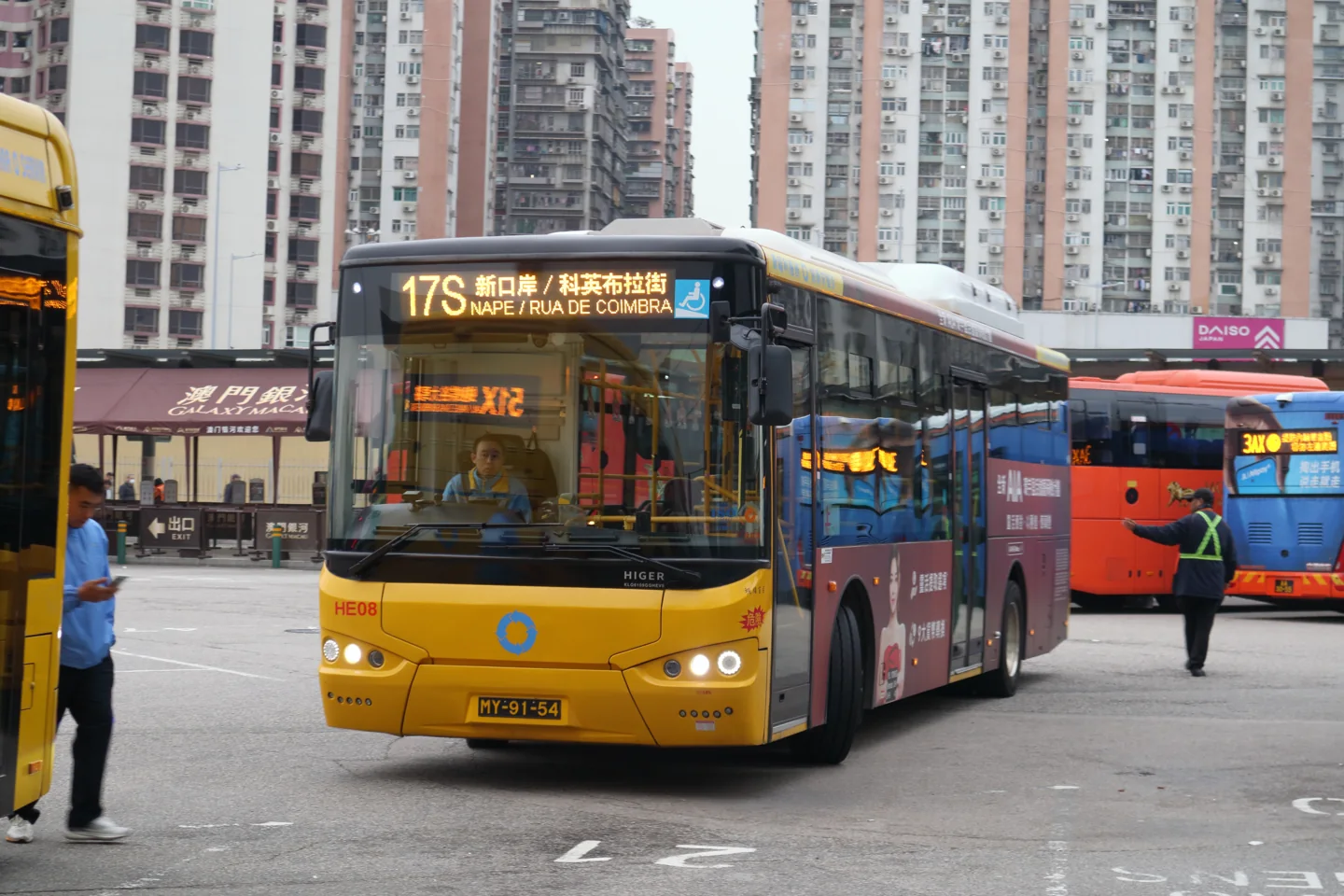
Ordinary buses cost MOP 6 at the standard fare, or MOP 3 with eligible approved stored-value payment; express X services use MOP 4 under that arrangement. Foreign ride codes listed by DSAT pay the MOP 6 fare without the local transfer discount.
The Light Rapid Transit tariff has token fares of MOP 6, 8, 10 or 12 and prepaid fares of MOP 3, 4, 5 or 6, according to counted stations. Certain crossing sections have special counting rules. Select the ticket for the route; do not assume the bus card and rail product are interchangeable.
14Build your routine and finish the first-month checks
Once the paperwork is moving, use the neighbourhood regularly: shop for the food you will cook, walk the school route and learn where to collect parcels or get a small repair done. These repeated errands make a more useful local map than a list of sightseeing highlights.
- In the first week: save every household member’s stay deadline, the worker’s designated attendance date and any school appointment. Confirm the employer or university can reach you.
- After receiving documents: complete the appropriate identity record, bank activation and payroll update. Photograph the documents securely and keep the originals accessible for formal appointments.
- After the housing handover: reconcile the inventory, rental receipts and utility contract holders. Confirm any pet conditions in the lease and complete the applicable licensing.
- Before month-end: compare actual groceries, transport, bills and medical spending with the budget. Review which school extras or annual charges need a monthly savings allocation.
- For the next months: calendar permission renewals, passport validity and school payment dates. Tell the relevant authority or provider when the facts on its record change.
For Cantonese or Portuguese study, the Education Bureau’s activity listings identify courses at its Centre of Languages on Rua Formosa. The autumn 2026 listings reviewed here had already closed registration in September. Ask about the next suitable beginner intake and whether your identification category is eligible before assuming a place is available.
Find community through a school parent group, colleagues or the university’s activities if enrolled. Build time for walks on the peninsula, Taipa errands or Coloane outings around the actual commute rather than leaving every day organized around administrative tasks.
Keep one household folder containing authorizations, receipts, the recognized lease, insurance details and emergency contacts. It gives you a practical reference when a clinic, school, bank or immigration counter asks for a specific document.

Sources & further reading
Reviewed 14 October 2026. Sources are linked beside the relevant instructions. Procedures use the responsible Macao authorities and the institutions’ own current pages. Older general listings are qualified by IPIM’s newer eligibility rules, and the June 2026 pet announcement is distinguished from earlier requirements. Blue-card stay, student stay and resident status remain separate. Reviewed on 14 October 2026. School and university prices refer to the named institutions and 2026/27 schedules. Immigration, pet, outpatient and transport amounts are the published service charges. CEM’s quoted amount is its July 2026 adjustment component, not the full electricity price. Household totals are hypothetical calculations. Photograph credits, licences and capture years appear with the images.
Browse the source directory
- PSP — entry, visas and permitted stays
- PSP — non-resident worker applications and blue cards
- Labour Affairs Bureau — non-resident worker forms
- Labour Affairs Bureau — responsible departments
- PSP — families of eligible non-resident workers
- PSP — non-resident student stay authorization
- PSP — residence applications made by Others
- Identification Services Bureau — first resident identity card
- Talent Development Committee — recruitment categories
- Talent Development Committee — third recruitment round
- Talent recruitment — application platform
- IPIM — investment and discontinued new application categories
- IPIM — blue-card and residence distinction
- PSP — authorized self-employed activities
- Financial Services Bureau — current tax obligations
- The International School of Macao — applying for 2026/27
- The International School of Macao — 2026/27 fees
- University of Macau — tuition and charges
- University of Macau — direct admission rules
- University of Macau — public transport connections
- Macao Customs — passenger goods and restrictions
- IAM — updated dog and cat import conditions, 12 June 2026
- IAM — live-animal import licence and inspection
- PSP — worker follow-up appointments
- BNU — account-opening service
- BNU — current account-opening guide
- Official Bulletin — lease formalities, Law 13/2017
- Legal Affairs Bureau — notarizing lease signatures
- Housing Bureau — licensed property intermediary search
- Financial Services Bureau — lease stamp-duty calculator
- Health Bureau — patient registration and Gold Card
- Health Bureau — hospital outpatient service and fees
- CEM — tenancy and electricity account changes
- CEM — tariff clause adjustment
- CTM — current prepaid registration requirements
- Transport Bureau — bus fares and accepted payments
- Macao Light Rapid Transit — tickets and fares
- PSP — emergency calls
- Education Bureau — language-centre activity listings
Make your next step a practical one
Confirm the permission and eligibility of every household member before committing to flights, a school deposit or a long lease; then collect the documents required by that route.