Visa
Moving & Living - Martinique - Complete Guide
Move to Martinique in fourteen practical steps: choose a commune, arrange residence and work, budget in euros, register for school, find housing, open healthcare rights and connect local services.
Photo credit
In Martinique, the address you choose shapes the move: a university week in Schœlcher, a job in Le Lamentin and a ferry commute across Fort-de-France Bay involve different routines. French administration, local transport networks and the island's own housing and service arrangements meet in everyday tasks.
These fourteen steps take you from choosing a commune to completing the first month's records and bills. They distinguish Martinique's overseas entry rules from Schengen travel, explain where local institutions fit, and give practical sequences for work, school, housing, healthcare and utilities.
Martinique at a glance
- Administrative status
- French overseas department and region
- Main administrative centre
- Fort-de-France
- Currency
- Euro · EUR / €
- Public administration
- French
- Residence authority
- Préfecture de la Martinique
- Social security
- CGSS Martinique
- Transport authority
- Martinique Transport
- Reviewed
- 15 October 2026
Follow your moving journey
Start at step 1, or jump to the task you are working on.
01Choose a commune around the journey you will make every day
Choose the address after you identify the daily destination. Living near the University of the Antilles in Schœlcher presents a different calculation from working in Le Lamentin or commuting to central Fort-de-France from Les Trois-Îlets. Start with those places on a map, then test the actual trip rather than comparing distances across the bay.
| Starting point | What to investigate |
|---|---|
| Fort-de-France | Compare the centre with Didier and Cluny; test the walk, bus connection and access to your workplace. |
| Schœlcher | Useful to investigate for university life; compare the campus journey from Madiana, Terreville and the bourg. |
| Le Lamentin or Ducos | Begin here if the job is in the central employment corridor; test road access at your actual start and finish times. |
| Les Trois-Îlets | Compare the bourg, Anse Mitan and Anse à l’Âne. A ferry-based commute requires a workable first sailing, last return and onward connection. |
| Le Marin, Sainte-Luce or the north | Match the choice to a local job or a genuinely workable remote arrangement, including schools and healthcare. |
- Put work, school and ordinary appointments into the transport operator's journey planner. Test the entire door-to-door trip, including walking and waiting.
- Visit shortlisted properties in daylight and after work. Look at ventilation, drainage, parking, screens and indoor mobile reception.
- Ask what happens during water or power interruptions and who maintains the equipment. Obtain the actual utility provider and meter details.
- Use temporary accommodation until you have compared the contract and the journey in person.
Martinique Mobilités publishes the Centre-network information; Martinique Transport identifies the maritime operator and network. Ferry timetables and service notices matter more to a commute than a tourist description of a beach.

02Identify the residence route for every household member
Martinique is a French overseas department and region outside the Schengen Area. Do not assume that a mainland Schengen short-stay visa covers it, or that a visitor exemption authorizes settlement. Exemptions can depend on nationality and existing documents. Select Martinique as the destination in the official France-Visas assistant and preserve the resulting instructions. France-Visas explains the overseas distinction.
- Establish your starting category. French citizens use their French identity documents. EEA and Swiss citizens have a separate residence framework; after three months, the basis can be work, study or sufficient resources with health insurance. A residence card is generally optional for these citizens. Read the EEA and Swiss residence rules.
- For other nationalities, choose the actual purpose. Employment, study, an eligible family relationship, independent activity and a private non-working stay have different applications. A family's permissions must be considered person by person.
- Apply through the service responsible for where you legally live. Complete the online application, collect the generated documents, book the designated appointment and follow the instructions for originals, biometrics and passport collection.
- Read the issued document. Confirm territorial validity, purpose and the post-arrival procedure. Keep the decision and application record with your travel papers.
For a stay beyond 90 days requiring a long-stay visa, the visa is a starting permission with conditions, not permanent residence. France-Visas distinguishes a VLS-TS requiring validation from a visa instructing the holder to apply for a residence card. Compare those long-stay instructions. Do not use nationality-based visitor information as a substitute for the residence assessment.
03Arrange the employment permission or viable business before moving
Send a prospective employer a clear summary of your nationality, current residence document and proposed job. The employer must determine whether your document already authorizes the work or whether a separate work authorization is needed. Where required, the employer makes the online application; keep that approval with the subsequent visa or residence file. Use the current work-authorization guidance.
- Obtain a written offer identifying the employer, workplace, duties, hours, gross salary, start date and any relocation assistance. Ask payroll for an illustration of net pay and deductions.
- For a permit-required recruitment, let the employer establish the applicable labor-market test or exemption. The government guidance identifies a separate Martinique shortage-occupation list issued in June 2026; a mainland list is not automatically the right one.
- If your profession is regulated, establish recognition and registration before accepting a start date that depends on being licensed.
- For independent work, prepare the business plan, qualifications, client evidence, projected income and premises arrangements. The entrepreneur/profession libérale framework requires a viable principal activity and sufficient means; registration alone does not supply immigration permission. Read the entrepreneur requirements.
- Complete the appropriate business declarations through the national business formalities portal, with advice on the legal form, contributions and tax treatment.
Check territorial validity if you already hold a French document. The overseas Labour Code limits the work authorization attached to certain listed residence documents to the department or collectivity where it was issued. Ask the employer and competent authority whether your particular document authorizes the proposed work in Martinique before transferring from elsewhere. Read the overseas territorial provisions.
A remote job still involves work performed from Martinique. Before relocating, agree payroll, social-security and employment arrangements with the overseas employer. If you will invoice clients, assess the independent activity. Do not describe a non-working visitor stay as a digital-nomad permit, or presume that being paid into an overseas account removes local obligations.
04Price the move and make a budget in euros
Separate the cost of reaching Martinique from the cost of maintaining the home. Ask the freight company for an itemized quote including port handling, customs clearance, storage and delivery to the actual address. Ask a landlord whether the advertised amount is hors charges or charges comprises, then identify exactly which services the charges include.
| Cost | Verified example or way to price it | Frequency and scope |
|---|---|---|
| Long-stay visa | €99 general full-rate application fee; reduced or exempt categories and service fees are separate. Official visa-fee table. | Application cost where the visa is required; not the residence-validation tax |
| Central-area public transport | Liberté pass €44 for 30 rolling days; a new personalized transport card costs €10. | Centre network, checked 15 October 2026 |
| Occasional central-area travel | Unit ticket €1.50; a new rechargeable occasional support costs €2. | Per ticket and initial physical support respectively |
| Mobile example | Sosh Caraïbe lists 200GB at €19.99/month; the provider's dated contract summary specifies €10 SIM activation; confirm the current charge at ordering. Compare the Martinique offers and contract terms. | Provider example, checked 15 October 2026; eligibility and included destinations apply |
| Student contribution | CVEC €105 for 2026–2027 where applicable; exemption and non-liability categories exist. | Academic year, separate from tuition |
| Home and ordinary living | Use actual rent, insurance, electricity, water, groceries and transport quotes or receipts. | Household-specific; no invented island-wide monthly total |
Read the Centre fare conditions and CVEC eligibility. For a clearly hypothetical housing calculation, an unfurnished principal-residence rent of €850 excluding charges plus the maximum ordinary one-month deposit would require €1,700 for those two items. That calculation excludes agency costs, insurance and utilities; €850 is an illustration, not a verified market rent.
Ask the tax service to assess residence, overseas income and any continuing filing obligations abroad. The DOM income-tax calculation includes a 30% reduction capped at €2,450 for qualifying taxpayers domiciled in Martinique; it is a reduction in the calculated tax, not a 30% exclusion of salary. Part-year moves have specific rules. Read the tax administration's DOM guidance. Keep a record of the arrival date and income before and after the move.
05Arrange school registration or the right university application
For a public primary school, start with the mairie for the commune where you live. The address determines the normal school sector; choosing a different school may require a derogation. In Fort-de-France, the municipal registration office is the Caisse des écoles at the former civil hospital in Ermitage. Follow the city's school-registration instructions.
- Prepare family identity and relationship records, the child's health or vaccination record, recent proof of address, and custody orders where relevant. Fort-de-France also lists CAF documentation; if you have just arrived without a CAF record, ask the registration office how to document your situation.
- For a transfer, request the previous school's certificat de radiation. Take the mairie's registration receipt to the assigned school to complete admission.
- Register separately for meals, garderie and school transport. The city's 2026 notice reiterates that canteen and childcare enrollment is required; a classroom place does not automatically include them. Read the current municipal notice.
- For secondary education or a child arriving with limited French, ask the education authority for the placement and language-support process before selecting a school privately.
The University of the Antilles identifies Schœlcher as a major Martinique campus, with law and economics, humanities, science and other university units; Fort-de-France also has an INSPÉ campus. Check where the particular teaching actually takes place. Compare the university's campus information.
Admission can involve Parcoursup, e-candidat, DAP or Études en France depending on level and applicant background. The university's 2026–2027 page distinguishes admission, administrative registration and pedagogical registration; most summer admission deadlines have already passed by this review. Do not assume that a later course-registration date allows a new application. Use the calendar for your course and intake. Obtain the CVEC payment or exemption certificate when applicable, then complete registration and any student immigration process separately.
06Confirm residence and healthcare before committing to retirement
French citizens moving from another part of France should arrange the address and institution changes for their existing pension and health files. EEA and Swiss retirees need the resources and health-insurance basis appropriate to an inactive resident; EU citizenship does not mean every residence condition disappears. Read the inactive-resident conditions.
- Ask your pension provider how overseas residence affects payments, tax withholding and any proof-of-life process. Obtain written confirmation of the account and address it will use.
- For a non-EEA national planning a private stay without work, assess the visitor long-stay category, resources, accommodation and insurance requirements. This is not a separate universal retirement visa. Read the non-working long-stay category.
- Establish which country is responsible for healthcare. Some pensioners covered by European coordination obtain an S1 from the competent institution and register it locally; eligibility depends on the pension and household circumstances. Use the status-specific healthcare guidance.
- Identify the GP, pharmacy and specialists you will actually use. Compare appointment access and transport from the proposed home before signing a long lease.
Prepare a care budget that includes complementary insurance and services outside reimbursement. Ask the insurer to assess existing conditions and any travel between Martinique, mainland France and other countries. Pension income, health coverage and residence permission are three separate decisions to complete.
07Prepare the paperwork, shipment and animal journey together
- Collect civil records first. Keep passports, birth and marriage documents, custody papers, qualifications, references and medical records. Use the receiving authority's rules for full copies, translations and legalization; do not pay for an apostille without establishing whether that particular document needs one.
- Keep names consistent. Explain differences across passports, diplomas and relationship records with the relevant supporting document. Store scans offline and keep originals in hand luggage.
- Prepare an itemized freight inventory. Give the clearing agent your origin, residence-transfer date, ownership history and delivery address. French Customs provides specific relief for used personal belongings when moving the normal residence to a DOM, subject to conditions.
- Supply the customs evidence. The official list includes a detailed valued inventory and proof of installation, such as a change-of-residence certificate, employment contract or transfer order. Relief is not intended for furnishing a second home; qualifying importations are normally made within a year of establishing residence, and disposal restrictions apply. Read the DOM moving-relief procedure.
- Plan pets by origin and transit. Book a veterinary appointment with the animal's identification and vaccination history and the precise itinerary. DAAF Martinique separates travel from the EU from non-EU entry and links a June 2026 import guide. Obtain the passport or certificate and timing applicable to that route before reserving carriage. Use DAAF Martinique's updated animal-travel resources.
Ask the carrier to confirm the crate, reservation, heat-related carriage limits and arrival handling in writing. Keep the animal's originals with the person traveling with it. An airline reservation does not replace the destination or transit documents. For freight, retain the relief decision and clearance receipt with the inventory so that the later sale or disposal of an item can be assessed correctly.
08Use the first two days to establish a usable address and contact
Carry your approvals and accommodation details on the final flight, even if the journey connects through mainland France. Have a collection or onward-transport plan that works for your actual arrival time. Temporary accommodation should provide a precise address and contact rather than only the name of the commune.
- Save the arrival evidence and inspect the passport or visa information relevant to your route. Keep boarding passes if they help establish the date you began residence.
- Check into the accommodation and obtain the documents it can provide for later address-based procedures. Each authority may request a different form of proof.
- Test card payments and a small cash withdrawal before committing a large payment. Keep a backup card separate from the main wallet.
- Activate a usable phone line and give the number to the employer, school and accommodation contact. Preserve access to the old number if it receives banking authentication codes.
- Make a list of immediate deadlines from the issued visa, college offer and employment contract. Book the first administrative appointment before unpacking becomes the priority.
Build a local folder containing the full address, landlord details, utilities, employer, school and insurer. Photograph meter readings and property condition as soon as you receive the keys. Those records are more useful for a disputed first bill than trying to reconstruct the handover weeks later.
09Complete the procedure printed on your visa and track the file
Read the visa wording before choosing a form. A VLS-TS is validated online; a visa requiring a residence-card application follows that instruction instead. For a VLS-TS, the standard validation deadline is three months after arrival. A visa saying carte de séjour à solliciter dans les deux mois requires the card application within that two-month period. Compare the document types.
- For VLS-TS validation, use the official validation service, enter the requested visa and arrival details, pay the applicable tax and save the confirmation. This tax is separate from the consular application fee.
- For a residence-card application or renewal, consult the Martinique prefecture's filing instructions. They identify ANEF categories; do not send every category to the same email address or assume that an online account is itself an application.
- Keep the submission confirmation and all subsequent documents. Read their validity and work conditions separately; the mere upload of a file is not a new residence or work authorization.
- Check the account for requests for missing documents, retain copies of your replies and calendar the expiry of the current permission.
If you need help with ANEF, the prefecture advertises a Point d'Accueil Numérique appointment service. Use that assistance route rather than buying an appointment from a third party. The prefecture's information pages were intermittently unavailable during this review; confirm the current channel for your category before making a journey. EEA and Swiss citizens should use their own framework rather than completing a non-EU visa-validation process unnecessarily.
10Obtain a RIB and organize ordinary euro payments
A relevé d'identité bancaire, or RIB, gives the details used for transfers and direct debits. Ask the bank which identity, address, tax-residence and income documents it needs for a newly arrived customer. If you already have a French account, ask whether an address update and local contact arrangements are sufficient before opening another one.
- Compare the account fee, card, withdrawals, SEPA transfers and overseas-payment costs against your actual use. Confirm that any advertised online account accepts your residence and identification situation.
- Obtain the RIB, give it to payroll and test a small transfer. Set up household debits only after checking the account details and payment dates.
- If you cannot open an individual account and meet the eligibility conditions, request a written refusal. IEDOM explains the droit au compte procedure and the evidence accepted when a bank has not replied within 15 days.
- Submit the signed request, refusal evidence, valid identification and recent address proof to IEDOM or the designated online route. The bank selected under the procedure supplies basic services; this does not promise credit or a discretionary premium package. Follow IEDOM's account-access instructions.
Keep enough accessible funds for the gap between arrival and the first salary. A transfer from an overseas account may have charges and timing different from a domestic euro transfer. Record the landlord's payment reference and obtain receipts so that a payment can be matched to the correct month.
11Read the bail, inspect the property and document the handover
Distinguish a location vide from a location meublée and confirm that the contract is for your principal residence. For ordinary monthly-paid principal-residence leases, the deposit ceiling is one month's rent excluding charges for an unfurnished home and two months for a furnished home. Other contract types can differ. Read the deposit rules.
- Assemble a rental file with identity, employment or other income evidence and the requested guarantor documents. Ask for the complete list before sending sensitive records repeatedly.
- Check the amount hors charges, the charge provisions or fixed package, the deposit, duration, notice terms, occupants and inventory. Ask how charge adjustments are calculated.
- Inspect air-conditioning, ventilation, roof and window condition, drainage, locks, hot water and plumbing. Test indoor reception and ask for the last available utility consumption information.
- Complete the état des lieux d'entrée with the landlord or agent. Add dated photographs, keys, meter numbers and readings; retain a signed copy and the furniture inventory if furnished.
- Arrange the required home-insurance cover and provide the certificate requested for handover. Confirm who opens electricity and water accounts and what is already included in rent.
For a disagreement about a guarantor, lease clause, charges or the deposit, ADIL Martinique offers independent housing information. Ask before signing an unclear provision. No verified island-wide rent average is used here: compare current properties of the same size, furnishing and location, then add the transport and service costs that the address creates.
12Open the health file and choose a médecin traitant
CGSS Martinique is the local social-security institution handling health and several other branches. Start with your status: employee, posted worker, pensioner, student and inactive resident can have different routes. Work-based entitlement, residence-based coverage and an S1 transfer should not be treated as the same application. The government explains the status distinctions.
- Obtain the transfer or coverage documents available from the former institution before leaving. Keep interim insurance in place for any gap identified for your household.
- Where an opening-of-rights application is required, complete the official form and its situation-specific evidence list. Prepare identification, civil records, lawful-residence or activity evidence, address proof and the RIB requested for the file.
- Use CGSS Martinique's official contact and appointment routes. Track the file and obtain an attestation de droits when rights are established; a card is a tool for using coverage, not a replacement for the entitlement decision.
- Choose a médecin traitant, arrange ongoing prescriptions and compare complementary mutuelle cover. Ask about consultation charges and reimbursement rather than assuming every bill is paid in full.
The CHU de Martinique publishes consultation and administrative-arrival instructions for its sites, including Pierre Zobda Quitman. Take the appointment confirmation, identity and coverage documents requested by the service. Know which hospital or clinic handles the household's continuing care before an urgent situation occurs. An EHIC used for necessary care during a temporary stay should not be mistaken for a complete permanent-move plan.
13Put utilities in the right name and test the commute
- Electricity: use EDF Martinique's new-customer process. Prepare the address, move-in date, meter reading and information identifying the previous supply point. Confirm whether a remote activation or technician visit is needed before assuming the power will be on.
- Water: identify the provider for the commune. ODYSSI covers Fort-de-France, Le Lamentin, Schœlcher and Saint-Joseph; its subscription instructions require occupancy evidence, identification, a RIB and meter details. Follow ODYSSI's move-in checklist. For another commune, ask the landlord for the responsible operator rather than submitting an ODYSSI application automatically.
- Phone and internet: compare a Martinique-specific plan, its local and roaming zones, data policy and activation costs. Test the signal in the property and confirm fixed-line availability at the exact address. Keep the old service until the new connection works.
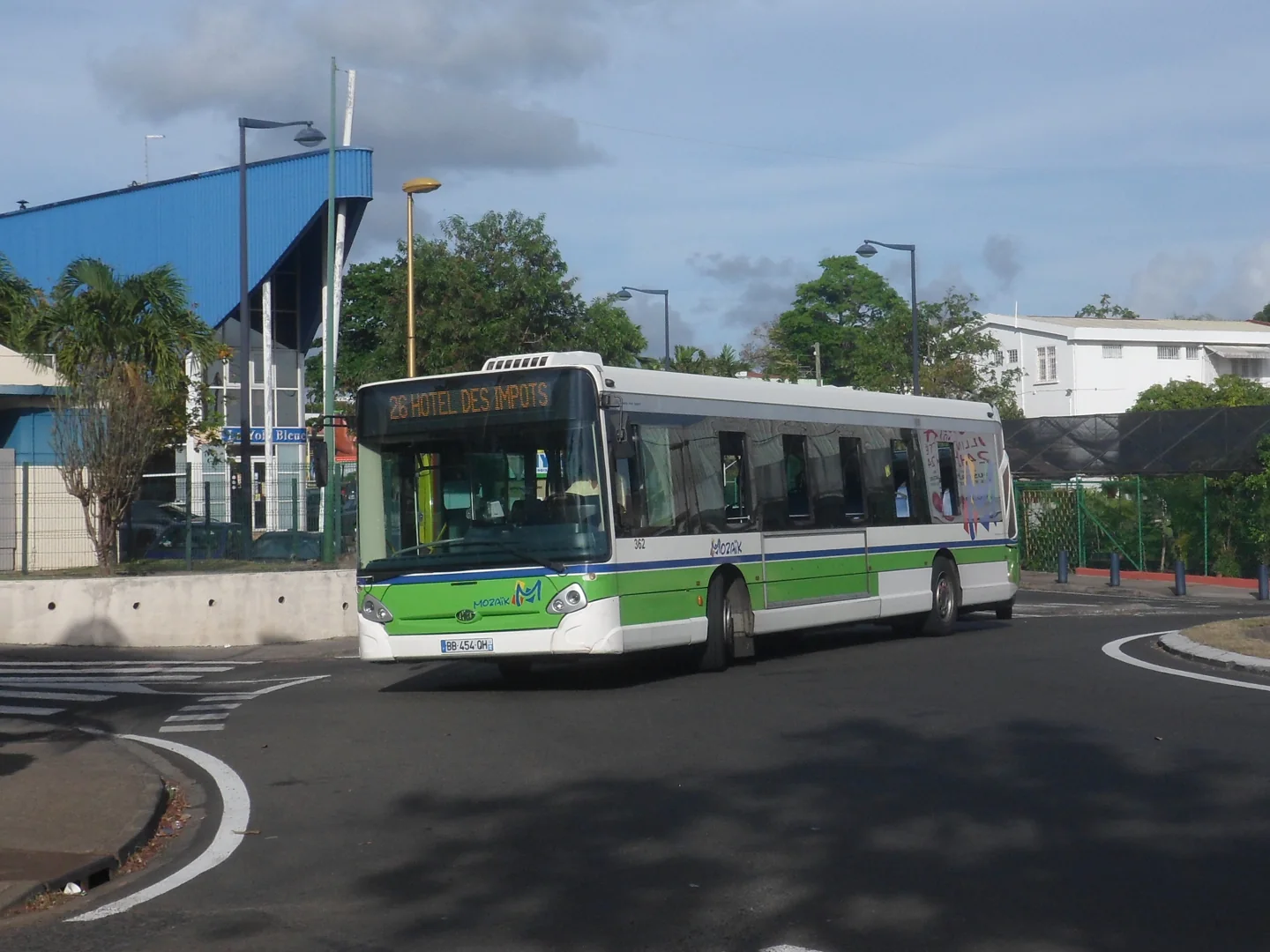
- Transport: choose the ticket for the network you actually use. On the Centre network, a personalized card requires a recent photograph, identity copy and address proof. Load the relevant pass and validate at each bus boarding. Read the card and validation instructions.
- Ferries and cars: use the maritime operator's current timetable for the proposed commute. If a vehicle is necessary, establish license validity, insurance, registration and parking costs before buying or importing one.
A card usable as a physical support on several networks does not mean a Centre-only pass pays every maritime or interurban journey. Check the title as well as the card. Recheck the actual weekday and weekend timetable before treating a ferry connection as the household's only way home.
14Build a routine and reconcile the first bills and records
Use the first month to turn temporary arrangements into reliable ones. Learn the relevant French terms on the documents you use: justificatif de domicile, RIB, attestation de droits, quittance and état des lieux. Keep each current version rather than assuming that one proof-of-address document will satisfy every institution.
- Week one: check the visa instruction and deadlines, notify the employer of arrival, test phone and bank access, and confirm the first school or administrative appointment.
- Week two: finish housing and meter handovers, submit the relevant health file, register meals and childcare where needed, and test the normal commute.
- Week three: compare the first payslip and service bills with the promised terms. Correct names, meter numbers or opening readings while the evidence is easy to retrieve.
- Week four: review every pending application and missing document. Calendar residence, insurance and lease dates, and agree who in the household will monitor each account.
- Establish local contacts: ask the school, university, mairie or colleagues about activities suited to your interests. Try an ordinary shopping and social routine before committing to subscriptions that depend on a car or a distant venue.
Keep official notices for your commune and transport network accessible, and agree a practical household plan for a disrupted journey or utility interruption. Rebuild the monthly budget from your receipts rather than an expatriate cost estimate. Once work, school, bills and permissions are running, you can judge whether the first address is the right longer-term base.
Sources & further reading
Reviewed 15 October 2026. Sources are linked beside the relevant instructions. Martinique is outside Schengen. EEA/Swiss residence, work authorization, visa entry and residence validation follow separate rules. Local ANEF channels depend on the category; prefecture pages were intermittently unavailable during review. The tax authority's DOM guidance is dated legislation, not a promise of a flat salary exclusion. No ordinary digital-nomad or universal retirement visa is invented. Checked 15 October 2026. Centre transport prices apply to that network and distinguish a pass from its reusable support. Sosh is a provider example with current catalog and dated contract terms; confirm activation and eligibility at ordering. The 2026–2027 CVEC is separate from tuition. The €850 housing amount is a hypothetical calculation, not a market quote. Consular fees, validation tax and service-provider charges are separate. Photograph credits, licences and capture years appear with the images.
Browse the source directory
- Martinique Transport — Centre network
- Martinique Transport — maritime network
- France-Visas — official visa assistant
- France-Visas — overseas territories and Schengen
- Service Public — EEA and Swiss long-term residence
- France-Visas — long-stay visa types
- Service Public — foreign-worker authorization
- Service Public — entrepreneur and independent-professional residence
- National business formalities portal
- France-Visas — official visa-fee table
- Sosh Caraïbe — Martinique mobile offers
- Sosh Caraïbe — 200GB contract summary
- Martinique Mobilités — Centre fares and travel cards
- CVEC — official contribution service
- Tax administration — DOM income-tax calculation
- Fort-de-France — public-school registration
- Fort-de-France — 2026 school and canteen registration notice
- University of the Antilles — Martinique campuses
- University of the Antilles — 2026–2027 enrollment
- France-Visas — private long stays without work
- French Customs — moving belongings to a DOM
- DAAF Martinique — animal travel and current import resources
- Service Public — validate a VLS-TS and pay the tax
- Martinique Prefecture — residence filing channels
- Martinique Prefecture — digital assistance appointments
- IEDOM — the right-to-account procedure
- Service Public — residential rental deposits
- ADIL Martinique — independent housing information
- Service Public — healthcare when moving to France
- Service Public — apply to open health-insurance rights
- CGSS Martinique — official contacts and appointments
- CHU de Martinique — outpatient consultation instructions
- EDF Martinique — open an electricity contract
- ODYSSI — move-in water service
- Service Public — tenant home-insurance obligations
- Labour Code — overseas territorial work-authorisation provisions
Make your next step a practical one
Identify each household member's residence basis, obtain the employer or college's application instructions, and test the daily journey before signing a long rental.