Visa

Moving & Living - Samoa - Complete Guide
Move to Samoa step by step: choose between Apia and Savaiʻi, arrange residence and work approval, prepare family records, banking, housing, health and household services.
Photo credit
In Samoa, choosing a home means thinking about the island as well as the address. A household based around Apia has a different pattern of school, shopping and office visits from one building its routine around Salelologa on Savaiʻi. The useful comparison is the journey you will actually make each week.
This fourteen-step guide follows the move from the permission and employment decisions through the records needed for arrival, a home and everyday services. It distinguishes visitor entry from residence and paid work, identifies optional business and education steps, and explains where the receiving authority must resolve an individual requirement. Photographs show real places with their capture dates retained.
Samoa at a glance
- Location starting points
- Apia on Upolu · Salelologa on Savaiʻi
- Immigration authority
- MPMC Immigration
- Employment authority
- Ministry of Commerce, Industry and Labour
- Tax authority
- Ministry of Revenue
- Social registration
- Samoa National Provident Fund
- Currency notation
- SAT$ — Samoan tala
- Reviewed
- 15 October 2026
Follow your moving journey
Start at step 1, or jump to the task you are working on.
01Choose the island and inspect the home against the weekly journey
Begin with the workplace, receiving school and medical appointments. Compare an Apia-area home on Upolu with the daily journeys it actually requires. A Savai'i address needs its own plan for services and any appointments on Upolu; do not make a regular commitment depend on an assumed ferry connection.
The Tourism Authority's market guide places Fugalei's produce market between Fugalei and Saleufi streets in Apia. It identifies Salelologa Market near the wharf and Savai'i bus terminal. These are useful points for testing shopping and transport access, rather than reasons to choose a property without seeing its approach and surroundings.
- Obtain the address, photographs, furnishing inventory and proposed rental term.
- Inspect the home or arrange a trusted inspection of that exact property.
- Establish the owner's authority to let it and obtain the agreement in writing.
- Separate rent, security, utilities, shared charges and any maintenance obligations.
- Record condition, keys, equipment and meter identifiers at handover.
Distinguish a holiday booking from a residential tenancy. Ask which currency and payment period apply, which services are included and whether cooking, laundry, parking or working from home is permitted. Have the notice, repairs, insurance and security-return provisions assessed before paying if a clause is unclear.
Ask whether water comes through SWA or another local arrangement, how bills are divided and who handles interruptions. Test the home’s approach after dark and the final walk with groceries or a child's school bag. Obtain promised repairs and a maintenance contact in writing. A universal residential deposit cap and notice period were not established in this review; use the applicable agreement and individual advice.

02Match the first journey to visitor or residence permission
Write the citizenship, passport, residence country and purpose of travel for each household member at the top of the moving file. Add every transit point and the destination after Samoa. If one person will travel first to inspect accommodation, keep that exploratory visit distinct from the household's eventual residence and work arrangements.
Samoa Immigration's border guidance describes a free 90-day visitor permit on arrival for foreign nationals without a temporary residence permit or Samoan citizenship, subject to its entry conditions. These include onward or return travel, a passport valid for at least six months after intended departure, the next country's required permission, accommodation details and evidence of funds. Character and health conditions also apply.
- Establish whether the journey is a visit or travel under an already approved residence arrangement.
- Prepare the passport, onward itinerary, accommodation contact and financial evidence for the applicable admission.
- For a family stay, record the village and family name rather than relying only on a general destination.
- Resolve transit and onward-entry permission with the relevant destination authorities.
- Carry the issued decisions and supporting records in hand luggage and record the admission actually granted on arrival.
The permit service states that work is not permitted on visitor status. Do not make the first salary or paid assignment depend on admission as a visitor. A business meeting or accommodation inspection should not be used as a substitute for arranging the activity and residence permissions required for the move.
Keep the dates on each person's actual document in a shared household calendar. If a journey changes, compare the new itinerary with those documents before rebooking the onward leg.
03Choose the residence purpose and assemble the household application
Identify the real basis for the stay: employment, business or investment, study, research, cultural or religious activity, or family support. Explain how accompanying adults and children fit the application. A rental agreement, pension or savings balance may support the plan but is not the residence decision.
MPMC's permit instructions distinguish temporary residence by purpose. For employment, they identify MPMC100 with employer sponsorship on MPMC101, medical and police evidence and originals or certified supporting qualifications and references. Have Immigration establish which records apply to each household member and duration rather than treating one adult's file as complete for the family.
- Select the purpose that describes the actual stay and planned activity.
- Obtain the current residence and accompanying-family checklist from Immigration.
- Prepare the supporting employment, financial, education or family records for that branch.
- Confirm the receiving channel and payment assessment for the application location.
- Retain the submission reference and read the issued decision's activity, duration, arrival and renewal conditions.
The MPMC100 form hosted by Immigration requests originals or certified copies and photographs for the people included. Its older information sheet contains entry and fee details that differ from the current service pages, so use those pages for the current published position and have the receiving office confirm the assessed payment.
For example, the Immigration fee table, reviewed 15 October 2026, lists employment temporary residence at SAT$900 for an offshore main applicant, SAT$1,800 in-country and SAT$450 per dependent spouse or child. These are residence application figures, not the complete cost of work approval or the move.
No dedicated retirement or digital-nomad route is asserted. A retirement or overseas-income plan needs an individually applicable residence basis and a separate assessment of any paid activity, healthcare continuity and taxation.
04Have the employer prepare FEEP approval for the actual role
Obtain the employing entity, duties, workplace, hours, pay, proposed start and contract duration in writing. Establish who prepares the application and how a delayed decision affects salary, accommodation and moving support. Give the employer the household's actual travel and residence position before agreeing to a start date.
MCIL's employment service says employers apply for a Foreign Employment Employee Permit before the employee starts. The permit is tied to the employer and role and can run for up to three years subject to its conditions; residence permission is also needed. Its jobs portal covers Samoa-based vacancies, while RSE and PALM concern work overseas.
- Have the employer identify the applicable business or domestic-work checklist.
- Prepare the signed offer, job description, employment agreement, identity and relevant experience records.
- Resolve the qualification-certification requirement with the receiving team before submission.
- Have the employer assemble the requested business, payroll and contribution evidence.
- Keep the issued approval and FEEP identification with the contract and compare them with the activity before work begins.
The linked FEEP package separates business and domestic employment and identifies medical and police reports as well as personal and job records. For permits from three months to three years it specifies medical evidence no more than six months old and police evidence no more than twelve months old. Obtain the current applicable report instructions before commissioning them.
The employment page lists the private-sector and state-owned-enterprise minimum at $5.24 per hour from 1 July 2026, with Public Service Act employment excluded. Use the applicable employment framework when assessing the written offer; this is not an expatriate salary estimate.
For remote employment or overseas clients, describe the location, employer and work explicitly to Immigration and MCIL. Obtain the permitted activity and any registration requirements instead of assuming foreign payment makes the work a visitor activity. Assess a working partner separately.
05Check the activity restrictions before registering a foreign-owned business
Describe the proposed product or service, customers, location, owners and intended working roles. Separate ownership of the investment from the work each person will perform. Confirm the activity's eligibility before signing premises or equipment contracts that depend on approval.
MCIL's business-registration service distinguishes company registration, foreign-investment certification, Revenue business licensing and MPMC residence. It identifies reserved activities for Samoan citizens and restricted activities that can require specific ownership or establishment conditions. The reserved examples include bus and taxi services and food-and-drink retailing; establish the actual classification rather than assuming every small business is open to a foreign investor.
- Give MCIL a precise description of the proposed activity and ownership.
- Establish the reserved, restricted or otherwise applicable branch and any sector approvals.
- Complete the company and foreign-investment registrations required for that structure.
- Use the accepted records to arrange the appropriate Revenue business licence.
- Resolve personal residence and work approval before the investor or director begins local activity.
The service links the Business Registries portal and the foreign-investment forms. Its published fee table lists SAT$50 to lodge a new foreign-investment application and a separate SAT$50 for issuance, reviewed 15 October 2026. Those figures do not include company registration, business licensing, premises or sector-specific costs.
Put renewal and change-reporting actions into the business calendar using the actual certificates issued. Keep the company record, investment decision, trading licence and each person's permissions separately so one approval is not mistaken for the entire process. Have the tax and payroll setup assessed before the first invoice or hire, and record who maintains the accounts and responds to the authorities.
06Budget for the actual home, application branch and tax year
Obtain quotations for travel, freight, temporary accommodation and the chosen home. Beside each item record the currency, due date, included services and cancellation terms. Keep the cash needed before the first salary separate from the ordinary monthly allowance.
| Initial costs | Recurring costs | Record to obtain |
|---|---|---|
| Journey, freight and first accommodation | Rent, groceries and household supplies | Carrier and property quotations |
| Agreed security and service setup | Electricity, water and communications | Lease and provider assessment |
| Records, applications and first purchases | Tax deductions, school, health and transport | Individual decisions and service terms |
For hypothetical arithmetic only, SAT$1,500 first rent plus SAT$1,500 agreed security requires SAT$3,000 before other moving costs. These are calculation inputs, not local market quotations or a legal deposit cap. Replace them with the selected home's actual terms and allow for a delayed work start or longer first stay.
The Revenue guide identifies 31 March following a standard calendar tax year as the annual income-return deadline. Employers have separate monthly PAYE obligations, and business activity can involve provisional tax and VAGST. Establish which obligations apply to the actual income instead of treating salary deductions as the complete response for every household.
- List employment, business, pension, rental and investment income by source country.
- Give Revenue or the adviser the actual arrival dates and residence circumstances.
- Obtain the applicable income-year, registration and payment instructions.
- Compare expected net pay with the written offer and individually applicable deductions.
- Retain records needed for Samoa and any continuing obligations in the previous country.
A universal newcomer tax rate and a national monthly living-cost total are not asserted here. Have the treatment of overseas income, pension payments and any foreign-tax relief assessed from the actual circumstances. Record those answers beside the budget so the household knows which amounts are spendable and which must be reserved.
07Secure the school or university response before fixing the daily journey
Prepare each child's age, current class, subject results and any language, medical or learning-support needs. Ask the receiving school and education ministry which newcomer placement process applies to the intended address. Gather previous reports, leaving records and immunisation evidence before departure, then obtain the requested translation and certification instructions.
- Identify the actual year level and intended receiving institution.
- Obtain its current admission, placement and supporting-record instructions.
- Resolve any assessment or equivalence of overseas results.
- Retain the acceptance response and confirm the start date.
- Establish fees, uniform, books, meals and the actual transport and childcare arrangements.
For higher education, the National University of Samoa's admission form distinguishes first-time applicants and existing students entering a new programme. Its checklist requests certified identity and relevant school or tertiary qualifications; research applicants need a proposal, while mature applicants have a work or training evidence branch. It names the Justice of the Peace, Attorney-General's Office and NUS Student Administration as certification channels and rejects photocopies of an already certified copy.
The Student Administration Office receives completed forms and supporting records at ground level in the Taputo'i Building. Use studentenquiries@nus.edu.ws to establish the programme, intake and overseas-qualification requirements before making travel depend on admission. An enquiry or submitted form is not an offer of a place.
The admission page also points to immunisation evidence for enrolment. Its linked education notice could not be read during this review, so obtain the current school-specific health-record checklist rather than assuming the university form supplies the entire process for a child arriving from abroad.
Under the study residence instructions, enrolment evidence and resources support the permit application, with separate scholarship or accommodation records as applicable. Keep the institution's acceptance and Immigration's residence decision together; any proposed employment also needs the relevant authorisation.
08Prepare the personal files and clear pets and belongings before dispatch
Organise identity, civil-status, employment, education, health and housing records separately. Compare names and dates before ordering certifications or translations. Carry the records needed for early applications with the travellers, with encrypted copies available offline.
- Obtain missing school, work and clinical records before departure.
- Prepare an itemised shipment inventory, values and the carrier's delivery instructions.
- Ask Customs and the carrier which declaration and any individually applicable relocation relief cover the goods.
- Give Biosecurity the animal, plant, food or used-equipment details before dispatch.
- Keep the permits, certificates, shipping and insurance records with the clearance file.
The Ministry of Agriculture and Fisheries' importing poster directs pet owners to Biosecurity Samoa first. Give the service the species, identification, age, origin, vaccination history and proposed transit route so it can supply the applicable requirements. The published contact is biosecurity.info@maf.gov.ws.
The poster explains that required import permits can be requested by email or in person, with the fee confirmed at application. The permit identifies any exporting-government certificate needed. Goods carried with the passenger must be declared on the arrival card; documentation for a separately sent consignment goes to the Biosecurity main office.
Schedule the veterinarian's work around the actual issued instructions, then obtain the carrier's separate acceptance. No universal pet vaccination interval, health-certificate window or quarantine period is asserted here. Retain the permit and certificate originals for inspection, and establish who receives the shipment and resolves further-document requests. Do not assume a household move makes every consignment automatically duty-free.
09Connect the arrival point, home transfer and first Immigration follow-up
Keep tickets, identity, issued permissions, accommodation details and the first contact number in hand luggage. Save the itinerary offline and arrange the final collection around the actual arrival time. Retain a flexible first stay if a missed connection would otherwise leave the household without accommodation.
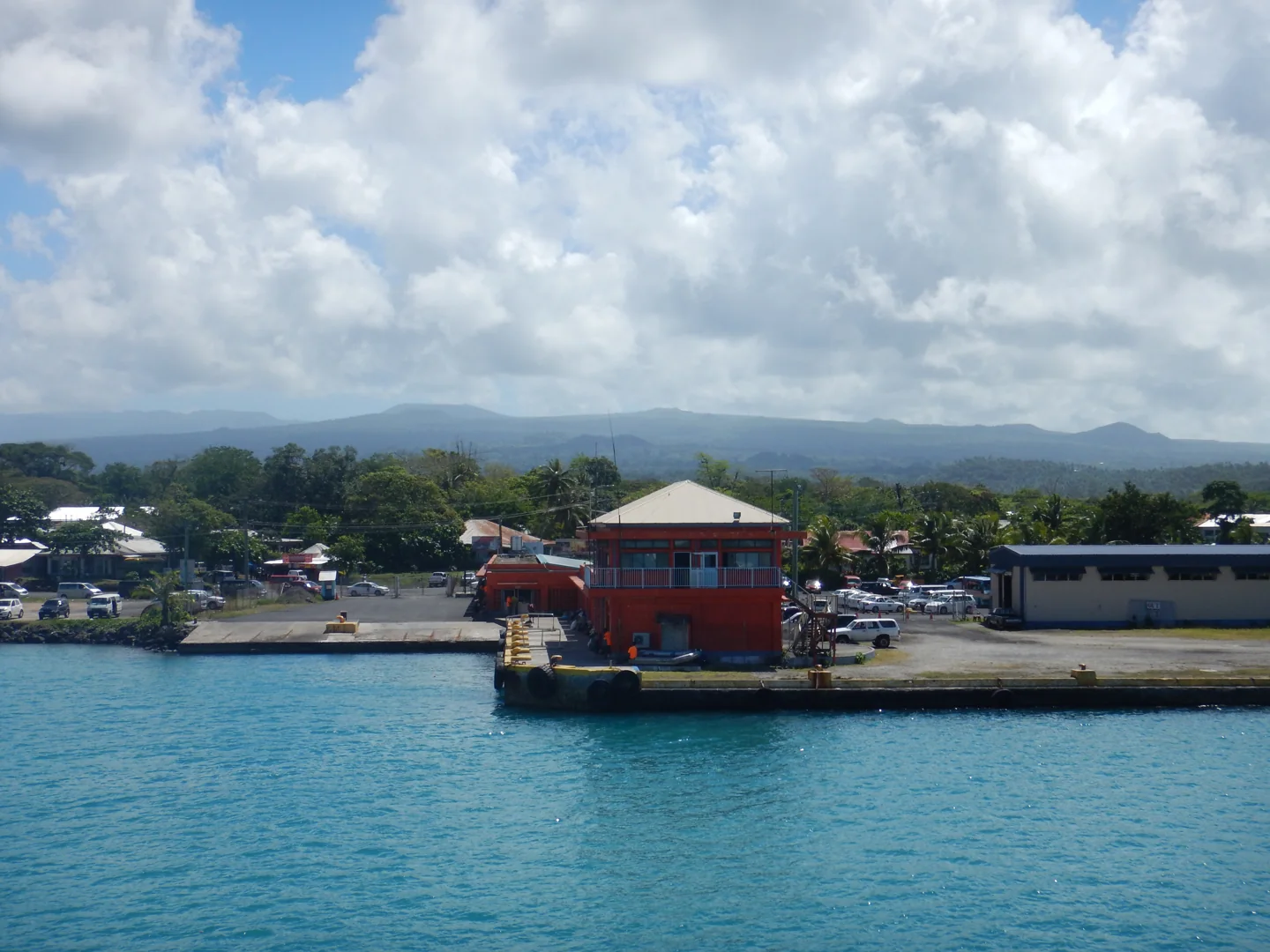
For Savai'i, the Tourism Authority's ferry guide identifies Mulifanua on Upolu and Salelologa on Savai'i as the terminals. It distinguishes foot passengers from vehicle bookings and tells rental customers to establish whether their vehicle may travel. Obtain the operator's current timetable, fare and boarding instructions for the actual date before fixing the transfer.
- Compare the international arrival with the onward transfer and any sailing required.
- Establish separate arrangements for passengers, vehicle, freight and animals.
- Record the admission and date actually granted to every traveller.
- Read the issued permit for any arrival action, follow-up or collection requirement.
- Test the journeys to work, school and the first appointments after reaching the home.
For a permit query, the Immigration directory lists the main office on Level 1 of the FMFMII Government Building at Eleele Fou, Apia, and a Savai'i office on the ground floor of the SNPF Building. Obtain the receiving arrangements for the actual document before travelling to an office.
Keep each household member's record separate. An application receipt has its stated effect; it should not be treated as unrestricted permission to work or travel. Record renewal and follow-up dates from the issued decision and update the household's address with the institutions that request it.
10Connect tax and provident-fund records to the first payroll
Give payroll the legal name and birth date used on the passport and explain which local numbers already exist. Keep the start of employment distinct from the travel date. Establish whether a previous local registration needs updating before opening another file.
The Ministry of Revenue's service guide says a new business-license operator receives a unique tax identification number. It separately identifies employer PAYE registration. An employee should have payroll establish the correct tax treatment and personal records rather than applying for a business licence simply to obtain a number.
- Identify the employee, employer or business registration branch with Revenue.
- Prepare the identity, address and activity evidence requested for that branch.
- Have the employer coordinate the applicable SNPF membership record.
- Compare the accepted references with those used for payroll.
- Once the tax account exists, arrange online access if it is needed for the relevant returns.
The Samoa National Provident Fund member guide directs registration through its main or branch offices with a birth certificate and photographic identity, plus a marriage certificate where the spouse's name is to be used. Give SNPF the actual employment and residence circumstances and establish any individually applicable exemption or coordination arrangement.
Samoa eTax asks for existing tax-account details when creating online access. Revenue staff verify the request before returns, payments and statements can be managed through the service. The site gives three to five days as its verification estimate; keep the response instead of assuming immediate activation.
Retain the registration and contribution records with the employment agreement. Compare the first deductions with the applicable assessment, and correct inconsistent names or references promptly. For self-employment or retirement, obtain the correct membership and tax position for those circumstances rather than copying the ordinary employee setup.
11Prepare the account file around the actual address and income
List the first payments that need to work: salary receipt, rent, food, transport and service charges. Keep an existing payment method available while the local application is assessed, and ask the previous bank what changes when the household's residence or tax address changes.
BSP Samoa's Pacific Standard Account page describes an everyday account using PacifiCard for ATM and EFTPoS access, with online banking and Visa debit as options. Compare the applicable transaction fees and card terms with the household's actual use before choosing a product.
- Obtain the selected account's application and current requirements from the bank.
- Prepare valid identity, evidence of the actual address and income records.
- Resolve temporary accommodation, bills in another person's name or a non-salaried income source before the appointment.
- Complete the required residence and tax declarations and retain the bank's response.
- After acceptance, obtain the account details, activate the approved services and test a small payment.
For new customers, the product page lists a current passport, driving licence or employment ID, with a utility bill, bank statement or rental agreement for address evidence and an employment letter or payslips for income. It directs applicants to a branch and links the account, customer-identity and individual tax-declaration forms. Have the receiving branch identify the acceptable combination for the actual citizenship and residence circumstances.
An application does not establish approval or immediate card availability. Give payroll only the accepted account details through its required channel. For international transfers, retain the source-of-funds records and compare sender, intermediary and receiving charges with the amount credited. Keep references and receipts for rent and bills so payments can be matched to the correct account.

12Arrange continuing care and confirm responsibility for treatment costs
Prepare current prescriptions, diagnosis summaries, relevant results and the previous clinician's contact details. Identify treatment needed soon after arrival and give the receiving team time to review the records. Assess the policy for the actual residence, household and medical needs, including referral or evacuation where relevant.
The health ministry's contact service distinguishes ministry enquiries from Clinical Hospital Services, listed at +685 66600 and +685 21212. Use the clinical receiving service to establish the appropriate facility and appointment, rather than treating a general enquiry as a completed referral.
- Describe the required treatment and ask how to arrange the receiving consultation.
- Obtain the current registration, referral and financial-assessment instructions.
- Prepare identity, coverage evidence and the clinical records requested for that care.
- Have the insurer confirm any prior approval, direct billing and reimbursement conditions.
- Keep invoices, decisions and follow-up instructions together.
The current universal newcomer admissions checklist and treatment tariffs were not established in this review. Obtain the assessment for the actual facility and procedure; a residence permit or employment contract does not itself state what every consultation will cost.
If treatment requires a journey from Savai'i or onward care outside Samoa, establish the clinical transfer, transport, accommodation and payment responsibilities together. Confirm who authorises the referral and which records accompany the patient. For children or a person under legal protection, obtain the appropriate consent and representation instructions before planned treatment.
13Arrange electricity and identify the actual water-account structure
Ask the owner whether each supply is active and which meter serves the exact home. Establish who holds the account, how shared consumption is divided and which charges fall outside rent. Keep photographs of the meter identifiers and starting readings with the handover record.
EPC's new-connection instructions start with an EPC-licensed electrician wiring the building and applying for the permit. The applicant accompanies the electrician to sign consent and bring identity. EPC then surveys the site, assesses the connection cost, completes a final wiring inspection and installs the meter and supply.
- Have the owner identify the existing supply or the property work still required.
- Use the licensed electrician for the applicable EPC permit and consent process.
- Obtain the assessed process and connection charges and pay through the instructed channels.
- Resolve the survey, materials and final inspection before relying on an occupation date.
- Retain the account reference, accepted supply arrangement and fault-reporting instructions.
The EPC page distinguishes payments to the electrician from payments to its cashiers and describes connection cost as survey-dependent. A universal connection price or activation deadline is not used here. Ask which procedure applies if the supply is already present and only the occupancy or billing arrangement changes.
For water, SWA's service description distinguishes its supply from independent village schemes. Establish which arrangement serves the home. Under SWA's landlord-and-tenant guidance, the landlord reads and bills private sub-meters while SWA bills the bulk meter. Use the registered account name with payments, retain receipts and agree how the landlord shows the shared-bill calculation.
Confirm who receives the invoice and reports a leak. Notify the authority in writing when the delivery address changes and compare the first bills with the lease dates and opening readings. Keep the water and electricity records separate so a payment to one service is not mistaken for settlement of the other.
14Set up communications and learn the village's everyday arrangements
Test reception inside the home and at the workplace before choosing a long commitment. Obtain the current plan's identity, activation, data, roaming and cancellation terms. Keep the previous number until calls, messages and account-verification codes work through the new arrangements.
Vodafone Samoa's prepaid page distinguishes its Paradise tourist SIM from ordinary prepaid plans. It requires international identity or a boarding pass for tourist registration and says those SIMs can buy only Paradise plans. Describe the intended resident use to the provider rather than choosing a short visitor product solely from its initial allowance.
- Establish the service available at the actual home and the documents needed for the selected plan.
- Test calls, messages and the work applications that matter to the household.
- Update the accepted address and contact details with employer, bank, insurer and authorities.
- Compare the first bills and salary with the agreements and starting records.
- Calendar pending decisions, follow-up requests and renewals with a named person responsible for each action.
Ask the landlord or a neighbour about the local village arrangements. The Tourism Authority's cultural guidance explains the evening prayer period, Sa, and advises asking permission before photography or entering village-controlled shore areas. Establish the actual local timing and access arrangements instead of assuming every village follows one timetable.
Use a regular visit to Fugalei or Salelologa market to learn which shopping and transport arrangements work for the household. Ask colleagues, school contacts or community hosts about sporting, church or cultural activities and their current meeting arrangements. Attend on the group's terms, with permission where needed.
At the end of the first month, replace assumptions with the decisions received: the occupied home, school placement, accepted account, care arrangements and permitted activity. Keep unresolved tasks in a short list showing the reference, missing evidence and next contact date.

Sources & further reading
Reviewed 15 October 2026. Sources are linked beside the relevant instructions. The hosted MPMC100 form contains older entry and fee information; current service pages take priority for those details. A complete overseas school-placement checklist, newcomer health tariffs and individual animal-entry conditions were not established. Ferry fare figures on tourism pages differ, so obtain the actual sailing quotation. Village water schemes and household circumstances require their own arrangements. Reviewed 15 October 2026. Published residence and foreign-investment figures apply to the specific application branches described. The rent and security calculation is hypothetical, not a market quotation or legal cap. No national living-cost total, current ferry fare or hospital tariff is asserted. Photograph credits, licences and capture years appear with the images.
Browse the source directory
- Immigration — at the border
- Immigration — permits
- Immigration — MPMC100 application
- Immigration — fees and offices
- MCIL — employment
- MCIL — FEEP application package
- MCIL — business registration
- Ministry of Revenue — inland revenue services
- SNPF — member guide
- Samoa eTax — account access
- NUS — admission form
- NUS — Student Administration
- BSP Samoa — Pacific Standard Account
- SWA — frequently asked questions
- Samoa Water Authority — services
- EPC — electricity services
- MAF Biosecurity — importing guidance
- Ministry of Health — contacts
- Samoa Tourism — markets
- Samoa Tourism — ferry to Savaiʻi
- Vodafone Samoa — prepaid
- Samoa Tourism — cultural protocols
Make your next step a practical one
Establish the permission and employment branch, choose the home around the household’s real journeys, and carry the accepted records into payroll, banking, care and household services.