Visa

Moving & Living - South Korea - Complete Guide
Move to South Korea step by step: compare Seoul, Busan and Daejeon, choose a stay route, plan deposits, arrange residence registration, banking, insurance and everyday services.
Photo credit
A move to South Korea can mean an apartment connected to a Seoul office, a Busan neighbourhood between daily errands and the coast, or a research routine in Daejeon. The address matters, but so does the order of the practical tasks: establish the permitted activity, fund the housing deposit and arrange the documents needed for resident services.
Follow this journey from choosing a base to completing the first month. Employment, overseas remote work, study, family and investment have distinct requirements. Use the steps that fit your household, with the linked Korean authorities and institutions as practical starting points.
South Korea at a glance
- Language
- Korean
- Currency
- South Korean won · KRW
- City starting points
- Seoul, Busan and Daejeon
- Housing terms
- Jeonse deposit or wolse deposit and monthly rent
- Immigration service
- HiKorea · contact centre 1345
- Reviewed
- 16 October 2026
Follow your moving journey
Start at step 1, or jump to the task you are working on.
01Choose the city and neighbourhood around the daily destination
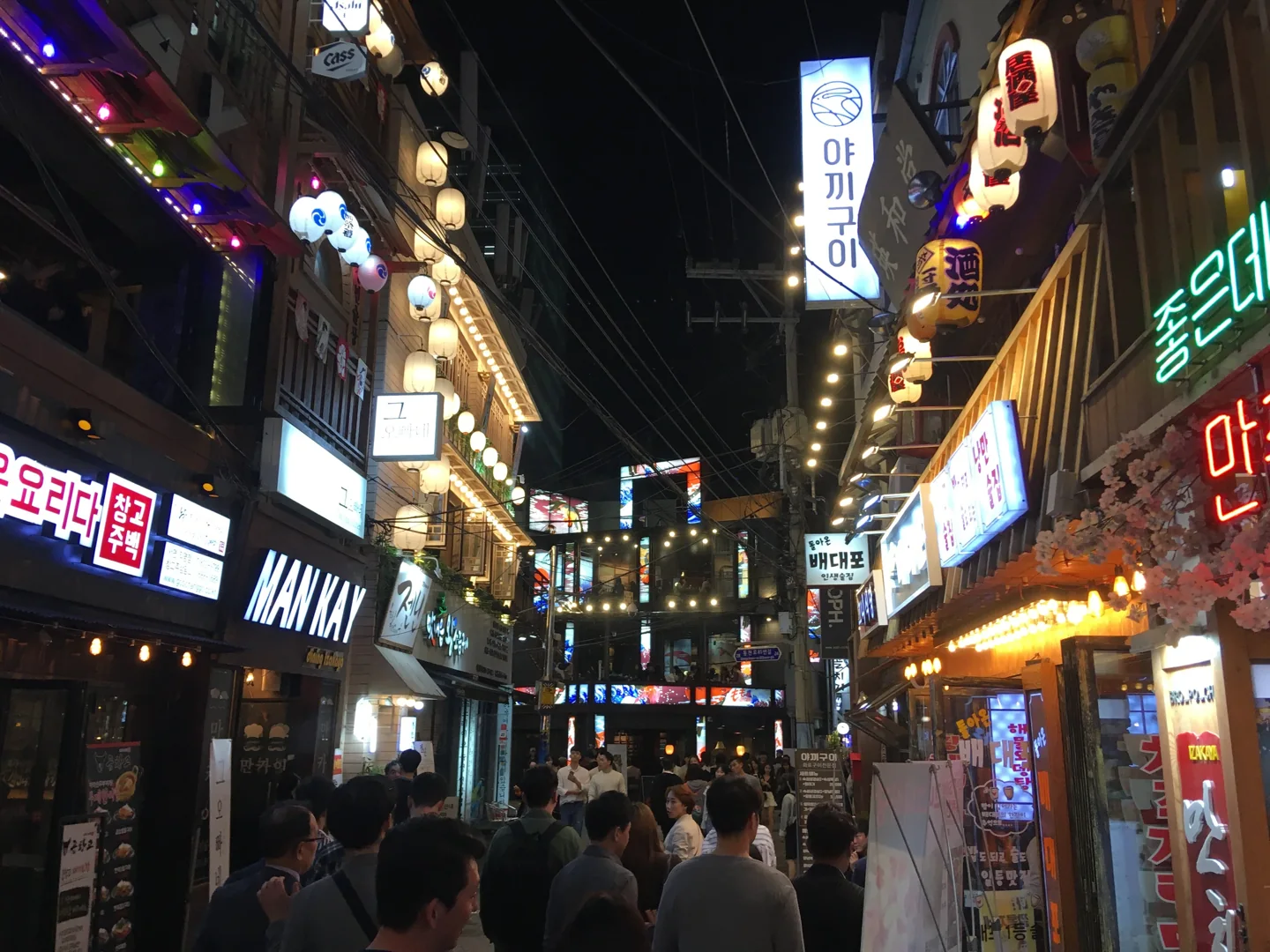
A Seoul office, a coastal base in Busan and a research placement in Daejeon produce different household routines. Start with the exact workplace or campus, then compare the homes that connect to it. A famous district is not automatically a convenient address.
| Base | Starting areas | Decision to test |
|---|---|---|
| Seoul | Gwanak for a relevant university journey; Gangnam for a relevant office or school destination | The actual campus or building entrance, transfers and last part of the trip. |
| Busan | Compare central Seomyeon with Haeundae separately | Whether the worksite and daily errands fit the proposed coastal or central base. |
| Daejeon | Yuseong for a relevant research or university destination | The journey to the actual campus and department. |
Seoul National University identifies Gwanak as its main campus, while KAIST publishes directions to its Daejeon campus. Establish the actual campus for the programme or job; a university can operate at more than one address.
- Map work, school and recurring care appointments.
- Choose two areas and compare actual properties, deposits and total monthly charges.
- Test the complete journey at the hours you expect to travel.
- Inspect heating, ventilation, storage, noise and internet arrangements inside the home.
- Use temporary accommodation until the address and commute have been checked.
For remote work, test the intended connection and room rather than selecting a property solely for its view. For a family, put school eligibility and the actual transport arrangement ahead of a long lease.
02Choose the stay status for the work, study or family plan
Start with the activity, not a visitor booking. The Korea Visa Portal's category navigator separates tourism and short business visits from professional employment, study, investment and accompanying family. Identify the principal applicant and then assess the partner and children separately, including any intention to work.
| Plan | Category starting points | What to establish first |
|---|---|---|
| A Korean job or corporate transfer | The relevant E category or D-7 transfer category | The actual role, employer and qualifying evidence. |
| Degree study or Korean-language training | D-2 or D-4-1, according to the programme | Admission and the institution's supporting records. |
| Investment or a technology startup | The relevant D-8 category | The business structure and category-specific eligibility. |
| Accompanying family | F-3 where applicable; other family categories have separate conditions | The principal status and each relationship. |
- Find the category matching the actual activity in the navigator.
- Identify the Korean mission or authorised visa service responsible for your application location.
- Obtain its current checklist and submission instructions for your nationality and lawful residence.
- Coordinate the sponsor's records with your personal and accompanying applications.
- Review the issued permission's conditions, dates and required arrival registration.
Keep the sponsor's contact and a full application copy. Before paying for translations, legalisation or a police report, identify the exact receiving authority and the document it accepts. If plans change from study to employment or from a foreign employer to a Korean job, resolve the change of status or permission before starting the new activity.
03Turn the Korean job offer into an approved work arrangement
Obtain the role, worksite, salary, hours and proposed start conditions in writing. Seoul's employment overview explains that permitted activity depends on stay status; it distinguishes professional E categories, short employment and other employment-capable statuses. Its broad overview is a starting point, not a substitute for the current checklist for a particular occupation.
- Ask the employer to identify the exact category and occupation it will support.
- Match the actual duties to that category before commissioning qualification or experience evidence.
- Agree who supplies company records and handles any sponsor-side application.
- Obtain the receiving authority's current salary, qualification and documentation requirements for the role.
- Submit through the correct process and confirm the authorised start conditions before beginning work.
Read the whole employment package: gross pay, deductions, overtime arrangements, leave, provided accommodation and what happens if employment ends. If the employer provides housing, record whether it is conditional on the job and how much notice or repayment is required when leaving.
Do not assume permission for one activity covers tutoring, freelance assignments or an additional workplace. Before changing employer or duties, obtain the applicable immigration instructions for the actual status. Keep the issued permission, contract and payroll records together so later applications use consistent information.
04Prepare an eligible foreign-work arrangement or business plan
The Immigration Service's workcation guidance describes an overseas-business or international-company route for remote-capable adults with at least a year's experience in the same industry, with accompanying family provisions. It requires income above twice the previous year's per-person GNI and individual insurance covering at least KRW100 million for treatment and repatriation. Its income example uses 2022 data: do not present that old cash threshold as the 2026 requirement.
- Document the qualifying overseas work and industry experience.
- Obtain the current income figure and accepted evidence from the receiving authority.
- Prepare income, criminal-record, insurance and any family evidence.
- Apply through the responsible Korean mission or eligible immigration process.
The guidance describes a one-year stay, extendable once, and restricts employment and profit-making activity in Korea. Establish the current programme position before filing; this route does not approve a Korean job.
For an investment or startup
Use Invest KOREA's investment guidance to distinguish a qualifying foreign investment from merely registering a company. Its equity-investment description uses at least KRW100 million and a ten-percent holding threshold; those criteria are not a promise of visa approval or a universal rule for every startup category.
Give Invest KOREA or the chosen professional adviser the proposed ownership, funding source, business activity and place of operation. Establish the applicable investment notification, registration and immigration sequence before transferring capital. Keep personal living funds separate from the proposed business budget and obtain the actual D-8 category checklist through the immigration route above.
05Fund the deposit, first month and tax obligations separately
The housing deposit can dominate the first payment even where the monthly rent looks manageable. Build a budget for the actual city and household, using written property, school, insurance and moving quotations. Keep refundable deposits separate from spending: the money remains unavailable for other needs during the tenancy.
| Initial move | Recurring household costs |
|---|---|
| Documents, application charges, flights and temporary accommodation | Rent, management charges and separately billed services |
| Deposit, brokerage, delivery and initial furnishings | Electricity, gas, water, internet and mobile plans |
| School setup, insurance gaps and transport setup | Food, commuting, tuition, healthcare and insurance contributions |
As a hypothetical cash-flow example, not a Seoul rent estimate, a KRW10 million deposit and KRW800,000 first month's rent require KRW10.8 million before brokerage, management charges or moving costs. Replace both assumptions with the proposed contract. Add temporary accommodation and a reserve for delays before the first salary payment.
Use the National Tax Service's 2026 foreign-taxpayer publication directory entry to reach its guide for filing 2025 income. Its publication year does not make every figure a rule for income earned in 2026. Give payroll or a qualified adviser the actual arrival history, household ties, income sources and foreign-work arrangement, and establish the applicable tax-year requirements before estimating net income.
That guide explains residence through domicile or a stay of at least 183 days, with family, assets and occupation relevant to domicile. Residents generally face worldwide-income taxation; non-residents face Korean-source taxation. For foreign residents with no more than five years' Korean domicile or residence in the preceding ten, its foreign-source-income rule focuses on amounts paid in or transferred to Korea. Have the adviser classify the income's source before applying that rule to overseas work.
The guide gives the ordinary annual filing period as 1–31 May of the following year, with deadline adjustments and exceptions. Establish whether payroll settlement completes your obligations or a personal return is needed, and obtain the calendar for the actual tax year.
- Obtain a written gross-to-net payroll illustration for the actual offer.
- Identify any income outside that payroll and ask whether a separate filing is required.
- Keep entry/exit dates, salary statements and relevant foreign-tax records.
- Record who handles payroll settlement, personal filings and any treaty assessment.
A visa category does not establish tax exemption, and an overseas payer does not settle the treatment of work performed in Korea. Keep the moving budget provisional until the actual tax and insurance deductions are understood.
06Secure the school place or university admission first
For a family move, establish the actual school arrangement before using a neighbourhood as the answer to the school run. Ask about eligibility, teaching language, learning support, year placement and the complete charges. An application is not a reserved place.
A school starting point in Seoul
Korea Foreign School's admissions page lists two eligibility categories: a parent holding a foreign passport, or a Korean-citizen applicant with 1,095 days abroad. It requests the relevant passport and residence or entry/exit evidence. Pupils must live full-time with a parent or legal guardian. Obtain the school's assessment of the actual family's eligibility before applying.
- Use the school's linked application form and prepare the child's photograph and requested records.
- Submit the application and the published non-refundable KRW300,000 application fee per child; confirm current payment instructions directly.
- Provide original school records and English translations where necessary, plus the passport copy, at least a week before any invited interview.
- Complete the assessment and await the written admission decision.
- Review the acceptance conditions and the remaining tuition, registration and transport costs before committing.
For university or language study
Use the institution's own admissions calendar. Seoul National University publishes separate international application guidance, including online application and recommendation instructions. Its spring 2027 undergraduate notice set applications for 6–9 July 2026 and recommendations by 10 July: both dates had passed at this guide's review. Use the next published intake, rather than assuming a late application will be accepted.
After admission, follow Study in Korea's student-visa instructions. Degree study generally uses D-2; Korean-language training uses the relevant D-4 category. Prepare the institution's standard admission letter and registration certificate, educational and financial evidence, passport and photograph. Family evidence is required when using parents' bank statements; tuberculosis evidence applies where specified. Obtain the receiving mission's additional nationality- and programme-specific requirements.
Ask the university about housing, orientation and the documents it supplies for immigration before booking the move. Keep admission, accommodation and permission deadlines on one calendar. Study admission does not independently authorise a separate job.
07Review retirement permission and pension coverage separately
A pension income does not itself establish a Korean residence category. Identify a qualifying route through the immigration step and assess the intended length of stay, access to payments, tax and care before making retirement-related commitments. This guide has not verified an ordinary pension-income retirement visa.
For people working in Korea, National Pension Service guidance makes coverage subject to nationality, stay status and exclusions, including relevant social-security agreements. Give payroll the actual nationality and any certificate of coverage rather than assuming all foreign employees have the same deductions.
- Ask NPS or payroll to assess coverage for the actual status and nationality.
- Check the contribution record against salary deductions.
- Review any applicable agreement with the home pension institution.
- Before leaving, establish benefit or refund eligibility and the required application.
NPS limits lump-sum refunds by reciprocity, agreement or specified insured visa periods; departure alone does not guarantee one. For an eligible pre-departure application, it lists the application, passport, residence card, bank-account evidence and proof of departure within a month. Retain the application record and a bank account usable for the payment.
08Prepare the personal file, shipment and pet clearance
Keep passports, issued permission, family records, employment or admission evidence and essential medical records accessible during travel. Make a document list for each receiving service so translations and authentication are commissioned for the purpose they must satisfy.
For a household shipment
Korea Customs Service's moving-goods guide distinguishes a qualifying move from a short stay. It describes intended residence of at least one year, or six months with accompanying family, and requires unaccompanied effects to arrive within six months of the mover's arrival. Eligibility and relief depend on the goods and the person's actual circumstances.
- Give the clearing representative the intended residence evidence and itemised inventory.
- Prepare the packing list, bill of lading and the identification, visa or employment records requested for the declaration.
- Use the linked Moving-Goods Declaration and, if needed, the power-of-attorney form.
- Have the representative identify dutiable goods and obtain itemised freight, clearance, storage and delivery quotations.
- Keep the declaration and final assessment after release.
The guide generally gives relief for eligible household goods used overseas for more than three months, with mandatory-taxation exceptions. Do not assume a new purchase or a vehicle qualifies because it travels with furniture.
If bringing a pet
Incheon Airport's quarantine instructions require an exporting-government quarantine certificate for dogs, cats and the listed other pets. Declare the animal and present it and the records for quarantine inspection. The page directs travellers to the Animal and Plant Quarantine Agency for origin-specific conditions.
Give the veterinarian the animal's species, age, origin, identification and proposed travel date before booking carriage. Obtain the applicable microchip, rabies-testing, certification and any origin-related conditions directly from the agency; those detailed conditions could not be verified from the agency page during this review. Airline acceptance and crate rules are separate. Keep the original certificate accessible and confirm the inspection arrangements for the actual arrival terminal.
For dogs and cats travelling from the United States, USDA APHIS's Korea instructions provide a concrete preparation route: an ISO-compliant microchip, current rabies vaccination and a neutralising-antibody result of at least 0.5 IU/ml, with the stated under-ninety-day exemptions for vaccination and testing. Have a USDA-accredited veterinarian issue the health certificate and obtain APHIS endorsement within thirty days of export. Use the linked certificate and its conditions for the actual animal; incomplete testing or identification can lead to quarantine at the owner's expense. This US export process is not a worldwide certification procedure.
09Organise the first night and learn the transport payments
Save the accommodation's full address in Korean and English, host contact and access instructions offline. Match the airport transfer to the actual terminal, arrival time, household and luggage. Keep issued permission and supporting work or admission records accessible during the journey.
- Complete the applicable arrival formalities and check the recorded stay conditions.
- Collect baggage and present any declared or quarantine items through the required process.
- Use the agreed transfer and confirm access to accommodation.
- Prepare the residence-registration appointment and the next essential employer or university tasks.
- Test the work or school route before the first time-sensitive journey.
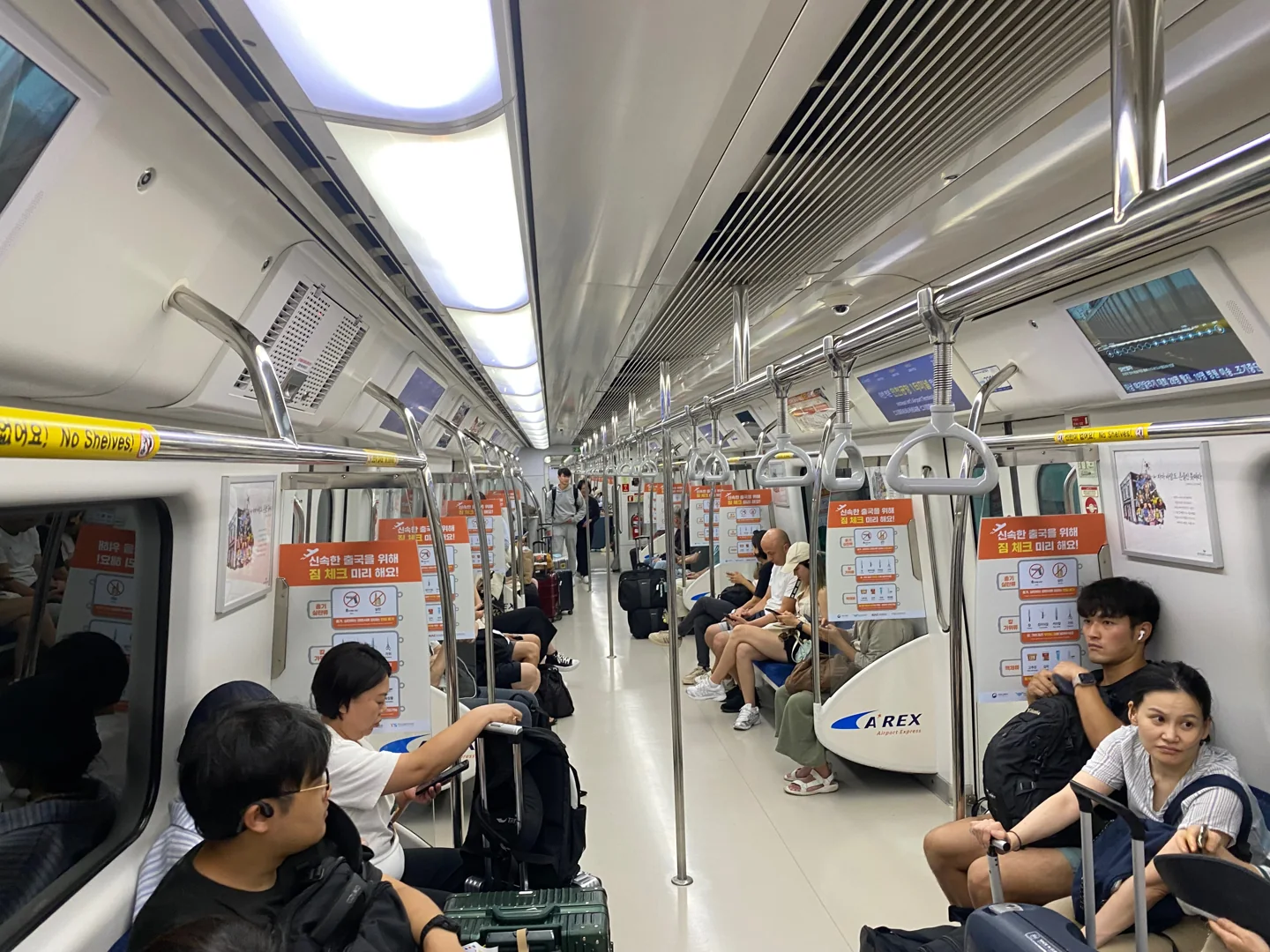
For Seoul, the city's published subway fare table, effective 28 June 2025 and checked 16 October 2026, lists the adult base fare at KRW1,550 with a transit card and KRW1,650 for a single ride. Distance and service conditions affect the total: this is not a fixed price for every journey or an airport-transfer quote.
Use the linked network map and confirm the actual route. For integrated transfers, the city requires tapping when boarding and leaving; its standard transfer window is thirty minutes, extended to sixty between 9 p.m. and 7 a.m. Follow the fare system for the city and service actually used, and keep enough balance for the next trip.
10Choose the rental arrangement and protect the deposit
Compare the deposit and monthly payment together. Seoul's housing explanation distinguishes jeonse, built around a substantial deposit, from wolse or weolse, which combines a deposit with monthly rent. Do not compare listings using the monthly figure alone: identify the amount tied up, the ongoing charges and the conditions for recovering the deposit.
- Inspect the actual property and request the complete proposed contract.
- Have the broker explain the landlord's identity, ownership and registered rights affecting the property.
- Record the deposit, rent, management charges, utilities, payment dates and agreed repairs.
- Obtain an explanation of the applicable lease reporting, move-in reporting and fixed-date procedures before signing.
- Keep the signed agreement, payment evidence, inspection photographs and handover readings together.
Ask for an itemised brokerage charge before committing and verify the agency through the city's linked real-estate service. Do not treat a translated advertisement as a translation of the final contract, or an estate agent's reassurance as a deposit guarantee.
For independent help in Seoul, the city lists housing-transaction counselling at the Seoul Foreign Resident Center, 40 Dosin-ro, Yeongdeungpo-gu. Its published session is Monday, 2–5 p.m., with English and six other languages; enquire through 02-2229-4900 or help@sfrc.seoul.kr before attending. Bring the proposed agreement and property details so the questions concern the actual transaction.
The city's general page contains broad statements about early termination and deposit repayment. Do not apply those as a universal rule to a particular dispute: obtain advice on the signed contract and applicable law. Negotiate any necessary condition concerning immigration approval, employer housing or an intended move-out date before paying.
11Book foreign-resident registration and keep the address current
The Korea Immigration Service's practical guide says a foreign national intending to stay more than ninety days must register within ninety days of entry, with specified diplomatic, official and agreement-status exceptions. Make this an arrival task rather than waiting for another institution to remind you.
- Use HiKorea to identify the responsible office and arrange the required visit reservation.
- Obtain the current registration checklist for the actual stay status through that service or the Immigration Contact Center, 1345.
- Prepare the required form, identification, residence evidence and status-specific records against that checklist.
- Attend the appointment, complete identity or fingerprint requirements where requested and retain the receipt.
- Check the issued residence record and keep its identifying details consistent in later service applications.
After moving, report the new address through the competent immigration office, local Si/Gun/Gu office or community service centre, or the available HiKorea channel. The guide gives fifteen days for registered foreign residents and fourteen days for foreign-national Koreans holding F-4 status. A household head's move-in report does not automatically change a foreign household member's record.
Keep permission expiry and address reporting as separate calendar entries. A residence-card application does not resolve an expiring stay, and a lease does not automatically update immigration records. Retain the address-report acknowledgement alongside the rental agreement for subsequent banking, employer or insurance administration.
12Open the account for the actual transaction purpose
Choose a branch that can explain the account in a language you understand. Tell it whether the purpose is salary, study or ordinary household payments, and ask for its document list before attending. Do not assume a passport-only account provides the same services as an account verified after residence registration.
The government's Study in Korea banking instructions list identification, a signature or seal, and evidence of transaction purpose. At the branch, take a queue ticket, consult the bank employee and separately request internet banking and an ATM card if needed. The bank must assess the actual application; the guide is not an account-approval guarantee.
- Bring the branch's requested identity and transaction-purpose evidence.
- Check the name and identifying details against the residence and employer or university records.
- Ask about account restrictions, transfer limits, charges and how to update the account after registration changes.
- Activate the agreed card and digital services and test a small payment or transfer.
- Give verified account details to payroll or the institution through its secure process.
Keep control of the phone and authentication method used for account access. Ask how overseas transfers are documented and priced before moving a rental deposit or receiving a large payment. Retain payment references and confirmations so the recipient can reconcile the transfer.
13Establish the health-insurance start date and care arrangements
Identify which insurance category applies to each household member. The National Health Insurance Service's foreigner guidance distinguishes employment-based coverage, local subscription and dependent eligibility. Foreign residents working at an insured workplace are compulsorily covered; ask payroll to confirm registration and the effective date. An exemption based on equivalent foreign or employer cover requires the applicable NHIS process, rather than a personal decision to opt out.
For local subscribers, NHIS describes the general six-month residence rule, subject to the applicable status. Dependent eligibility has relationship, income and property conditions; accompanying immigration status does not by itself prove health-insurance dependency. Submit the requested family and identity evidence and obtain NHIS's determination.
Students have a different timetable
The government's Study in Korea insurance table gives foreigner-registration date for a first-entry D-2 or D-4-3 student, with re-entry date after registration; general D-4 training uses six months after entry. Students are automatically enrolled and documents go to the registered address. Arrange suitable interim cover until the actual start date is confirmed, and keep that address current.
- Give payroll, the university or NHIS the actual status and arrival details.
- Confirm eligibility, the effective date and the household's dependent arrangements.
- Check the bill and payment method; obtain a correction promptly if details are wrong.
- Choose a clinic or hospital that can handle the household's regular needs and language requirements.
- Ask how insured, non-covered and privately insured treatment is charged before a planned appointment.
Bring prescription details and a medical summary for continuing treatment. Establish the new provider's process before the existing supply runs out. Keep private-policy claim instructions and any employer assistance contacts accessible; national coverage does not make every service free.
14Set up household services and close the first-month tasks
At the property handover, identify the electricity, gas, water and management-charge arrangements. Record meter references and opening readings, then agree which accounts stay with the landlord or building manager and which require a tenant application. Separate a fixed building charge from metered consumption in the monthly budget.
Seoul's communications guide lists passports, residence cards and, where required, an account in the applicant's name, with subscription conditions varying by provider and status. Compare prepaid, postpaid, MVNO and eSIM options against the documents you actually have. For household internet, the city lists KT at 100, SK Broadband at 106 and LG U+ at 101 as starting contacts; obtain availability and terms for the specific address.
- Obtain the supplier and fault-reporting details for each service.
- Ask the mobile provider which plan supports your status, documents and intended length of stay.
- Confirm whether the line supports the identity-verification functions you need before linking essential accounts.
- Obtain an address-specific fixed-internet installation and price quotation.
- Test the phone, home connection and account-recovery arrangements.
Review the first month against a short checklist: residence and address records, payroll and pension details, banking access, insurance start dates, school or university arrangements, rental receipts and the first service bills. Assign a next action to anything unresolved and record the permission expiry separately from ordinary billing dates.
Choose a regular activity near home or campus to make Korean practice and community part of the week. Ask the university or local resident centre about programmes that match your level and schedule. Keep the first routine simple enough to sustain alongside work and the remaining administration.
The same city guide identifies NAVER Map and KakaoMap for directions and public-transport information, and Papago for translation. Install the tools you can use before the first appointment, save the destination in Korean and confirm the correct entrance rather than relying on the English building name alone.
Sources & further reading
Reviewed 16 October 2026. Sources are linked beside the relevant instructions. Tax guidance published in 2026 concerns filing 2025 income; establish the requirements for the actual tax year. The workcation document contains an old income illustration, so no 2026 cash threshold is asserted. The US pet-export instructions apply to US-origin journeys, with other origins referred to the responsible quarantine authority. Admissions dates retain their original cycle and are not described as open. Application forms and eligibility must match nationality, stay status and the responsible receiving authority. Seoul subway fares retain their effective date of 28 June 2025 and were checked on 16 October 2026. The school application charge applies to the named school. The KRW10.8 million housing example is a hypothetical calculation, not a market quotation. Deposits, rent, brokerage, school fees, utilities and insurance require household-specific current quotations; no national monthly cost total is invented. Photograph credits, licences and capture years appear with the images.
Browse the source directory
- Seoul National University identifies Gwanak as its main campus
- KAIST publishes directions to its Daejeon campus
- Korea Visa Portal's category navigator
- Seoul's employment overview
- Immigration Service's workcation guidance
- Invest KOREA's investment guidance
- National Tax Service's 2026 foreign-taxpayer publication directory entry
- Korea Foreign School's admissions page
- spring 2027 undergraduate notice
- Study in Korea's student-visa instructions
- National Pension Service guidance
- Korea Customs Service's moving-goods guide
- Incheon Airport's quarantine instructions
- USDA APHIS's Korea instructions
- city's published subway fare table
- Seoul's housing explanation
- Korea Immigration Service's practical guide
- Study in Korea banking instructions
- National Health Insurance Service's foreigner guidance
- Seoul's communications guide
Make your next step a practical one
Choose the actual work or study destination and the applicable stay route. Then obtain the household document checklists and written housing, insurance and school costs before fixing the move.