Visa

Moving & Living - Spain - Complete Guide
Move to Spain step by step: choose a neighbourhood, establish the right immigration and work route, prepare documents, register locally and arrange banking, housing, education and healthcare.
Photo credit
Life in Spain is shaped by the place you choose: Madrid’s neighbourhood streets and riverside spaces offer a different weekday from the market and surrounding streets of Valencia’s Russafa. The practical move begins with the same foundations: a suitable permission, a workable address and a clear order for the administrative tasks.
This guide follows that order, from choosing a base and the appropriate immigration route to completing registrations, signing a tenancy and arranging daily services. Use the optional employment, remote-work, study and retirement instructions that fit your household. Madrid examples are identified as local procedures rather than presented as rules for every municipality.
Spain at a glance
- Currency
- Euro · EUR
- Choose first
- The actual worksite, campus or school journey
- Immigration
- Nationality, family position and planned activity determine the route
- Address registration
- Padrón through the municipality where you live
- Identity documents
- Follow the applicable EU registration or residence-card process
- Reviewed
- 16 October 2026
Follow your moving journey
Start at step 1, or jump to the task you are working on.
01Choose the city around your actual weekday
A move to Spain takes shape at the neighbourhood level. Establish where the job, campus or school will be, then compare homes that make those journeys manageable. Give each shortlisted address the same test: door-to-door travel, essential shopping, healthcare access, internet availability, building access and the household's realistic housing budget.
| Starting point | Places to investigate | What to test on a visit |
|---|---|---|
| Madrid | Chamberí, Retiro and streets near Madrid Río | The route to the actual workplace or campus, evening noise and access to everyday outdoor space |
| Valencia | Russafa/Ruzafa and the adjoining Ensanche | The walk to the market and services, the evening environment and the journey to the specific destination |
Madrid's official neighbourhood guide provides useful geographical starting points: Chamberí, the residential area around Retiro and the public spaces along the Manzanares at Madrid Río. Use those descriptions to plan visits, then inspect the precise street and building. A tourism district name does not establish rental value, quietness or suitability for every household.
In Valencia, Visit València's neighbourhood walk connects Russafa's market and surrounding streets with the Ensanche. This is a practical area for comparing how shopping, social life and the route home fit together. Visit during an ordinary morning and again in the evening; make the decision from the conditions you experience and the actual contract offered.
- Mark the fixed destinations for each household member.
- Choose two or three neighbourhoods with plausible journeys.
- Inspect several homes and request comparable written cost breakdowns.
- Check building access, light, ventilation, equipment and service availability at each address.
- Keep temporary accommodation while completing the permission and housing decisions.
Bring the shortlist back to the budget before choosing. A cheaper advertised rent can lose its advantage once commuting, furnishings or an unsuitable school journey is included. The result should be a small set of workable addresses, with the uncertainties attached to each one clearly recorded.

02Choose the permission that fits your nationality and activity
Start with two questions: which nationality and family rules apply, and what will each person actually do in Spain? A short visit, residence, local employment, overseas remote work and study require different assessments. Plan for the partner and children separately rather than assuming the main applicant's documents automatically cover them.
For EU and EEA citizens, Article 7 of the free-movement rules provides qualifying bases for stays beyond three months: employment or self-employment; sufficient resources with comprehensive sickness cover; or qualifying enrolment with cover and sufficient resources. Family provisions depend on the qualifying person's position, with narrower family coverage under the student provision. Establish the applicable basis and gather its evidence before arranging the registration appointment. Swiss nationals should use the Police's corresponding registration instructions.
| Proposed activity | Where this journey develops the process |
|---|---|
| A job with a Spanish employer | The employment step: sponsor, authorisation, visa and activation |
| Remote work for an overseas business | The international-telework step: relationship, qualifications and social security |
| Living on sufficient non-work resources | The optional retirement step: non-lucrative residence and its restrictions |
| A qualifying course | The study-permission instructions below and the education step |
The Ministry's long-stay study procedure covers qualifying study exceeding 90 days. Applicants abroad use the Spanish consular office for their residence district, normally applying at least two months before the course begins. Prepare admission and paid registration evidence, qualifying insurance, financial support and the applicable identity, criminal-record and medical documents. Tuition money does not count towards the required maintenance resources.
For higher education, an adult lawfully in Spain may use the in-country process subject to its timing requirements, including applying at least two months before the lawful stay expires and before studies start, with the stated exceptional provisions. Do not assume arriving shortly before a course leaves enough time. For study stays beyond six months, the published instructions require a TIE application within one month of entry. Family eligibility is defined in the procedure; accompanying student-family permission does not authorise work.
Once the appropriate route is identified, make a household checklist showing the responsible authority, filing location, necessary originals, fees to obtain from the actual service and the next deadline. Record the permission granted and its conditions before treating an application receipt or travel booking as the final outcome.
03Turn the Spanish job offer into the correct work permission
For the ordinary initial employee route, the Ministry's employee-authorisation instructions put the employer in charge of the application. The company must establish the applicable labour-market condition or exemption, supply its supporting records and provide a signed contract whose start depends on the authorisation becoming effective.
- Ask the employer to identify the exact route for the role and your circumstances.
- Agree which personal qualifications and records you supply and which company records it prepares.
- Have the employer submit through the linked Mercurio service and retain the application reference.
- After approval, follow the responsible consulate's visa process within the applicable deadline.
- Coordinate entry, Social Security registration and the residence-card appointment with the employer.
The ordinary route gives the worker one month from notification to the employer to apply for the visa. After entry, the Ministry describes affiliation and registration with Social Security within three months, followed by a TIE application within a month of that registration. Obtain the actual decision and use its conditions; a different employment category can follow a different procedure.
Review the gross annual salary, number of payments, working time, probation, leave, location and any applicable collective agreement before signing. Ask payroll for the expected deductions and first payment date. Keep the contract, decision, entry record and payroll documents in the same file so later registrations and renewals use consistent details.
For an EU, EEA or Swiss citizen, begin with the relevant free-movement registration requirements rather than commissioning the ordinary third-country work-permit file. Establish each accompanying person's position separately, especially where nationality or the intended work differs.
04Build the international-telework file around the real employment arrangement
The UGE's international-teleworker FAQ describes a route for adult third-country nationals whose overseas work can be performed entirely through digital and telecommunications systems. Employees work for the foreign employer; qualifying independent professionals can undertake Spanish professional activity up to twenty percent of their total while retaining the relevant foreign relationship. Do not apply that allowance to a Spanish employment contract.
The separate initial-application checklist calls for evidence of at least three months' employment or professional relationship and at least a year's real, continuous activity by the foreign company. It also asks for a relevant qualification or at least three years' comparable professional experience. Establish which evidence fits the actual relationship before commissioning documents.
- Obtain the employer or client contract and evidence of the company's activity.
- Prepare the requested authorisation letter describing the role, remote duties, remuneration and conditions.
- Match payslips or invoices with the requested bank evidence.
- Resolve the applicable Social Security arrangement and required health coverage.
- Prepare the personal, qualification and background records, then submit through the appropriate visa or residence channel.
The checklist uses gross monthly resources of 200% of the current SMI for the principal, an additional 75% for the second family member and 25% for each further member. Calculate using the applicable official SMI and obtain the receiving authority's accepted evidence for the household.
The FAQ distinguishes an application abroad for a consular telework visa from an initial residence application in Spain. Use the correct channel for your actual location and lawful status. It also explains different Social Security arrangements for employees and autónomos: obtain the applicable registration instructions or an accepted international-agreement certificate, rather than assuming overseas contributions settle the question.
Keep company ownership, employment and independent contracting distinct throughout the file. If the proposed arrangement changes, establish the required notification or new permission before relying on the old approval.
05Budget for the first payment and establish your tax position
Build the budget around the proposed city, household and contract. Separate money paid once from bills paid repeatedly, and keep a refundable deposit distinct from spending. It remains unavailable for other needs during the tenancy.
| Initial move | Recurring household costs |
|---|---|
| Applications, translations, document authentication and travel | Rent, utilities, internet and mobile plans |
| Temporary accommodation, deposit and agreed initial furnishings | Food, commuting and household services |
| School setup, freight and insurance gaps | Tuition, insurance, healthcare and payroll deductions |
For a hypothetical example, not a Spanish rent quotation, a home at €1,200 a month with a €1,200 deposit needs €2,400 for the first rent and deposit, before any additional lawful guarantee, temporary accommodation or moving expense. Replace the figures with the proposed agreement. Ask payroll when the first salary reaches the account and retain funds for the intervening bills.
The Tax Agency's residence explanation uses more than 183 days in the calendar year, counting sporadic absences unless another tax residence is proved, or the main base of economic activity or interests in Spain. It also sets a rebuttable family-residence presumption involving a non-separated spouse and dependent minor children. Do not reduce the assessment to a flight-day count.
- Give a qualified adviser your dates, household ties, work arrangement and income sources.
- Assess Spanish and home-country residence, including the applicable treaty where necessary.
- Obtain a gross-to-net illustration and identify any income outside payroll.
- Record who handles personal filings and when the relevant tax-year obligations arise.
The Agency describes residence or non-residence for the whole calendar year; a midyear move does not automatically split the tax year. Immigration status, municipal registration and a favourable employment package do not independently establish a tax exemption. Review any proposed special tax regime against its actual eligibility and application process before including it in the budget.
06Arrange a school place or the correct university admission route
Work backwards from the intended classroom, rather than choosing accommodation and then assuming a nearby place will follow. Ask about teaching language, curriculum, support needs, the daily timetable and the full cost of meals, transport and activities. Keep each child's previous reports and details of any learning support together for discussions with the receiving school.
For a move to Madrid during the 2026–27 school year, use the region's extraordinary admission process. Applications can go to a school with vacancies for the relevant stage, in person or electronically, or in person to the appropriate Servicio de Apoyo a la Escolarización (SAE). The regional page links the application, school finder and territorial services. Identify the SAE serving the proposed address and ask which records fit your child's circumstances; a preferred school is not a confirmed place.
- Shortlist schools against the child's age, language and support requirements.
- Establish whether the ordinary or extraordinary admission process applies.
- Submit the requested identity, household and educational evidence through that process.
- Keep the submission receipt, follow the allocation and complete enrolment with the receiving school.
University applicants should start with UNEDasiss's classification of overseas qualifications, which depends on the education system and qualification, not simply the student's passport. Accreditation, recognition of prior studies and PCE subject examinations serve different purposes. The destination university decides which services and subjects its admission route requires.
At the Universidad Complutense de Madrid, the published route for applicants from non-EU systems without the relevant agreement starts with recognition of previous studies and UNEDasiss accreditation. It also addresses Modalidad de Bachillerato, PCE examinations, Spanish-language evidence and subsequent pre-registration. Read the requirements for the actual degree before booking examinations. An accreditation is not an offer, and an offer does not independently establish immigration permission. Align the academic and immigration timetables before paying non-refundable moving costs.

07Prepare the non-lucrative route if you will live without working
Spain's non-lucrative residence instructions provide a route for eligible third-country applicants who will live without employment or professional activity. It can fit some retirement plans, but it is not an authorisation to continue remote work. EU, EEA, Swiss and relevant free-movement family cases use a different framework.
The Ministry sets monthly means at 400% of IPREM for the principal applicant and 100% for each accompanying family member. It also requires appropriate health insurance, criminal-record evidence and a medical certificate. Calculate against the applicable official index and the period requested rather than using an undated euro amount from a commercial checklist.
- Obtain the checklist from the Spanish consulate responsible for where you reside.
- Prepare EX-01, passport and the requested financial, health and background records.
- Arrange required sworn translations and apostille or legalisation, subject to applicable exemptions.
- Submit through the authorised process and follow the official payment and collection instructions.
The initial permission lasts a year from entry; the Ministry requires a TIE application within a month of arrival. Check the visa's entry validity and put the card appointment in the arrival calendar.
Before deciding that the pension can fund the move, review payment access, currency conversion, tax and continuing care for the actual household. Obtain the insurer's written acceptance of relevant conditions and the consulate's accepted coverage requirements. Keep a separate reserve for the housing deposit and initial move so those payments do not consume funds already allocated to ordinary living costs.
08Prepare the document file, shipment and pet journey
Build one folder per person and one for the household. Separate originals, required translations, authenticated copies and ordinary working scans. Use a dated checklist from the actual application service so that a missing criminal-record certificate or an expired passport is discovered while there is time to replace it. Retain accessible copies of decisions and travel records without putting the only originals in a shipment.
Use the Ministry's document authentication and translation instructions to establish the treatment of overseas public records. Determine whether an apostille, diplomatic legalisation or an applicable exemption fits the particular document, and arrange an accepted translation. Ask the receiving service about the version and validity period it accepts before commissioning several copies.
For belongings arriving from outside the EU, the Tax Agency's transfer-of-residence leaflet explains relief subject to conditions, rather than automatic exemption for every shipment. Its published requirements include twelve consecutive months of prior residence outside the relevant territory and, generally, six months' prior possession of the goods. Prepare a detailed inventory with estimated values and approximate acquisition dates, evidence of the earlier residence and the move, and the customs declaration (DUA). The normal import window is twelve months after establishment, with conditions for earlier import. The leaflet also restricts disposing of relieved goods during the following twelve months. Ask the customs representative to establish the treatment of vehicles, excluded goods and the actual destination before accepting a freight quotation.
For dogs, cats and ferrets, follow MAPA's current pet-travel instructions with the veterinarian. First establish whether the movement meets the non-commercial conditions, including the owner's journey within five days where the animal travels separately. Identify the origin's applicable category before scheduling travel.
- Arrange the accepted identification and valid rabies protection.
- Obtain the applicable pet passport or official health certificate, declaration and supporting records.
- For origins requiring rabies-antibody testing, follow the authorised-laboratory process and waiting period; MAPA specifies 90 days after the blood sample for the applicable entry cases.
- Use an authorised travellers' entry point when required and present the animal and documentation for the stated checks.
The current page links the certificate valid from 22 April 2026 and the authorised-entry-point list. Do not reuse an old certificate template. Confirm the carrier's arrangements separately, then make the household's travel date fit the completed veterinary timetable.
09Make the airport-to-home journey and organise the first days
Before departure, save the exact first address, access instructions, host's contact and transport plan offline. Keep identity, permission, insurance, essential medicines and immediate payment access with you. Decide how the household will reach accommodation with its actual luggage, children and any pet; a convenient route for a solo traveller may not suit the move.
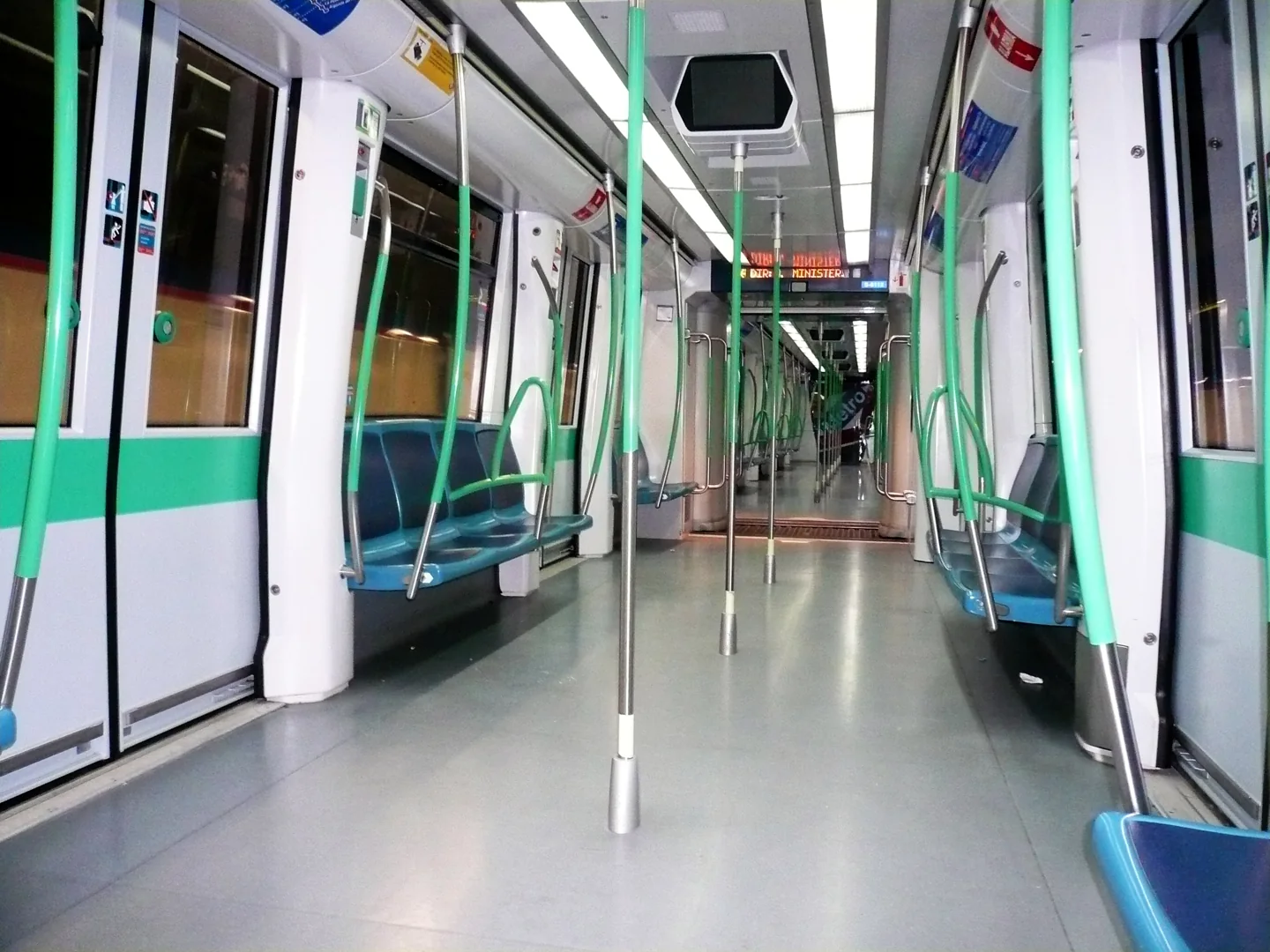
At Madrid-Barajas, Aena's Metro instructions identify line 8 between Nuevos Ministerios and Aeropuerto T4. They list the airport supplement as €3 for the specified zone-A and combined ticket holders using the airport stations, in addition to the applicable ticket. These instructions and prices were checked on 16 October 2026. Select a ticket that covers the journey and its conditions rather than assuming the ordinary ten-trip fare includes every airport charge.
- Complete the applicable entry and customs procedures, retaining the travel evidence needed for subsequent appointments.
- Reach the agreed accommodation and confirm access, basic services and the inventory or handover arrangements.
- Make sure a phone and payment method work before depending on them for appointments.
- Put the actual immigration deadline triggers into the calendar using the authorisation and route instructions.
- Confirm the employer's, institution's or other receiving contact's next action and your first attendance date.
Use the first base to inspect permanent housing and establish the address documents the municipality needs. Keep the initial stay long enough for a deliberate choice rather than accepting an unsuitable lease under pressure. Where a registration or work-activation task depends on another document, record that dependency and contact the responsible service promptly if the preceding task is delayed.
At the end of the first days, the useful outcome is concrete: you can enter the home, communicate, pay for essentials, reach the next appointment and explain which outstanding procedure comes next. Keep receipts and reference numbers together so that the next office can identify the application without relying on a remembered conversation.
10Complete municipal registration and your immigration identity process
Keep three administrative tasks distinct: registering the household's actual address, obtaining or using the foreigner identification number, and documenting the applicable residence position. Ask each office which evidence it needs for its own procedure; carrying one document does not eliminate every other appointment.
In Madrid, use the municipal padrón service for the address where you habitually live. In-person applications require an appointment; the online route requires accepted electronic identification. Choose one submission route, rather than filing both. Prepare the registration sheet signed by the adults, the applicable original identification and evidence of occupation of the home.
Madrid's service accepts housing evidence including a house or room tenancy of at least six months, with its stated signatures and address details. It specifies an additional rent receipt for renewed or electronically signed contracts and provides other household-authorisation arrangements. These are Madrid's documentary instructions, not a national minimum tenancy length. If the ordinary evidence does not fit your housing situation, ask the municipal service about the applicable assessment.
- Read the municipality's checklist for the household, including children or representatives.
- Obtain the required appointment or use the accepted electronic route.
- Submit the complete address-registration application and retain its receipt.
- Give the resulting evidence to other services when their own procedure requires it.
EU, EEA and Swiss citizens staying longer than three months should follow the Police registration-certificate procedure, applying personally within three months of entry. Its checklist includes EX-18, valid identity evidence, the 790-012 payment receipt and evidence satisfying the applicable residence conditions. The certificate records the NIE along with the person's identity, address and registration date.
For other residents, use the Police residence-card service and the timing attached to the actual authorisation. The employment and non-lucrative routes described earlier have different deadline triggers. Book the relevant procedure and follow the applicable checklist rather than choosing an appointment solely because its title mentions foreigners. Keep the decision, entry evidence, fee receipt and subsequent appointment records together.
11Choose an account that accepts the documents you have
Ask the bank which process fits your nationality, residence position and identification. BBVA's foreign-customer guidance, updated March 2026, distinguishes branch opening with a passport from processes using EU-resident identification or a TIE. It says passport-based opening is completed in a branch; do not assume every advertised online account supports the documents you hold.
- Identify the eligible account and obtain its current pre-contractual conditions.
- Confirm the original identity documents, Spanish phone number and any economic-activity or tax information required.
- Complete the appropriate branch or digital identity checks.
- Review maintenance, transfer, card and cash-withdrawal conditions before accepting.
- After approval, test access and a small payment before giving the details to payroll or essential suppliers.
The bank's guidance lists adulthood and a national mobile number among its requirements. Obtain the actual account decision rather than treating a bank's general article as a guarantee of approval. Keep tax-residence details and contact information accurate as the move progresses.
Once the account works, confirm the IBAN and payment references with the employer, landlord and utilities. Before authorising a direct debit, record the supplier, billing period and expected amount. Keep a second usable payment method while arranging the new household and compare exchange costs before transferring a large housing deposit.
For a joint household, discuss account ownership and access deliberately: who receives salary, who can approve payments and how essential bills continue if one person is away. Keep recovery details securely and review the first statement against the agreed fees and transactions.
12Choose the correct tenancy and check every payment
Identify whether the proposed agreement is for your habitual home, a genuine temporary stay or another use. Have the contract reflect the real purpose. Read the current Urban Leases Act alongside the applicable regional rules; its consolidated text includes changes effective in October 2026, so an older estate-agency checklist may miss important details.
For a dwelling lease, Article 36 specifies a one-month cash fianza. Additional security is capped at two months' rent for dwelling contracts up to five years, or seven where the landlord is a legal entity. The current text also prohibits requiring the tenant to take out rent-default insurance. Identify the type and duration of the actual agreement before applying those limits.
- Inspect the property and verify the landlord or agent's authority.
- Request the whole proposed contract and an itemised payment schedule.
- Check the rent, fianza, any additional guarantee, services and inventory.
- Resolve the permitted use, duration, rent updates, notice and repairs before signing.
- Record condition, keys and meter readings at handover, and keep payment evidence.
Article 20 bars passing property-management and contract-formalisation costs to the tenant, directly or indirectly. Query a charge described as mandatory “services” rather than accepting the label as proof that it is payable. The current Article 36 also provides for a signed end-of-tenancy condition record.
Ask a local housing adviser to assess any rent limit applying to the exact address and contract. Keep the evidence of the advertised terms, final agreement and agreed repairs. When comparing homes, include independently billed electricity, water, heating, internet and any lawful contractual charges rather than treating the advertised rent as the entire household cost.
13Establish entitlement, insurance and your local health centre
Match health coverage to the actual residence route and employment arrangement. Immigration insurance requirements and eligibility for public treatment are related questions, but one document should not be assumed to settle both. Obtain the relevant entitlement or accepted insurance before relying on it.
As a regional example, Madrid's first health-card service requires municipal registration in the region, healthcare entitlement recognised by INSS and, for foreign applicants, a valid residence permission or renewal in progress. The card application has no fee. At the 16 October 2026 review, the page displayed a temporary online-maintenance notice directing applicants to authorised centres in person.
- Establish public entitlement or the required private cover for each household member.
- Complete the address and identity records needed by the regional service.
- Use the linked health-centre finder and ask its administrative unit for the case-specific documents.
- Complete registration and confirm the assigned family doctor or paediatrician.
- Arrange continuing prescriptions and any regular specialist care.
Madrid says no application form is needed when applying through the health centre: its administrative staff explain the required records. Ask how to obtain care while the card is being processed. Other autonomous communities have their own services, so use the authority for the actual address.
Bring a concise medical summary and prescription details rather than relying on the brand name of an overseas medicine. With private insurance, check provider networks, appointments, exclusions and any claim authorisation process before booking treatment. Retain the policy and entitlement records together, including the date each household member's coverage starts.
14Set up the daily journey and review the first month
Test the commute at the time it will actually happen, including the walk to the stop, transfers and the journey home. Do this for school as well as work. A home that looks close on a map may require a different ticket zone or an inconvenient interchange.
For a concrete recurring-cost reference, Madrid's official 2026 transport announcement sets the monthly zone-A pass for ages 26–64 at €32.70, and the ten-trip Metro, EMT and ML1 ticket at €7.30. The announcement dates the discounts through 31 December 2026; these are Madrid-specific fares, reviewed on 16 October 2026, not a national transport budget. Choose the ticket for the actual age profile, zones and journeys using the CRTM ticket information.
For phones and household services, ask the chosen supplier to confirm coverage at the exact address, the documents it accepts, installation availability and the complete recurring price. Record any minimum term and equipment-return arrangements. For an existing home, agree with the landlord who will arrange each service and record the meter readings at handover. Keep the first bills beside the contract so that differences are easy to resolve.
| First-month review | Evidence to keep |
|---|---|
| Residence and address procedures | Submission receipts, decisions and next appointments |
| Work, school and healthcare | Confirmed start arrangements and service contacts |
| Home and payments | Inventory, readings, receipts and first statements |
| Future obligations | Actual expiry dates, renewal windows and responsible person |
Build a routine around places you can return to: a neighbourhood library, language class, sports activity or local association. Attend a trial session before committing to a long membership. Keep enough room in the first month's calendar to complete outstanding appointments, learn the routes and correct billing or registration details. Finish the month by assigning a next action and date to every unresolved item.

Sources & further reading
Reviewed 16 October 2026. Sources are linked beside the relevant instructions. Reviewed on 16 October 2026. Immigration instructions retain their nationality, filing-location and household restrictions. The tenancy section uses the consolidated law updated in October 2026. Madrid’s padrón and health-card requirements are regional examples; the health-card service displayed temporary online maintenance at review. Financial eligibility percentages are retained without inventing a 2026 IPREM or minimum-wage cash amount. Documentary photographs retain their actual capture dates and individual credits. Madrid’s published 2026 zone-A monthly pass for ages 26–64 is €32.70, and its stated Metro/EMT/ML1 ten-trip ticket is €7.30; announced discounts run through 31 December 2026. Aena lists a €3 airport supplement for the specified tickets. Prices were checked on 16 October 2026. The €1,200 rent plus €1,200 deposit calculation is hypothetical, not a market quotation. Obtain actual housing, utilities and household quotations for the selected address. Photograph credits, licences and capture years appear with the images.
Browse the source directory
- official neighbourhood guide
- Visit València's neighbourhood walk
- Article 7 of the free-movement rules
- Ministry's long-stay study procedure
- Ministry's employee-authorisation instructions
- UGE's international-teleworker FAQ
- initial-application checklist
- Tax Agency's residence explanation
- extraordinary admission process
- UNEDasiss's classification of overseas qualifications
- Universidad Complutense de Madrid
- non-lucrative residence instructions
- document authentication and translation instructions
- Tax Agency's transfer-of-residence leaflet
- MAPA's current pet-travel instructions
- Aena's Metro instructions
- municipal padrón service
- Police registration-certificate procedure
- Police residence-card service
- BBVA's foreign-customer guidance, updated March 2026
- current Urban Leases Act
- Madrid's first health-card service
- Madrid's official 2026 transport announcement
- CRTM ticket information
Make your next step a practical one
Choose the household’s actual route and fixed daily destinations, then complete the relevant numbered steps in dependency order. Keep a receipt, next action and deadline for each outstanding procedure.