Visa

Moving & Living - Vietnam - Complete Guide
Move to Vietnam step by step: choose a neighbourhood, coordinate work or study permission, prepare documents and set up residence registration, banking, housing, healthcare and everyday services.
Photo credit
Life in Vietnam is shaped by the daily journey: a Hanoi school run beside West Lake, an office across the river in Ho Chi Minh City, or a campus and neighbourhood in Da Nang. The useful starting point is the address and the reason for your stay.
This fourteen-step journey takes you from choosing that base to a functioning first month. It explains the current work-permit and host-registration processes, how to prepare school and banking applications, and how to price the move using actual household choices. Visitor entry, permission to work and longer-term residence remain separate decisions.
Vietnam at a glance
- Language
- Vietnamese
- Currency
- Vietnamese đồng · VND / ₫
- Immigration
- Ministry of Public Security · Immigration Department
- Address registration
- Khai báo tạm trú · submitted by the host
- Residence card
- Thẻ tạm trú · category-specific eligibility
- Medical emergency
- 115 · ambulance
- Reviewed
- 16 October 2026
Follow your moving journey
Start at step 1, or jump to the task you are working on.
01Choose the city around your actual daily journeys
Start with the place you must reach most often. A job in an industrial area outside central Hanoi needs a different home search from a course at RMIT’s Saigon South campus. Vietnam’s large municipal boundaries are a poor substitute for measuring the trip from a particular building.
| Base | Areas to investigate | What to test |
|---|---|---|
| Hanoi | West Lake / Tây Hồ, Ciputra, the Cầu Giấy area | School-bus pickup, office location, traffic at bridges and the walk from the actual apartment. |
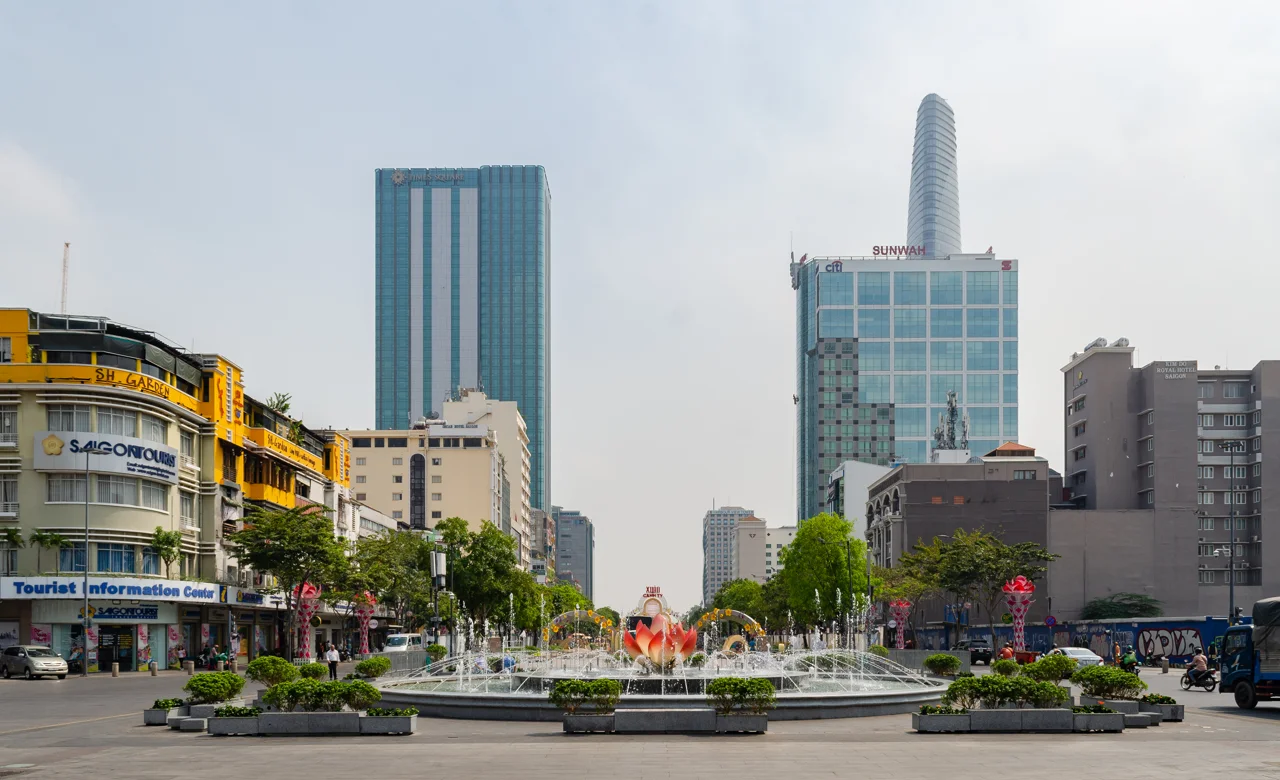
| Ho Chi Minh City | Central Nguyễn Huệ area, Thảo Điền, Phú Mỹ Hưng | Which side of the river your work and school occupy; the complete journey beyond a metro station. |
| Da Nang | Hải Châu centre, the An Thượng area and streets inland from Mỹ Khê | Work or campus location, rainy-day access, street noise and whether the building operates as holiday accommodation. |
- Put the office, campus, school and proposed clinic on one map. Compare two plausible home areas rather than searching an entire city.
- Book temporary accommodation close enough to test those routes. Walk the last part in daylight and after dark, and repeat the commute at the time you will actually travel.
- Ask the owner for the full Vietnamese address, including the current phường or xã. Match it across the lease and residence declaration.
District names still appear in conversation and older listings. However, district-level administrations were dissolved when the two-tier system began on 1 July 2025. Use today’s ward and municipality on administrative paperwork; ask a listing agent to reconcile an old “District 2” or “District 7” address with the current one. Government explanation of the local-government reorganisation
02Match entry permission to the reason for your move
Write down what you will do in Vietnam: visit, undertake a particular job, study at a named institution, join eligible family or make a genuine investment. An entry document, permission to undertake work and an address registration solve different problems.
- For an exploratory visit, start with the Immigration Department e-visa service. Applicants use it from outside Vietnam. Select the intended dates and single or multiple entry; the maximum validity is 90 days. Prepare the passport information and requested images, complete the application accurately, pay online and retain the application reference to retrieve the result.
- Match the approved document to the passport and intended designated border gate. The portal lists permitted entry and exit gates. A paid application is not an approval; wait for the result before relying on it.
- For employment, ask the receiving employer to coordinate the work permission and suitable immigration sponsorship. For study, obtain the institution’s offer and visa instructions first. For family or investment, ask Immigration or the Vietnamese mission responsible for your place of residence for the category-specific evidence.
- Create a household list showing each person’s passport, purpose, sponsor, entry document and expiry. A main applicant’s job offer does not automatically settle a partner’s or child’s position.
The e-visa charge displayed on review is US$25 for single entry or US$50 for multiple entry, non-refundable if refused. These are application charges, not a relocation package. Do not treat a visitor e-visa as evidence that local employment or an ongoing remote-work arrangement is authorised. Vietnam Immigration Department services
03Agree the job and arrange work permission before starting
Get the proposed role, work location, employing legal entity and salary in writing. Ask whether the quoted salary is gross or net, who pays document and permit costs, and how payroll will handle tax and insurance. Confirm any probation, notice, housing allowance and school support before assessing the offer.
Vietnam revised its foreign-worker process through Decree 219/2025, effective 7 August 2025. The employer’s Form 03 combines the explanation of foreign-worker need with the permit request; provincial authorities administer the process. The government describes a ten-working-day decision period after a valid dossier is received. Government summary of the revised work-permit process
- Have the employer identify the exact occupational category and evidence you need. Teachers and other regulated occupations require their sector’s qualification evidence; a generic job title is insufficient.
- Coordinate the dossier and intended start date. Article 22 provides for filing within the 60 days before the intended start, and at least ten days before it. Allow additional preparation time for documents and corrections.
- If an exemption is proposed, ask the employer to identify its legal basis and whether a certificate or advance notification is required. Being called an “expert” alone does not establish exemption.
These filing rules and the category-specific documents appear in the official Decree 219/2025 text. For a business, commission a written assessment of the actual sector, ownership, capital, investment registration and your operating role before committing funds. For remote employment, obtain an assessment covering the proposed activity, immigration status, tax and employer obligations. This review did not establish a dedicated digital-nomad application route; an overseas salary is not itself proof of permission.
04Separate moving cash, monthly spending and tax
Build your budget in Vietnamese đồng, shown as VND or ₫. Use the actual lease, school and insurance quotations; avoid converting a headline “cheap Vietnam” figure into a household plan. Keep any foreign-currency school invoice visible in its original currency until you know the settlement instructions and exchange cost.
| Initial cash | Recurring spending |
|---|---|
| Flights, temporary accommodation, visa application, document certification and translation | Rent, building charges, electricity, water, internet and phone |
| Rental deposit and advance rent, delivery and basic household purchases | Food, transport, healthcare premiums, medicines and childcare |
| School application and enrolment; permit or residence-card charges where applicable | Tuition instalments, school transport, tax and any payroll deductions |
Illustration, not surveyed rent: if a landlord quotes VND18 million monthly rent, asks for two months’ deposit and one month in advance, the signing cash is VND54 million. Add your temporary stay and setup costs separately. The deposit is tied-up cash, not three months of recurring expenditure; these assumed terms are not a national legal rule.
The 2026 income-tax framework requires a fresh assessment. Article 2 of Law 109/2025 includes a 183-day calendar-year or consecutive-twelve-month residence test and a regular-home condition. Residents’ taxable income can include foreign income; nonresidents’ liability concerns Vietnam-source income. Track arrival and departure dates and have payroll examine your housing, foreign salary and treaty position. Current personal income tax law
Resident wage provisions apply from the 2026 tax year, while the law’s general commencement is 1 July 2026. Obtain a payroll calculation using that framework before agreeing a net package; older seven-band illustrations may be inappropriate. Government explanation of the 2026 transition
05Secure school places or admission before fixing the home
Ask the school about the specific year group, language support, learning support and joining date before paying an application charge. Then test its bus route against your housing shortlist. A nearby school does not help if it cannot meet the child’s needs or offer a place.
- As a Hanoi starting point, contact UNIS Hanoi admissions about availability and its admissions priorities. Its rolling process includes nationality, English-language and learning-support capacity limits. Payment does not guarantee placement.
- Use the school’s application document checklist: passport and photographs, questionnaires, school reports and grade-dependent testing or transcripts. Reports must be in English, with translations verified and stamped by the school; confidential recommendations are requested from the nominated teacher or counsellor.
- Request the complete invoice and refund terms before accepting a place. For 2026–27, UNIS lists US$600 application, US$1,750 enrolment and US$33,330 annual-option tuition for grades 1–5. Its optional annual bus fee is US$1,100. These figures describe one private Hanoi school, not Vietnamese public-school costs. UNIS 2026–27 fees
For a full degree, RMIT Vietnam’s international application process starts with the programme’s academic and English requirements, supporting documents and online application. After an offer, coordinate payment and the nominated Vietnamese embassy or consulate for the student visa. RMIT says preparing the invitation can take up to two months and requires the applicant to be outside Vietnam during that entry-visa process.
In central Vietnam, the University of Danang is another institutional starting point. Ask its international office for the current intake and teaching language; do not use its still-accessible 2025 English admissions deadline as a current offer. Obtain admission and immigration arrangements before signing a campus-dependent lease.

06Establish a lawful long-term basis before retiring here
Receiving a pension and qualifying to live in Vietnam are separate questions. This review did not verify an ordinary pension-income retirement visa or a residence application based simply on age. Start with the Immigration Department and the mission responsible for you to establish whether a genuine family, investment or other applicable category fits.
- Describe your nationality, family relationships, intended length of residence and whether you will undertake any paid activity. Ask for the precise category and renewal conditions that apply to those facts.
- Ask your pension administrator how payments, bank details, proof-of-life requests and tax deductions will work abroad. Keep access to the originating account until the Vietnamese payment arrangement has been tested.
- Obtain health-insurance quotations using your actual age, conditions and medicines. Compare renewal limits, outpatient care, hospital access and evacuation cover, rather than only the first-year premium.
- Choose a home with a realistic journey to the provider you need. Inspect stairs, lifts, bathroom access and the route outside the building.
Retain enough funds for a return journey or a change of base if circumstances change. Repeated short visits do not amount to a verified settlement plan. Keep the retirement decision conditional on the residence answer and the continuing healthcare budget, rather than assuming that a rental contract or property purchase grants immigration status.
07Prepare the right originals, certification and pet arrangements
Make separate folders for immigration, work, education and health. Include passports, civil-status records relevant to accompanying family, qualifications, employment evidence, school records and prescriptions. Save encrypted scans and keep essential originals in cabin baggage.
For the work-permit dossier, Article 18 specifies a valid passport, relevant occupational and work-arrangement evidence, two 4 × 6 cm colour photographs and a criminal-record document issued no more than six months before filing, subject to the linked-procedure exception. Have the employer arrange the qualifying medical examination: foreign health certificates are accepted under the decree’s mutual-recognition conditions, rather than automatically because they are recent. Official work-permit document rules
- Ask the receiving office which original or certified copy and Vietnamese translation it needs.
- Check the document’s issuing country and certification route. Vietnam’s Apostille Convention commencement was 11 September 2026. Where the Convention operates between the countries and the public document is in scope, obtain the apostille from the issuing country’s competent authority. HCCH announcement
- For out-of-scope documents or a country relationship without Convention operation, establish the consular-legalisation route. An apostille authenticates origin, not the contents or eligibility. The Vietnamese consulate’s notice also explains the translation requirement. Vietnamese consular explanation of the new certification arrangements
For pets, book the actual operating carrier and confirm the arrival inspection arrangements before buying the animal’s ticket. Vietnam Airlines requests service booking at least 24 hours before departure; its transport acceptance is separate from import clearance. Vietnam Airlines pet conditions For departures from the United States, an accredited veterinarian can use the APHIS Vietnam country page and current dog/cat certificate. Other origins need their own official export and Vietnamese entry instructions. Obtain written timing and original-document requirements for your route; do not reuse a certificate window from an unrelated country.
08Reach the first home and complete check-in properly
Carry the approved entry document, passport, sponsor or university contact, accommodation booking and address in Vietnamese. Save these offline. Arrange a transfer suitable for your arrival time and luggage; send the driver the exact building entrance rather than only an area name.
- At border control, verify the passport and permitted-stay details recorded for you. Resolve an obvious error before leaving the controlled area. Keep the entry record with the visa documents.
- Follow the current port instructions for any arrival or health declaration. The e-visa portal recommends the Immigration pre-arrival form; that recommendation should not be turned into a claim that the form is mandatory at every border.
- Obtain a modest amount of usable đồng through an authorised exchange or an ATM, retaining the receipt. Keep a backup payment method separate.
- At the accommodation, provide the passport and immigration information needed for residence declaration. Ask who submits it and request confirmation, including for an apartment booked through an online platform.
- Test your phone, mobile data and a call to the host. Save the sponsor’s contact and the home’s Vietnamese address.
Passport and nationality conditions remain separate from a successful booking. For example, current UK government entry guidance for full British-citizen passports specifies six months’ validity after arrival and two blank pages. Other passports require their own confirmation. Vietnam entry guidance with British-passport scope Keep first-day appointments flexible enough to complete check-in and address registration without rushing straight into an unauthorised work start.
09Register the stay and arrange the appropriate residence documents
Khai báo tạm trú, the host’s declaration of your stay, is different from a thẻ tạm trú, a temporary residence card issued to an eligible applicant. A declaration does not extend a visa.
- Under Circular 87/2026, the accommodation owner, legal representative or authorised declarant submits guest information. For electronic registration, this is required immediately when the foreigner arrives. Give accurate passport, nationality, stay-permission and planned accommodation dates.
- If a paper declaration is used, the host completes the current NA17 and delivers it to commune-level police within 12 hours, or 24 hours in remote areas; it is also sent immediately through an appropriate communication method. Obtain confirmation and repeat the process when moving accommodation. Current temporary-stay declaration circular
- For an eligible temporary residence card, have the sponsor prepare the current application, passport, category evidence and photographs. The Ministry’s residence-card service lists NA8 plus the appropriate organisational or individual sponsorship form. Download the current forms and confirm the receiving office’s requirements; forms were amended in 2026.
- Retain the application receipt, payment receipt and collection instructions. The service lists five working days from a complete file, and US$145 for a card up to two years; that fee does not establish eligibility or guarantee that duration.
- Ask payroll to confirm the registered taxpayer number, passport spelling and personal details. Keep the registration evidence and update changed passport or address details with the responsible parties.
Do not substitute an old district name for the current ward when completing the application. The sponsor should reconcile the address with the host’s declaration before submission.
10Open an account you can actually use for daily payments
Ask your employer which bank its payroll uses, then compare the nearest useful branch with another provider. Opening an account, obtaining a debit card, enabling the app and making international transfers can have different documentary conditions.
- Book or visit a branch that handles foreign customers. Bring the original passport and current visa or equivalent document, local contact details and any employment or address evidence the bank requests.
- Complete the bank’s application and biometric verification. HSBC’s current-account page explicitly requires foreign-customer passport and valid entry evidence, branch biometric collection and at least 60 days’ remaining validity on submitted documents; it may request employment documents.
- Ask which charges, minimum balances and services apply to your account. HSBC Personal Banking lists a VND3 million minimum monthly average balance; payroll and Premier conditions differ. Treat this as a provider-specific condition, not a national account-opening fee. HSBC Vietnam current-account requirements
- Activate the chosen services with staff, then test a small transfer and withdrawal. Confirm the recipient name before accepting a bank-transfer QR code for rent or other substantial payments.
Save the branch contact, account name, number and transfer instructions. Ask what evidence will be required for future outward remittances and retain salary, tax and transfer records. Keep an alternative card while local services are being approved. Do not assume an app advertised for Vietnamese citizens offers the same remote onboarding to a foreign passport holder, or that account approval automatically includes unrestricted transfers.
11Inspect the property and put the payment terms in writing
Learn the words in the quotation: tiền thuê is rent, tiền cọc the deposit, and phí quản lý a management charge. Ask whether “serviced” includes cleaning, internet, water and electricity, and what consumption limits or extra charges apply. Compare total occupancy cost rather than the advertised rent alone.
- Visit the exact unit. Test taps, drainage, air conditioning, locks, hot water and internet. Inspect damp, road noise, escape routes and the route to the building entrance during heavy rain.
- Establish the owner’s identity and the agent’s authority to rent the home and receive payment. Have a competent reader explain any Vietnamese clauses you cannot understand.
- Write down rent in the agreed payment currency, due dates, deposit, advance period, utility charging method, repairs, pets, notice, early termination and deposit return. Put any promised repair and completion date in the signed document.
- Include the owner’s responsibility for registering foreign residents and providing confirmation. An attractive apartment with an unresolved registration arrangement is an incomplete offer.
- At handover, photograph the condition, inventory, keys and meter readings with the owner or agent. Keep signed copies and a receipt identifying each payment’s purpose.
No single deposit amount is presented here as mandatory across Vietnam. Negotiate the actual arrangement and its exit conditions. For accommodation standards and practical inspection advice, see UK government guidance on living in Vietnam; its general housing advice is useful, but current Vietnamese registration rules take priority over older summaries. Ask specifically how a lift outage, water interruption or urgent repair is handled in the building you choose.
12Choose the clinic, hospital and insurance before you need them
Start with the care your household actually uses: routine consultations, prescriptions, maternity, paediatrics, dentistry or a specialist. Ask the insurer and provider about the exact service, not simply whether an insurance-company logo appears on a hospital website.
- Give the insurer your intended residence and work arrangement, existing conditions and medicines. Confirm when travel cover ends and any resident policy begins.
- Ask the employer which statutory insurance arrangements apply to your contract and when cover becomes usable. Obtain the evidence and registered-provider details; do not assume all treatment becomes free because payroll deducts insurance.
- Contact a convenient clinic and receiving hospital. In Ho Chi Minh City, FV Hospital’s financial information describes social-health-insurance acceptance for eligible services and private direct-billing arrangements. Confirm your own eligibility, exclusions and authorisation before treatment.
- Ask whether a guarantee of payment is required, what deposit is needed without one, and which outpatient or emergency services are reimbursed later. Keep accessible funds for the excess or an uncovered bill.
- Bring a medical summary, generic medicine names, prescriptions and relevant results. Arrange the next supply with a clinician before the current one runs out.
The ambulance number is 115. Save a local provider and insurer assistance number as well, and keep the address ready in Vietnamese. Current government health advice highlights medical evacuation cover and restrictions on certain addictive or psychotropic medicines. Resolve an affected prescription with the Vietnamese mission before packing it; the permitted supply for those categories is not the same as an ordinary long-term household medicine stock.
13Connect the home and test the complete transport route
Use a phone number you can keep: bank verification, deliveries and appointment messages may all depend on it. The Viettel tourist registration service requests passport and portrait images before the information, SIM and plan stages. At an operator shop, ask staff to register the service in your details and demonstrate calls, data, top-ups and expiry.
- Check device and eSIM compatibility before paying. Record the number, plan terms and support contact, and test the service before leaving.
- At the home, identify the electricity account, meter and billing method. Request an itemised bill where the landlord collects payment. Hanoi’s EVNHANOI service instructions describe identity and property-use evidence, including relevant lease and owner-consent arrangements; coordinate any contract change with the owner.
- Test broadband inside the actual unit at working hours. Establish who pays installation, owns the router and cancels the contract when you leave.
- Use the Hanoi Metro operator’s ticket information to plan a station visit and buy the appropriate ticket. Its published Line 2A chart, effective 1 August 2025 and still displayed at review, lists a standard monthly ticket at VND280,000 and cash single journeys from VND9,000 to VND19,000. These are Hanoi Line 2A prices, not a national transport budget.
Measure the walk and any bus or taxi leg beyond the station. For driving, establish the licence and insurance valid for your nationality and vehicle before renting. The current UK travel advice specifies a 1968 International Driving Permit together with the UK licence for British drivers, plus third-party insurance. That example does not establish recognition of every foreign licence or a car licence’s validity for a motorcycle.

14Turn the first month into a workable local routine
Choose a few repeatable places near the home: a food shop, pharmacy, exercise route and a place to practise Vietnamese. In Hanoi, a West Lake walk can introduce the immediate area; in Da Nang, an ordinary shopping trip around Hàn Market is more useful for daily life than spending every weekend on excursions.
- First days: retain the entry and host-registration records, confirm the employer or university contact, and test the phone and backup payment method.
- First week: finish the property handover, photograph meters, test the commute, locate the chosen clinic and ask the building manager about maintenance and waste collection.
- Following weeks: reconcile the first rent and utility payments with the written terms, verify payroll and tax-registration details, and check that banking works without assistance.
- Before the month ends: calendar visa, residence-card, permit, passport, insurance and lease dates separately. Include the preparation lead time, not only the final expiry date.
Students at RMIT should follow the university’s student visa and residence instructions: coordinate the landlord’s registration and submit renewal documents at least five weeks before visa expiry. That is the institution’s submission lead time, not an automatic extension. Ask the international office about orientation and clubs that match your interests.
Join one activity that meets regularly, and learn enough Vietnamese to explain your address, request an itemised charge and ask for an appointment. Keep a short household contact sheet and a folder of receipts. Revisit the budget after the first complete billing cycle: replace assumptions with actual consumption, transport and food spending, then decide whether the chosen neighbourhood and lease still fit your life.

Sources & further reading
Reviewed 16 October 2026. Sources are linked beside the relevant instructions. Reviewed 16 October 2026. Work rules use Decree 219/2025 and residence declarations use Circular 87/2026. The Ministry residence-card service lists some older form citations: obtain the current 2026 form set from the authority. No dedicated pension-income retirement or digital-nomad application was verified. Foreign health-certificate recognition, apostille treaty relationships, household sponsorship, banking and statutory cover retain their applicant-specific conditions. RMIT application-location and lead-time rules are institutional requirements. Prices reviewed 16 October 2026: e-visa US$25 single / US$50 multiple; Ministry-listed residence card up to two years US$145. UNIS Hanoi 2026–27: US$600 application, US$1,750 enrolment, US$33,330 annual-option tuition for grades 1–5, US$1,100 optional annual bus. HSBC Personal Banking VND3 million minimum monthly average balance is a condition, not a fee. Hanoi Metro Line 2A VND280,000 standard monthly and VND9,000–19,000 cash single fares come from the operator chart effective 1 August 2025, still displayed at review. VND18 million rent, two months’ deposit and VND54 million signing cash are hypothetical inputs and calculation, not market averages. Photograph credits, licences and capture years appear with the images.
Browse the source directory
- Government explanation of the local-government reorganisation
- Immigration Department e-visa service
- Immigration Department
- Government summary of the revised work-permit process
- Official work-permit document rules
- Current personal income tax law
- Government explanation of the 2026 transition
- UNIS Hanoi admissions
- application document checklist
- UNIS 2026–27 fees
- RMIT Vietnam’s international application process
- University of Danang
- HCCH announcement
- Vietnamese consular explanation of the new certification arrangements
- Vietnam Airlines pet conditions
- APHIS Vietnam country page
- Immigration pre-arrival form
- Vietnam entry guidance with British-passport scope
- Current temporary-stay declaration circular
- residence-card service
- HSBC Vietnam current-account requirements
- UK government guidance on living in Vietnam
- FV Hospital’s financial information
- government health advice
- Viettel tourist registration service
- EVNHANOI service instructions
- Hanoi Metro operator’s ticket information
- current UK travel advice
- student visa and residence instructions
Make your next step a practical one
Confirm the immigration basis and sponsor for every person, obtain the work or admission checklist, then price and inspect a home whose address, registration, healthcare and daily journeys work together.